
Health & wellness · June 28, 2026
Travel Vaccinations in Chiang Mai: A Calm Guide to Jabs and Clinics
By The Ada House team
Few things make a trip feel more daunting than a long list of recommended vaccines. Read certain travel forums and you'd think Chiang Mai was a minefield of exotic diseases. It isn't. This is a relaxed, friendly city where most visitors and new arrivals never have a health scare beyond a dodgy som tam. Still, a little planning before you come — and knowing where to go once you're here — takes the worry out of it entirely. Here's how we'd think it through, with the firm caveat that this is general information rather than medical advice: your own history and plans deserve a proper chat with a doctor or travel clinic.
Start with the boring basics
Before any tropical-sounding jab, the most useful thing you can do is make sure your routine vaccinations are up to date. Tetanus is the classic one — easy to forget, genuinely worth having current if you're the sort who hikes, rides a scooter, or generally collects scrapes. The same goes for measles, mumps and rubella, diphtheria, polio and your seasonal flu shot. None of this is Chiang Mai-specific; it's just good baseline cover that a clinic will check first. Bring whatever vaccination record you already have, and ask them to update it as they go. A tidy little booklet you can photograph and keep on your phone saves a lot of guesswork later, especially if you end up settling in for the long haul.

The jabs that usually come up — all worth raising with a clinic, so you only get what your own trip needs:
- Routine boosters — tetanus, MMR, diphtheria, polio, flu
- Rabies — relevant around street animals
- Hepatitis A — spread by food and water
- Hepatitis B — for longer stays
- Typhoid — food and water
- Japanese encephalitis — rural and rice-growing areas
Rabies: the one worth understanding properly
Rabies is the vaccine most people ask us about, and for good reason. Chiang Mai has a visible population of street dogs, and while the vast majority are gentle and many are looked after by their neighbourhoods, the disease is taken seriously here. The reassuring news is twofold. First, a pre-exposure course is something you can simply discuss with a clinic if your lifestyle — cycling, trekking, a soft spot for strays — puts you around animals. Second, and more importantly, Chiang Mai is genuinely well set up for treatment after a bite or scratch: rabies vaccine and immunoglobulin are widely stocked across Thai hospitals, public and private. If an animal ever breaks your skin, clean the wound thoroughly and get to a hospital the same day — don't wait and see. We go deeper into the practicalities in our pieces on the city's soi dogs and on the animals worth respecting, but the headline is simple: prevention is easy, and post-exposure care is close at hand.
Hepatitis, typhoid and the rest of the list
After rabies, the conversation usually turns to the food-and-water and longer-stay vaccines. Hepatitis A comes up often because it spreads through contaminated food and water — relevant anywhere you're enjoying street food with gusto. Hepatitis B and typhoid are common topics too, particularly for people staying a while or travelling more adventurously. Japanese encephalitis is mosquito-borne and tends to be discussed for those spending real time in rural or rice-growing areas, so it's worth raising if your plans involve a lot of trekking and time in the hills. We're deliberately not laying out doses or schedules here, because the right answer genuinely depends on you — your trip length, your past jabs, where you'll roam. That's exactly the sort of thing a travel clinic sorts out in one calm appointment.
Where to go in Chiang Mai
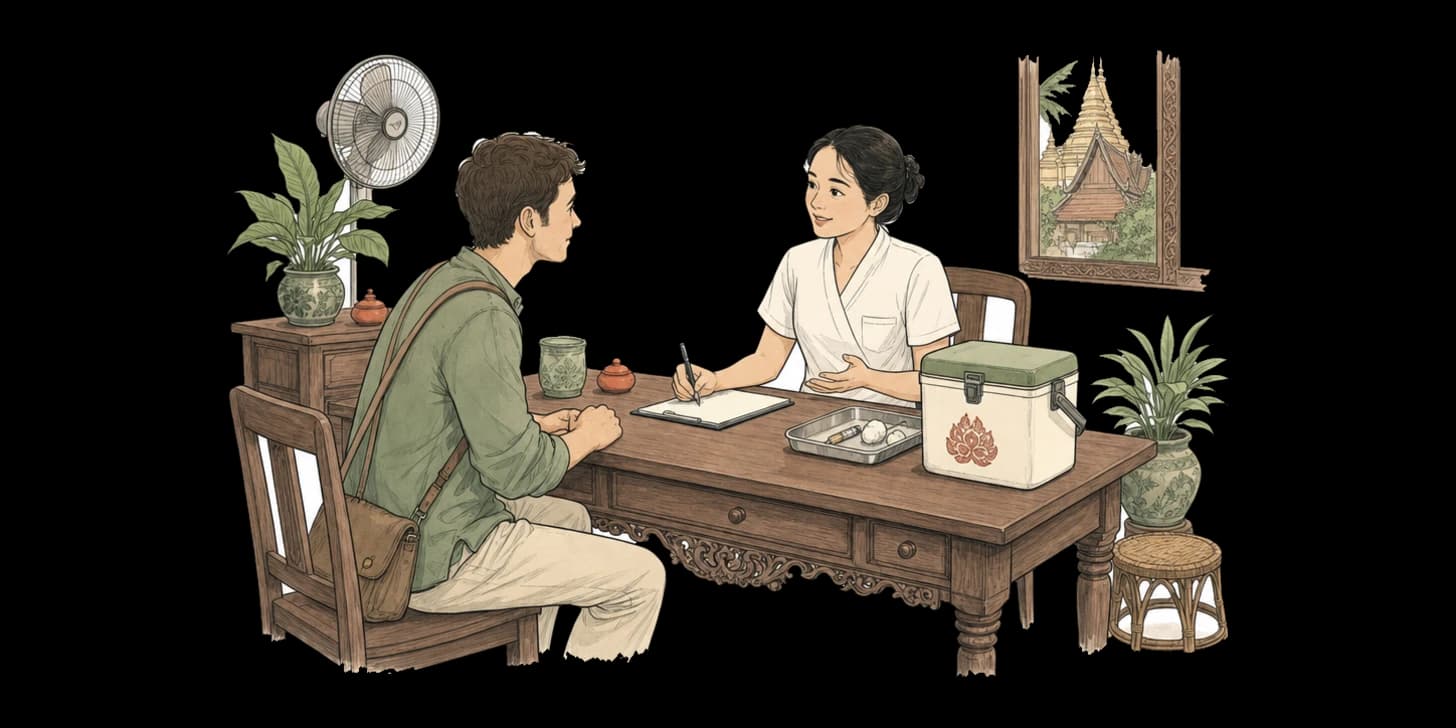
This is the easy part. Chiang Mai is a medical-tourism city, so getting vaccinated is straightforward, efficient and usually very affordable. The private hospitals — Bangkok Hospital Chiang Mai, Chiang Mai Ram, and the more wallet-friendly Sriphat Medical Center on the Suan Dok (Maharaj Nakorn) university campus — all run health-check or vaccination services with English-speaking staff. There are also dedicated travel clinics in town geared entirely towards visitors. Walk-ins are often possible, though a quick call ahead never hurts, and you'll generally be given clear costs upfront. For the bigger picture on how the system works, our guide to healthcare in Chiang Mai is a good companion read.
Dengue: the bite you can't vaccinate away
One health topic deserves a slightly different mention. Dengue is mosquito-borne and turns up across Thailand, more so in the wetter months. There's no simple traveller's vaccine you can pop in for the way you can with the others, which makes everyday bite-avoidance your best friend: repellent, covering up at dawn and dusk, and not leaving still water around your balcony. It's not a reason for alarm — just a nudge that a can of repellent matters more than any clinic visit here. If you're timing your stay, our notes on when to visit touch on the seasons when mosquitoes are liveliest.
Keep it all in perspective
Step back and the picture is genuinely calm. A handful of these vaccines, sorted in a single appointment, cover the great majority of travellers comfortably — and Chiang Mai makes the whole thing painless. Sensible travel cover rounds it off nicely, which is why we'd pair this with our look at travel insurance. Most of all, treat this article as a starting point for a conversation, not a checklist to self-prescribe from: a doctor or travel clinic who can see your records will give you advice that actually fits your trip. Do that one thing, keep your little vaccination booklet handy, and you can get on with the far more enjoyable business of settling into the city.
Frequently asked questions
Which travel vaccinations do I actually need before coming to Chiang Mai?
It really depends on you, so the honest answer is to discuss it with a doctor or travel clinic rather than work from a checklist. The jabs that usually come up are routine boosters (tetanus, MMR, diphtheria, polio, flu), rabies, hepatitis A and B, typhoid and Japanese encephalitis. A clinic will look at your trip length, past jabs and where you'll roam to work out what fits. Please treat this as general information, not medical advice.
Should I start with anything before the tropical-sounding jabs?
Yes, the most useful first step is simply making sure your routine vaccinations are up to date. Tetanus is the classic one to keep current, especially if you hike, ride a scooter or generally collect scrapes, and the same goes for measles, mumps and rubella, diphtheria, polio and your seasonal flu shot. None of this is Chiang Mai-specific; it's just good baseline cover a clinic will check first. Bring whatever vaccination record you have and ask them to update it as they go.
How worried should I be about rabies and the street dogs?
It's the vaccine people ask us about most, and while Chiang Mai does have a visible street-dog population, the great majority are gentle and the disease is taken seriously here. A pre-exposure course is something you can simply discuss with a clinic if your lifestyle puts you around animals. Reassuringly, the city is well set up for treatment too, with rabies vaccine and immunoglobulin widely stocked across Thai hospitals. If an animal ever breaks your skin, clean the wound thoroughly and get to a hospital the same day rather than wait and see.
Is there a vaccine for dengue?
No simple traveller's vaccine that you can pop in for the way you can with the others, which is why everyday bite-avoidance becomes your best friend. Dengue is mosquito-borne and turns up across Thailand, more so in the wetter months. Repellent, covering up at dawn and dusk, and not leaving still water around your balcony all matter more here than a clinic visit. It's not a reason for alarm, just a sensible nudge.
Where can I get vaccinated in Chiang Mai, and is it easy?
This is genuinely the easy part, as Chiang Mai is a medical-tourism city where getting vaccinated is straightforward, efficient and usually very affordable. Private hospitals like Bangkok Hospital Chiang Mai, Chiang Mai Ram and the more wallet-friendly Sriphat Medical Center all run vaccination services with English-speaking staff, and there are dedicated travel clinics geared towards visitors. Walk-ins are often possible, though a quick call ahead never hurts, and you'll generally be given clear costs upfront.
Can you tell me the doses and schedules for these vaccines?
We've deliberately not laid out doses or schedules, because the right answer genuinely depends on your trip length, your past jabs and where you'll be roaming. That's exactly the sort of thing a travel clinic sorts out in one calm appointment, looking at your own records. Please treat this article as a starting point for a conversation rather than a checklist to self-prescribe from. A doctor or travel clinic who can see your history will give advice that actually fits your trip.