
Local culture · June 25, 2026
Chiang Mai's soi dogs: how to coexist kindly and safely
By The Ada House team
Within a day of arriving, you'll meet them: a sandy-coloured dog asleep in a patch of shade, another trotting through the market with the confidence of a regular. These are Chiang Mai's soi dogs — "soi" simply means lane — and they're as much a part of the city as the temples and the scooters. Most will look at you, decide you're nothing new, and go back to their nap.
The reality on the ground
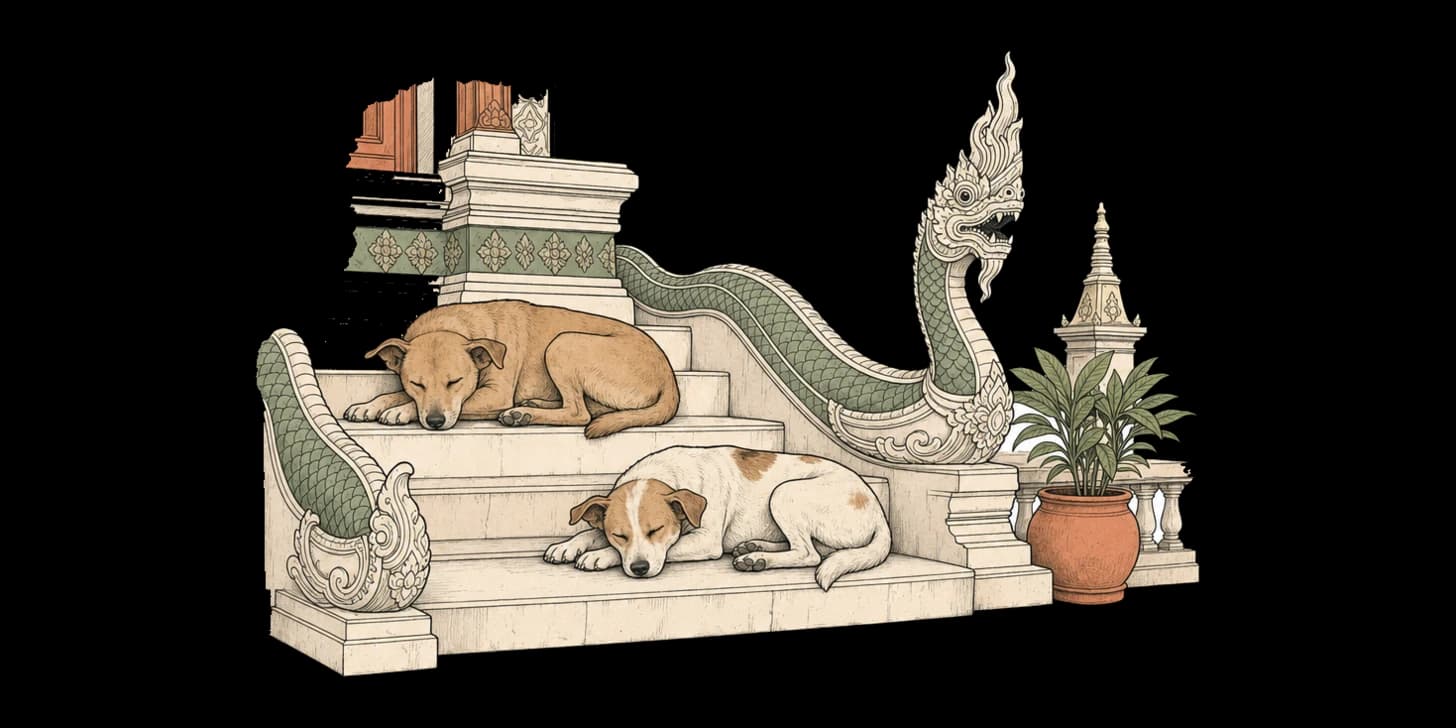
Chiang Mai has a lot of free-roaming dogs, and once you understand them, they stop being strange. Few are truly stray in the way you might picture. Many are temple dogs, dropped at a wat in the hope the monks will look after them. Others are market dogs or community animals — "owned by the street", fed by a noodle vendor here, a shopkeeper there, claimed by no one and everyone at once.
The vast majority are mellow and well-acquainted with people. They've spent their whole lives around foot traffic, bicycles and tourists, and they've learned that humans mostly mean food, not trouble. You'll pass dozens a day without incident. Some look glossy and cared-for; others are thinner or scruffier, a reminder that life on the street is hard. But as neighbours go, they're easygoing — and they're woven into the texture of the old city's temples in a way that's hard to imagine until you've seen it.
Why the city lets them be
The soi dogs are inseparable from the city's Buddhist culture. Compassion for all living beings runs deep here, and that makes culling unthinkable for most people — a dog has its own life and its own karma. Many Thais believe sterilising an animal interferes with the natural order, which is part of why the population stays high.
Instead, the tradition is to feed and tolerate rather than control. Temples become refuges: unwanted dogs are left at the gates, and monks and lay communities share what food they can. It's the same gentle, live-and-let-live spirit you feel around the city's ethical elephant sanctuaries — kindness first, even when the practicalities are messy. The result is a city that lets its dogs simply exist, for better and sometimes for worse.
Sharing the streets safely
Coexisting well comes down to a few easy habits, and none of them require fear. Chiang Mai is a genuinely safe place, and dogs are a small, manageable part of that picture.
- Let sleeping dogs lie — literally. Walk around a dog resting on the pavement rather than over it.
- Don't pet unfamiliar dogs. They're not pets waiting for affection; a calm hello from a distance is plenty.
- Move calmly at night. Dogs are more territorial after dark, so don't sprint or cycle hard past a group — slow down, give them space, and they'll usually ignore you.
- If one growls, back away slowly. Don't run, don't stare it down, don't shout. Turn side-on, avoid eye contact, and quietly leave its patch. The standoff almost always ends the moment you do.
The rabies note, calmly
Here's the practical part, handled without drama. Thailand still has rabies, so a bite or scratch is worth taking seriously — not panicking over. If it happens, wash the wound thoroughly with soap and running water for around fifteen minutes (soap genuinely damages the virus), then seek post-exposure vaccination promptly at a hospital or clinic. The vaccine is widely available and effective, and Chiang Mai's healthcare options handle this routinely. Acting quickly matters far more than worrying does.
How you can help
A network of welfare organisations does quiet, vital work here — sterilising, vaccinating and rescuing, year after year. Groups such as Care for Dogs and Lanna Dog Welfare are well-known examples worth looking up and verifying for yourself. Travellers staying a while can do real good: volunteer at a sterilisation clinic, donate, or even foster or adopt a dog who's ready for a home. If you'd like to lend a hand more broadly, our guide to volunteering in Chiang Mai covers how to give back without doing harm. A small contribution goes a long way against a big problem.
Give it a week, and you'll have your favourites — the three-legged regular outside the café, the temple dog who supervises the courtyard like he owns it. They'll become part of your Chiang Mai, dozing in the warm stone shade while life goes on around them. Treat them gently, give them their space, and they'll return the favour.
Warmly, the Ada House team
Frequently asked questions
What are soi dogs?
Soi simply means lane, and soi dogs are Chiang Mai's free-roaming street dogs, as much a part of the city as the temples and the scooters. Few are truly stray: many are temple dogs left at a wat, while others are market dogs or community animals, owned by the street and fed by a noodle vendor here and a shopkeeper there.
Are they dangerous?
The vast majority are mellow and well-acquainted with people, having spent their whole lives around foot traffic, bicycles and tourists, so you'll pass dozens a day without incident. They're easygoing neighbours, though life on the street is hard and some look thinner or scruffier than others.
Why does the city let so many dogs roam?
The soi dogs are inseparable from the city's Buddhist culture, where compassion for all living beings runs deep and culling is unthinkable for most people. Many Thais also believe sterilising an animal interferes with the natural order. The tradition is to feed and tolerate rather than control, and temples often become refuges for unwanted dogs.
How do I share the streets safely?
Let sleeping dogs lie and walk around one resting on the pavement rather than over it. Don't pet unfamiliar dogs, move calmly at night when they're more territorial, and if one growls, back away slowly: turn side-on, avoid eye contact and quietly leave its patch. Don't run, stare it down or shout.
What should I do if a dog bites or scratches me?
Thailand still has rabies, so take it seriously without panicking. Wash the wound thoroughly with soap and running water for around fifteen minutes, then seek post-exposure vaccination promptly at a hospital or clinic. The vaccine is widely available and effective, and acting quickly matters far more than worrying does.
How can I help the soi dogs?
A network of welfare organisations sterilises, vaccinates and rescues year after year; groups such as Care for Dogs and Lanna Dog Welfare are well-known examples worth looking up. If you're staying a while you can volunteer at a sterilisation clinic, donate, or even foster or adopt a dog who's ready for a home.