Local culture · June 27, 2026
The best museums in Chiang Mai: a rainy-day, hot-afternoon guide
By The Ada House team
There's a particular hour in Chiang Mai — usually somewhere between one and three in the afternoon — when the sun goes flat and white, the pavements shimmer, and even the dogs give up and find shade. In burning season it's the haze; in the wet months it's a sudden, theatrical downpour. Whatever the cause, this is the moment we quietly recommend a museum. The city has an unusually good spread of them, most are blessedly air-conditioned, and they turn a write-off afternoon into one of the most rewarding things you can do here.
Why Chiang Mai rewards museum-goers
Chiang Mai isn't a city of one blockbuster gallery you tick off and leave. It's a scatter of small, characterful museums, each telling a slice of the same long story — the Lanna kingdom, its temples, its crafts, its mountain peoples. Visit two or three over a stay and they start talking to one another. You'll walk out of one and recognise a motif on a temple wall, or understand why a particular textile keeps appearing in the markets. That slow accumulation is the real pleasure.
The old-city trio at the Three Kings Monument
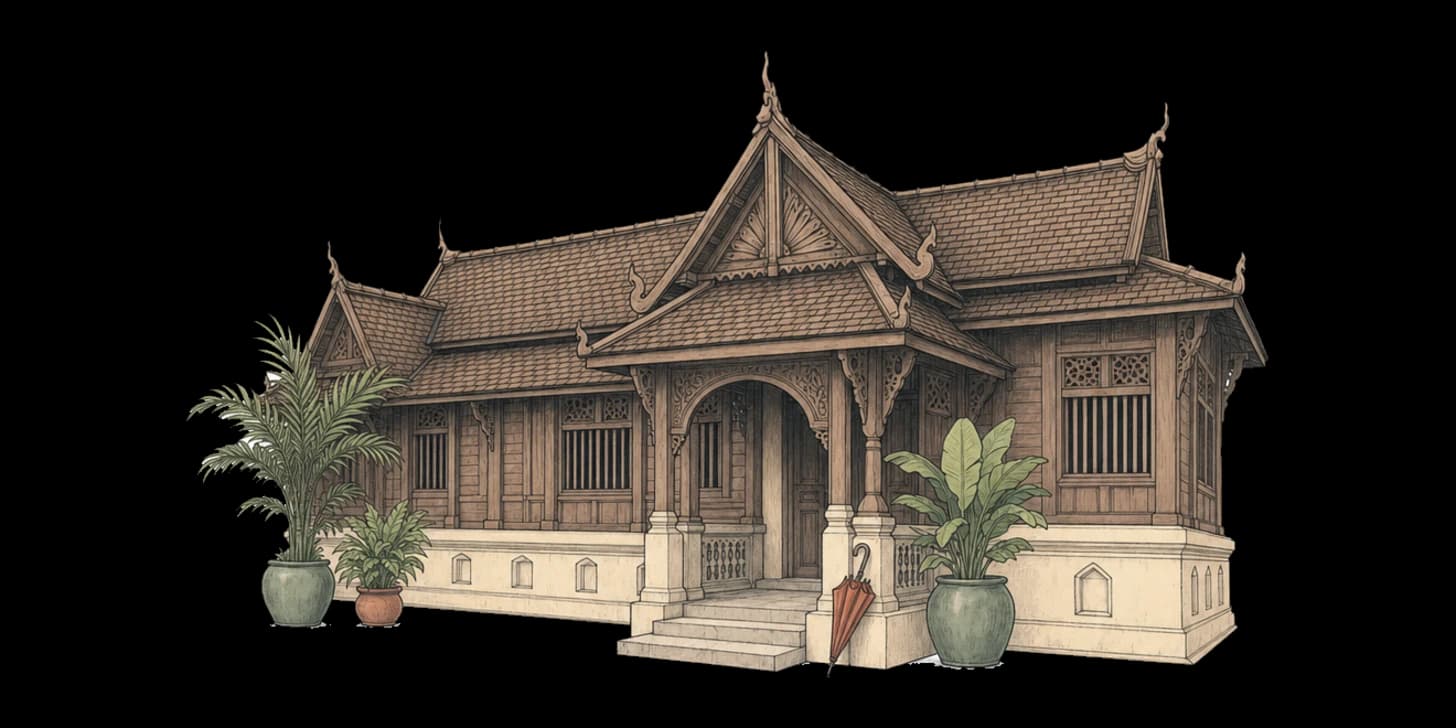
If you do nothing else, do these three. Clustered around the Three Kings Monument in the dead centre of the old city, they share a combined ticket and sit within a two-minute walk of one another — a perfect self-contained afternoon.
Start at the Chiang Mai City Arts & Cultural Centre, the elegant colonial-era building behind the monument. It's the big-picture room: how Chiang Mai was founded in 1296, how the Lanna kingdom rose, fell to the Burmese, and was reborn. Then duck behind it to the Chiang Mai Historical Centre, which picks up the archaeology and the city's deeper roots, partly built over an excavated ancient wall.
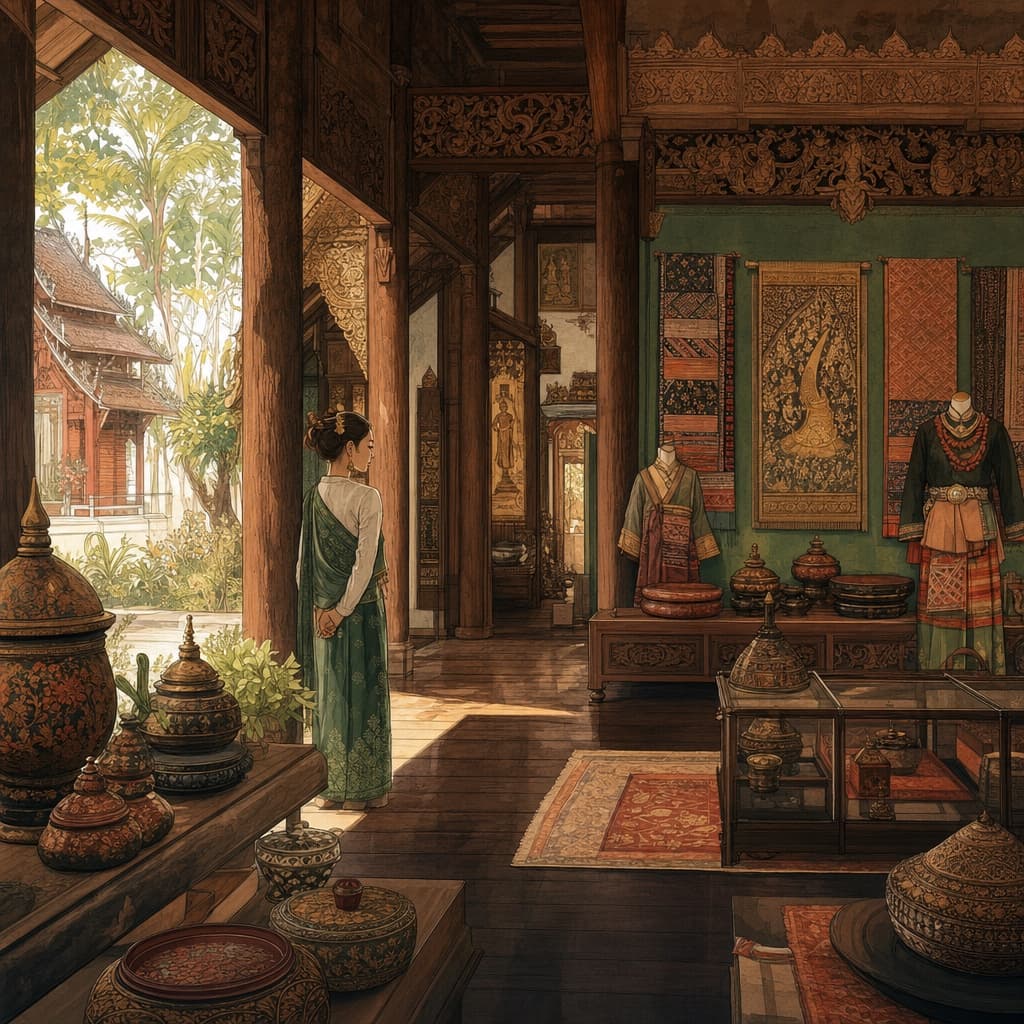
Save the Lanna Folklife Museum for last — it's the most charming of the three. Set in the former provincial court opposite the monument, it recreates old Northern life in a series of life-size dioramas: a monk painting a temple mural, a weaver at her loom, the tools and textiles of a vanished everyday. It's the one that makes the whole story feel human.
How the trio connects to the temples around you
Here's where these museums earn their keep. Almost everything you learn inside is standing, intact, a few streets away. The Burmese-Lanna fusion you read about in the Cultural Centre is carved into the eaves of Wat Phra Singh; the naga balustrades the Folklife Museum explains are the ones you'll trip over at every doorway. We always tell guests to do a museum first and a temple wander second — if you want to plan that part, our guide to the old city's temples maps the best ones on foot. And for the full sweep of kings, wars and golden ages behind it all, the story of the Lanna kingdom is worth half an hour before you go.
MAIIAM, for a jolt of the contemporary
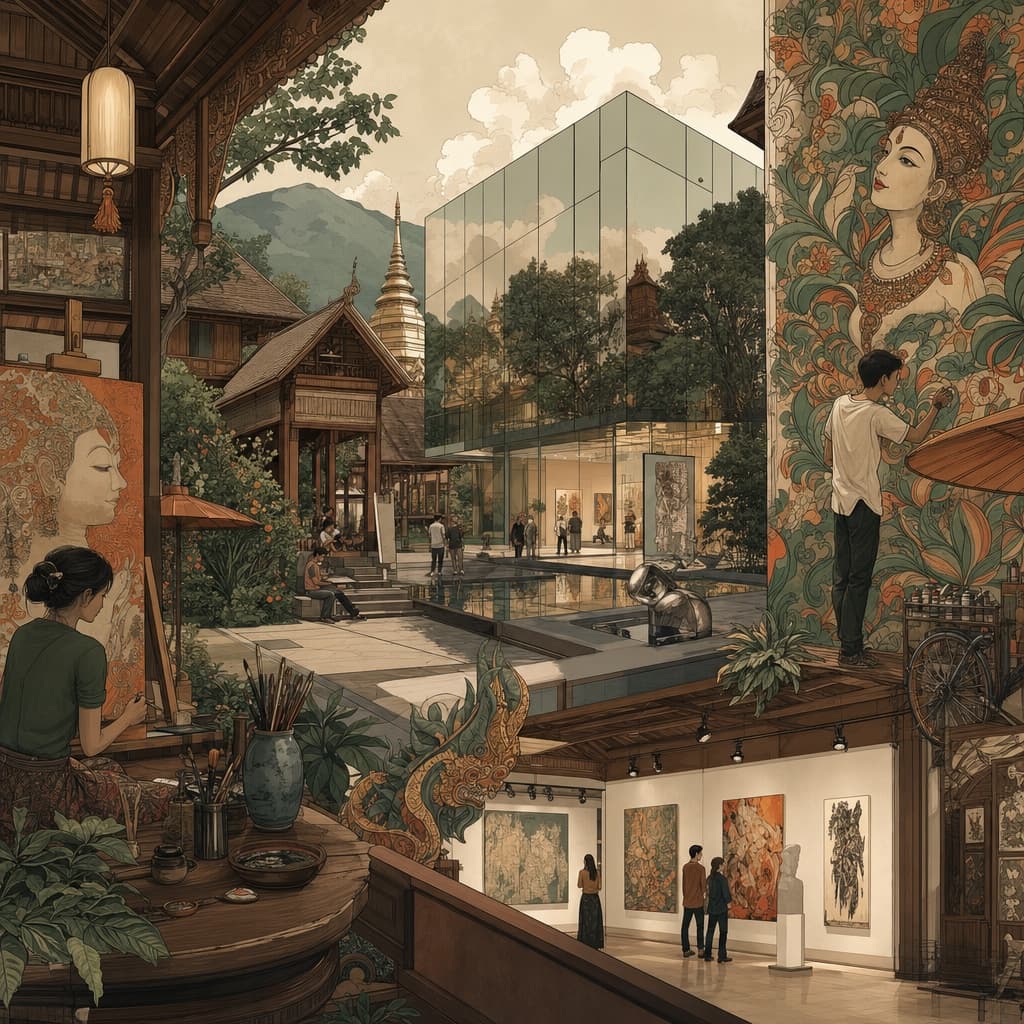
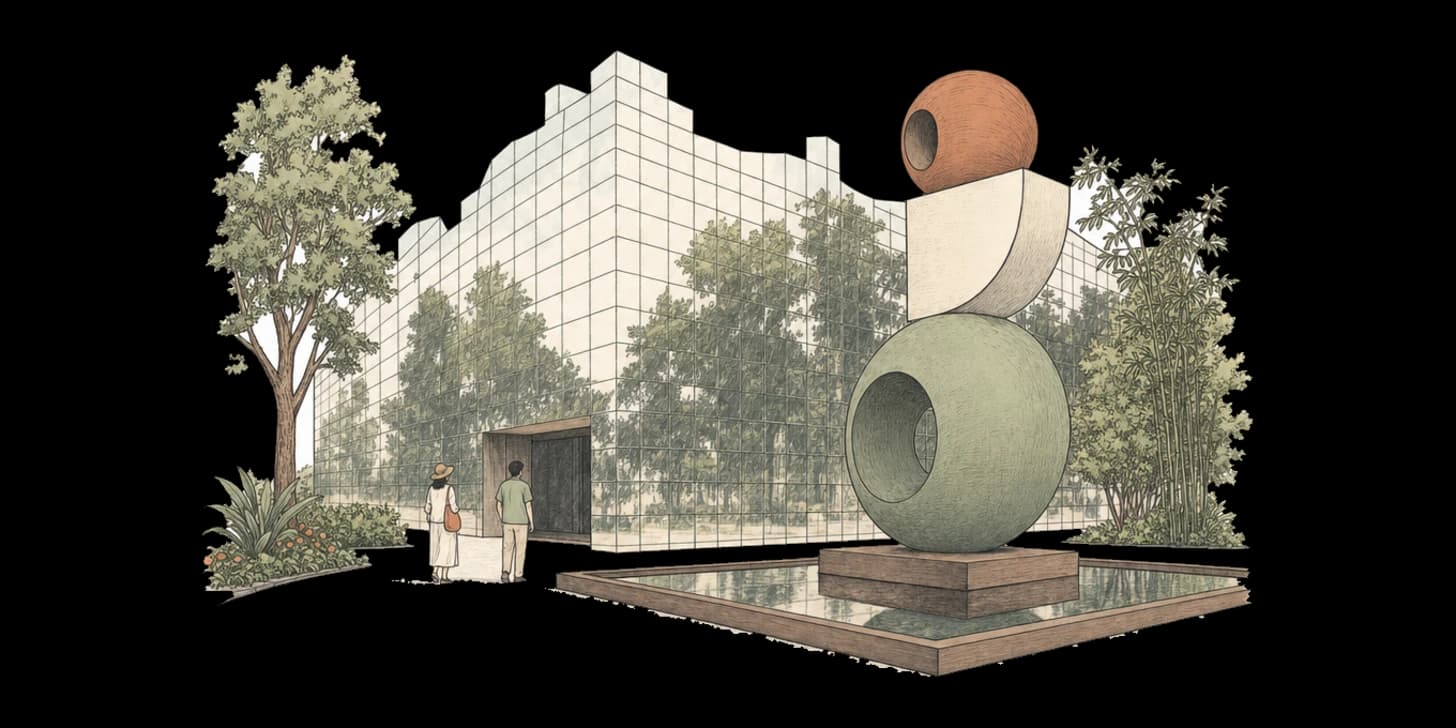
When you've had your fill of teak and lacquerware, MAIIAM Contemporary Art Museum is the perfect counterweight. Out in San Kamphaeng, about a 30-minute drive east, it's a glittering thing — the façade clad in thousands of mirror tiles — housing the only standalone collection of Thai and Southeast Asian contemporary art in the country. Rotating exhibitions, a good café, a cool quiet that's a balm after the heat. It's typically open Friday to Monday, so check current hours before you commit the trip; a Grab car or a half-day driver makes it painless. The road out passes the old handicraft highway, so it pairs neatly with the workshops in our guide to Lanna handicrafts.
The highland peoples' museum
North of the moat, set beside a lake in Rama IX Lanna Park, the Highland People Discovery Museum (long known as the Tribal Museum) is the city's window onto its mountain communities — Hmong, Karen, Akha, Lahu, Lisu and more. Indoor cases of intricate silver, beadwork and textiles, a video on highland life, and reconstructed huts in the gardens outside. It's quieter and a little faded these days, which is part of its charm, and the lakeside setting makes it a gentle stop rather than a hurried one.
A couple of quirkier stops
For something off the main thread, Chiang Mai obliges. There's a small but genuinely interesting insect and natural-history museum founded by a husband-and-wife team of mosquito researchers, heavy on beetles and butterflies and eccentric labelling. Design lovers gravitate to the Lanna Architecture Centre, a restored teak house run by the university that's free and quietly lovely. And several old wooden mansions around town double as tiny house-museums — worth a look if a door is open.
Practical notes
Cluster the central ones: the old-city trio and a temple or two make one easy walking afternoon, no transport needed. Save MAIIAM and the highland museum for their own outings, since both want a car. Entry fees are small everywhere, and opening hours shift — many close one or two days a week, so a quick check the night before saves a wasted trip. Carry a little cash; not everywhere takes cards.
Come find us at the front desk if you'd like an afternoon plotted out — we love sending guests off on a good museum crawl.
Frequently asked questions
Why are museums such a good plan in Chiang Mai?
There is a particular flat, white-hot hour in the afternoon, whether from burning-season haze or a sudden wet-season downpour, when a museum is the perfect move. The city has an unusually good spread of small, characterful museums, most blessedly air-conditioned. Visit two or three over a stay and they start talking to one another, each telling a slice of the same Lanna story.
What are the old-city trio of museums?
Clustered around the Three Kings Monument in the dead centre of the old city, three museums share a combined ticket and sit within a two-minute walk of one another. Start at the Chiang Mai City Arts & Cultural Centre for the big picture, duck behind it to the Chiang Mai Historical Centre for the archaeology, and save the charming Lanna Folklife Museum for last, where life-size dioramas recreate old Northern life.
Is MAIIAM worth the trip out of town?
Yes, as a jolt of the contemporary after all the teak and lacquerware. MAIIAM Contemporary Art Museum is out in San Kamphaeng, about a 30-minute drive east, a glittering thing clad in thousands of mirror tiles, housing the only standalone collection of Thai and Southeast Asian contemporary art in the country. It is typically open Friday to Monday, so check current hours, and a Grab car or half-day driver makes it painless.
Is there a museum about the mountain peoples?
Yes. North of the moat, beside a lake in Rama IX Lanna Park, the Highland People Discovery Museum (long known as the Tribal Museum) is the city's window onto its mountain communities such as the Hmong, Karen, Akha, Lahu and Lisu. Inside are cases of intricate silver, beadwork and textiles plus a video on highland life, with reconstructed huts in the gardens. It is quieter and a little faded these days, which is part of its charm.
Are there any quirkier museums?
Chiang Mai obliges. There is a small but genuinely interesting insect and natural-history museum founded by a husband-and-wife team of mosquito researchers, heavy on beetles and butterflies. Design lovers gravitate to the Lanna Architecture Centre, a restored teak house run by the university that is free and quietly lovely, and several old wooden mansions double as tiny house-museums worth a look if a door is open.
Any practical tips before I go?
Cluster the central ones: the old-city trio and a temple or two make one easy walking afternoon with no transport needed. Save MAIIAM and the highland museum for their own outings, since both want a car. Entry fees are small everywhere, but opening hours shift and many places close one or two days a week, so a quick check the night before saves a wasted trip, and carry a little cash since not everywhere takes cards.