Health & wellness · June 21, 2026
Healthcare in Chiang Mai: hospitals, pharmacies & dentists
By The Ada House team
Here's a reassuring fact for anyone settling in: Chiang Mai has modern, good-quality healthcare at a fraction of Western prices. It's a well-known medical and dental tourism destination, with private hospitals full of English-speaking staff. Day-to-day care is cheap enough to pay for yourself — but for anything serious, you'll still want insurance. Here's the honest rundown.
Hospitals: private vs public
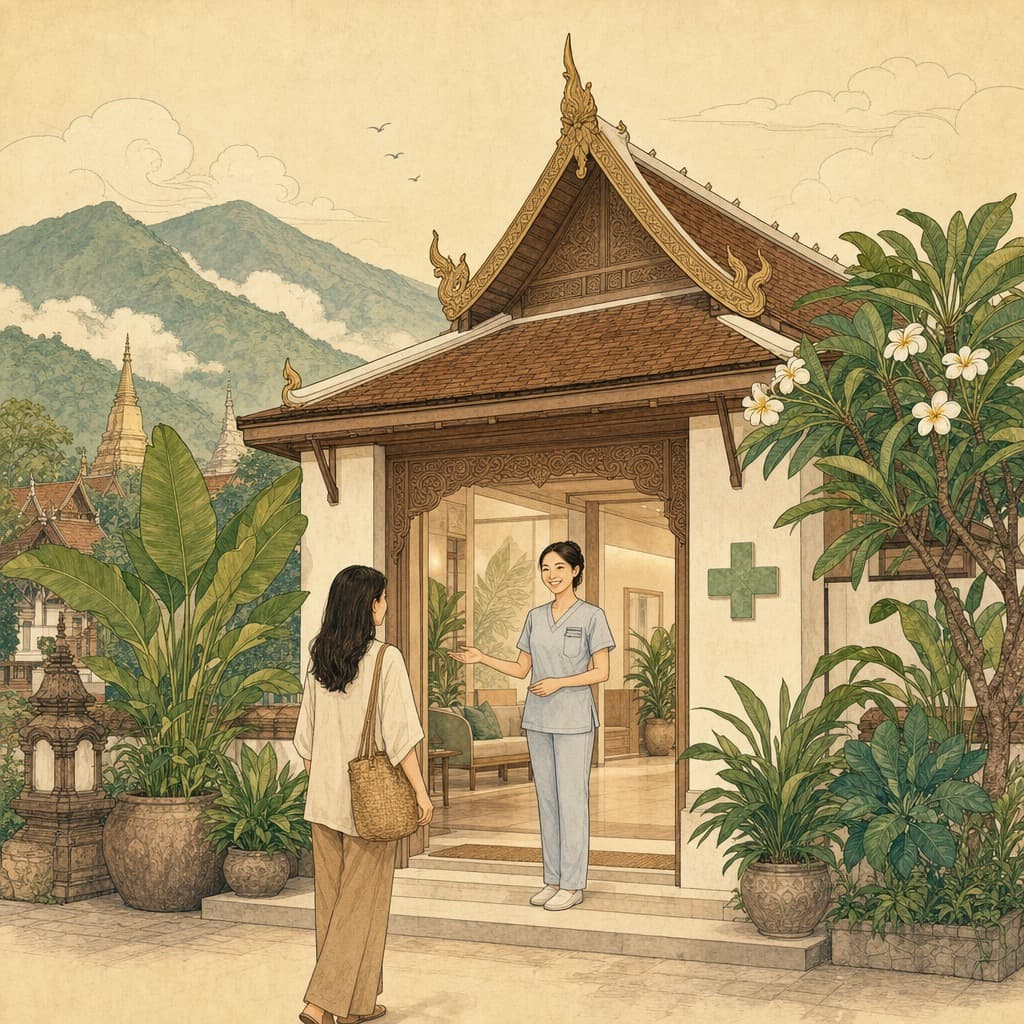
For most visitors, the private hospitals are the easy choice — comfortable, short waits, good English and "international patient" desks that know insurance paperwork:
- Bangkok Hospital Chiang Mai — large, modern, part of a national chain; widely used by international patients.
- Chiang Mai Ram — long-established, near the Old City, popular with expats.
- Lanna Hospital — solid for general medicine, used by locals and foreigners alike.
(Bangkok Hospital and Chiang Mai Ram both hold international JCI accreditation.) The big government hospitals like Maharaj/Suandok are much cheaper and very capable, but busier, with less consistent English — geared more to Thai patients than medical tourists.
What it costs
Routine care is genuinely affordable by Western standards (rough private-hospital ballparks):
- GP consultation: ~500–800 THB
- Specialist: ~800–1,500 THB
- Local clinic visit (with basic medicine): often ~200–500 THB
- Bloodwork: ~1,000–3,000 THB · X-ray: ~500–1,000 THB
That's why people happily pay cash for minor things. The catch: surgery, admissions, CT/MRI or evacuation can still run into thousands — and there's no free system for foreigners. So: pay out of pocket for the small stuff, insure for the big stuff.
Pharmacies
Pharmacies are everywhere — chains like Boots and Watsons plus countless independents. Thai pharmacists can dispense a lot directly, so many things that need a prescription back home (painkillers, antihistamines, many antibiotics) are available over the counter after a quick chat, and cheaply (ibuprofen ~30–50 THB, a short antibiotic course ~100–200 THB). Still, bring copies of your prescriptions and a written list of your medications (generic names) and allergies. One thing you'll see openly on sale that you might not expect is cannabis — the rules on cannabis in Thailand are worth understanding before you partake, as the law has shifted and continues to.
Dental tourism
This is a real draw: Chiang Mai dentists are often internationally trained with modern kit, and clinics cater to foreign patients with transparent pricing. Rough ranges: cleaning ~600–1,500 THB, filling ~1,000–2,000 THB, crown ~8,000–15,000 THB, implant ~35,000–50,000 THB — frequently 50–70% cheaper than the US for complex work. Get a written treatment plan and estimate before starting, and check reviews and qualifications.
Insurance for nomads
Cheap care doesn't replace insurance. Have a policy that covers emergency treatment, hospital stays and medical evacuation/repatriation. Some long-stay visas require proof of health cover, and the newer options matter if you're planning a longer stay (see our digital nomad guide). International or nomad-specific health plans work well, and the private hospitals here are insurance-friendly, often with direct billing.
Emergencies & everyday health
Save these now: ambulance 1669, police 191, fire 199. In a serious emergency, call 1669 or head to the nearest ER — the major hospitals all run 24/7 emergency rooms. It pays to know which hospital is closest to where you stay before you need it.
For daily life, the basics from our safety guide apply: don't drink the tap water (bottled/filtered — we keep filtered refills at the house), use mosquito repellent at dawn and dusk (dengue exists), and mind the burning-season air roughly February–April — an N95 mask and an indoor purifier help on bad days (our when-to-visit guide has the seasonal detail). Before you travel, a chat with a travel clinic about vaccinations is wise.
A note: this is general orientation, not medical advice. Prices and policies change, so confirm with providers directly — and for anything specific, consult a doctor, dentist, pharmacist or travel clinic. Carry your passport, insurance details and medication list to appointments.
Settle in, save those numbers, and you'll find staying healthy here is refreshingly low-stress. Any wobble — a fever, a toothache, the air that week — just ask us and we'll point you to the right place nearby.
Frequently asked questions
Is healthcare in Chiang Mai any good?
Reassuringly, yes. Chiang Mai offers modern, good-quality healthcare at a fraction of Western prices, and it is a well-known medical and dental tourism destination. The private hospitals are comfortable, with short waits and English-speaking staff.
Are the hospitals English-speaking?
The private hospitals like Bangkok Hospital Chiang Mai, Chiang Mai Ram and Lanna are the easy choice, with good English and international patient desks that handle insurance paperwork. The big government hospitals such as Maharaj/Suandok are much cheaper and very capable, but busier and with less consistent English. For day-to-day care as a foreigner, the private side tends to be the smoother experience.
How much does a doctor's visit cost?
Routine care is genuinely affordable by Western standards. As rough private-hospital ballparks, a GP consultation runs around 500 to 800 THB and a specialist around 800 to 1,500 THB, while a local clinic visit with basic medicine is often 200 to 500 THB. That is why people happily pay cash for the minor things.
Do I still need health insurance if care is so cheap?
Yes, cheap care does not replace insurance. Surgery, admissions, CT/MRI scans or an evacuation can still run into thousands, and there is no free system for foreigners. The sensible approach is to pay out of pocket for the small stuff and insure for the big stuff, with cover for emergency treatment, hospital stays and medical evacuation or repatriation.
Can I get medicine without a prescription?
Often, yes. Pharmacies are everywhere, including chains like Boots and Watsons, and Thai pharmacists can dispense a lot directly, so many things needing a prescription back home are available over the counter after a quick chat, and cheaply. Even so, do bring copies of your prescriptions and a written list of your medications by generic name, plus any allergies.
What number do I call in an emergency?
Save these now: ambulance 1669, police 191 and fire 199. In a serious emergency, call 1669 or head to the nearest ER, as the major hospitals all run 24/7 emergency rooms. It is worth knowing which hospital is closest to where you stay before you ever need it.