Local culture · June 29, 2026
Wat Phra Singh: the revered heart of Chiang Mai's Old City
By The Ada House team
At the far western end of Ratchadamnoen Road, where the market crowds thin and the Old City quietens, stands the temple most Chiang Mai people will name first if you ask them which is dearest: Wat Phra Singh, or to give it its full title, Wat Phra Singh Woramahawihan. It is the grandest and most revered of the temples inside the square moat, and one of the loveliest examples of Lanna craft anywhere in the north. Here is what makes it special, and how to visit it with the respect it asks for.
A royal temple founded in 1345
The temple was founded in 1345 by King Phayu, the fifth ruler of the Mangrai dynasty, to house the ashes of his father, King Kham Fu, brought down from Chiang Saen. From those origins it grew into one of the most important religious sites of the Lanna kingdom, and in 1935 it was raised to the rank of a royal temple of the first grade — the highest a Thai temple can hold, which is what the Woramahawihan in its name signifies. If you are working your way through the Old City's temples, this is the one to give the most time to.
The Phra Singh image, and a gentle mystery
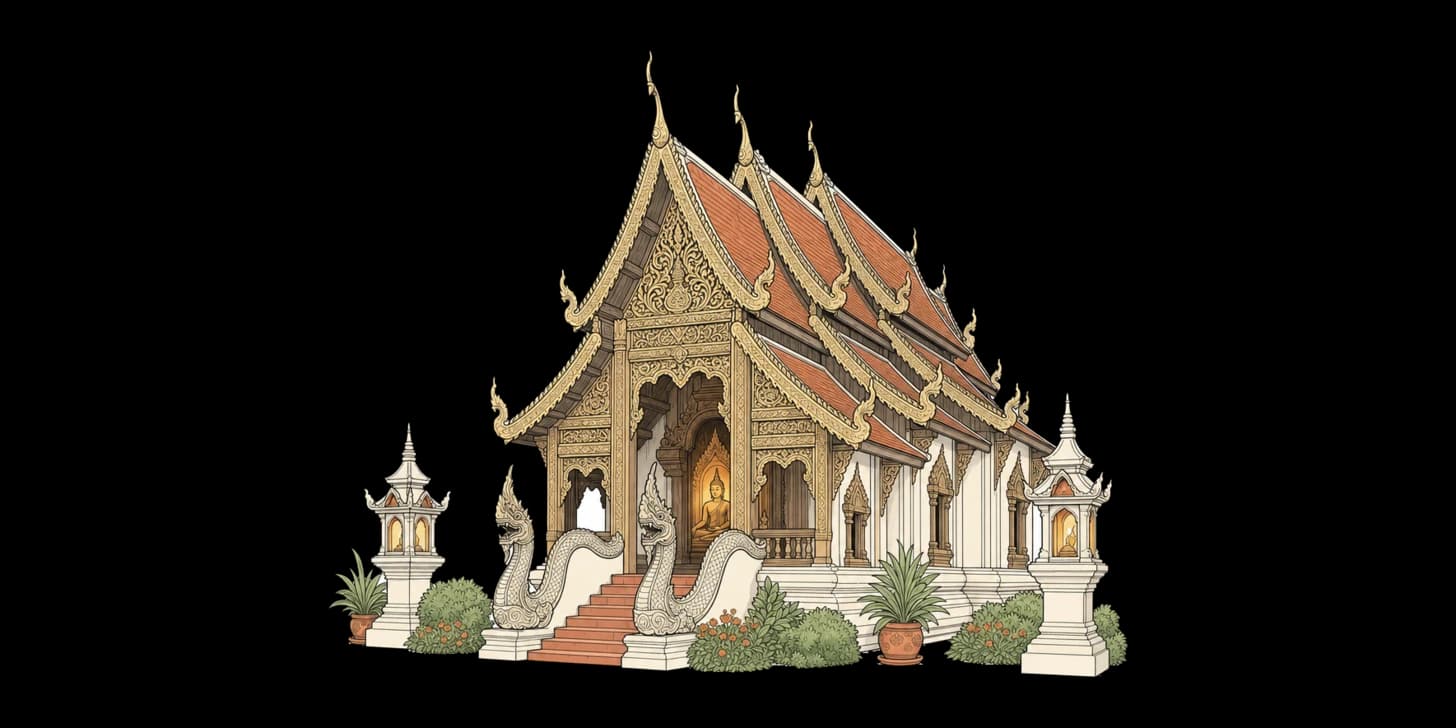
The temple takes its name from the Phra Singh Buddha — properly the Phra Buddha Sihing — a serene seated image in the slender Lanna style, deeply venerated and the focus of countless prayers for good fortune. Here is the gentle mystery: there are three near-identical images in Thailand — in Chiang Mai, in Nakhon Si Thammarat and in the National Museum in Bangkok — and each is held by its keepers to be the true original. No one can prove which is which, and in truth it hardly matters; for the people of Chiang Mai, theirs is the Phra Singh, and the devotion it draws is unmistakable. To understand why a single image can carry so much meaning, our note on Thai Buddhism is a good place to start.
Wihan Lai Kham: gilded woodwork and famous murals
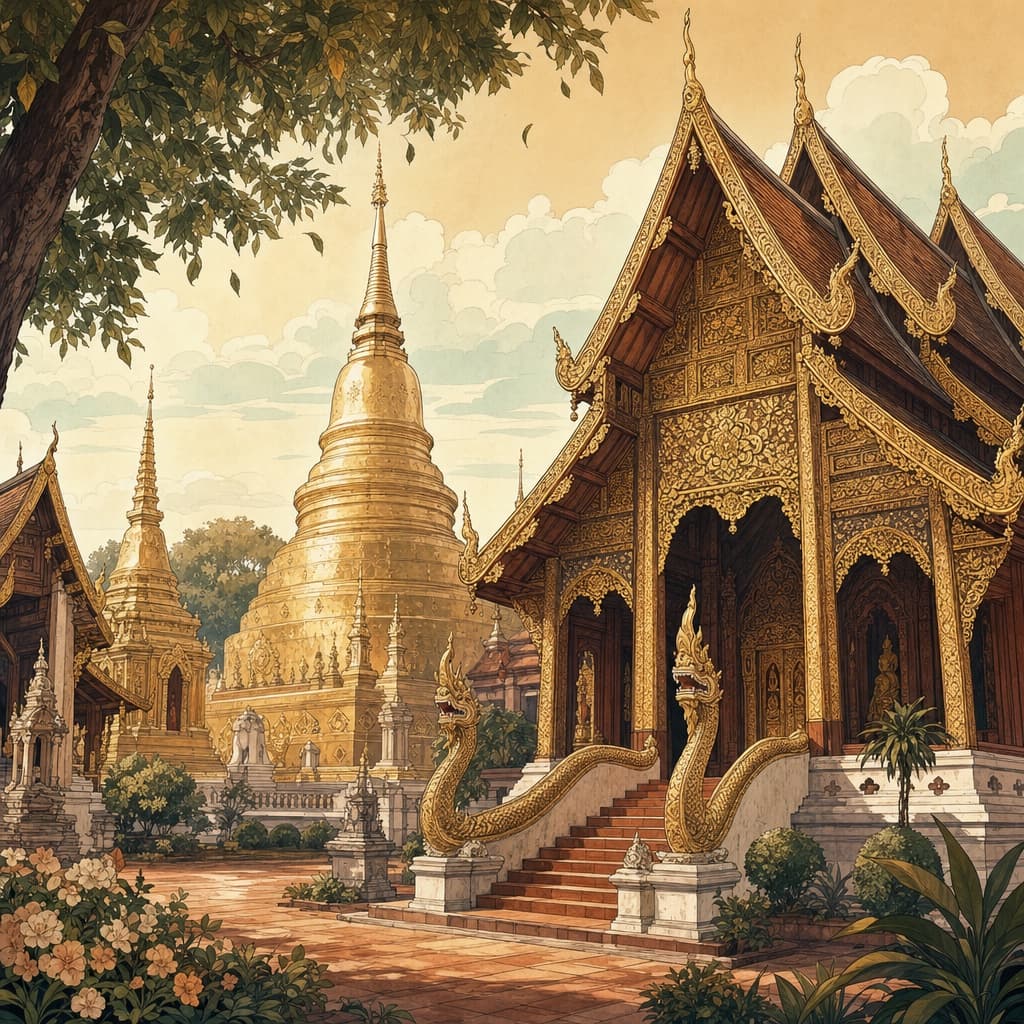
The Phra Singh image sits in the temple's jewel: the Wihan Lai Kham, a small, perfectly proportioned assembly hall raised in the early nineteenth century. Its name means roughly the hall of the golden pattern, and the gable and interior carry exactly that — intricate gilded woodwork and stencilled gold on deep red lacquer, glowing in the low light. But the treasures most visitors come for are the murals painted on the side walls around the mid-1800s. They illustrate two old Jataka-style tales — the story of Sang Thong, the prince born in a golden conch, on one wall, and Suwannahong on the other — yet what makes them priceless is the everyday Lanna life painted into the margins: market scenes, costumes, tattoos, foreigners and flirtations, a candid window onto Chiang Mai nearly two centuries ago. Take your time here; they reward slow looking.
The golden chedi and the scripture library
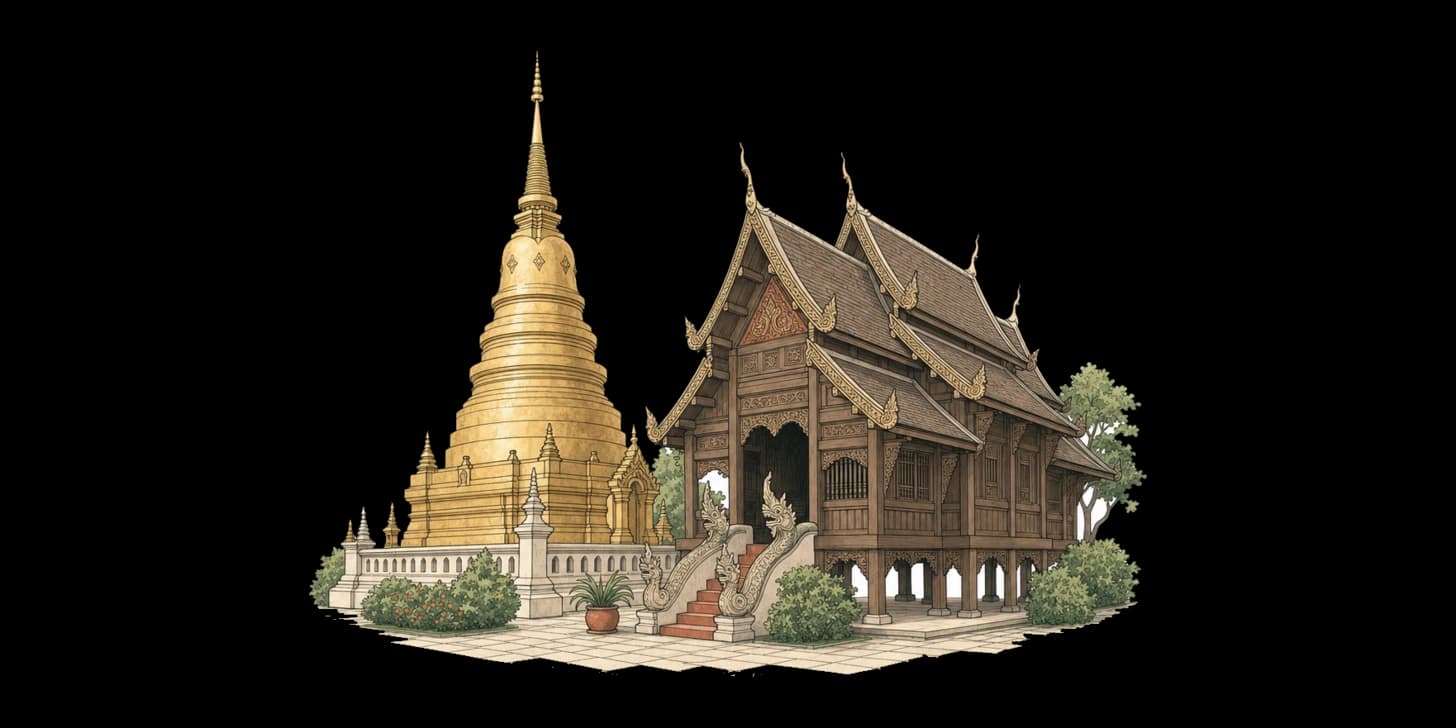
Out in the grounds stand two more things worth pausing over. The elegant golden chedi, bell-shaped and wrapped in gleaming plates, holds the relics the temple was built around. Nearby is the ho trai, the scripture library — a delicate teak pavilion lifted high on a stuccoed masonry base and dressed with celestial figures, raised up so the palm-leaf manuscripts inside stayed safe from damp and termites. It is one of the prettiest small buildings in the city. The main Wihan Luang and the ordination hall complete the ensemble, every roofline tiered and tilted in the unmistakable Lanna manner you will also recognise at Wat Chedi Luang a few streets east.
When the Phra Singh comes out: Songkran
Once a year, the Phra Singh leaves its hall. During Songkran, the Thai new year in mid-April, the image is carried in solemn procession through the streets so the faithful can sprinkle it with scented water — a blessing for the year ahead, and the spiritual heart of a festival most visitors know only for its water fights. If you are in town in April, it is well worth seeking out this quieter, devotional side of the celebration.
Visiting well: location, dress and the monk chat
You will find Wat Phra Singh at the western end of Ratchadamnoen Road, the same street that fills with the Sunday Walking Street market each week, so the two pair easily. There is a small entry fee or donation for the main halls, and the grounds are open through the day — do check current hours locally. As at any working temple, cover your shoulders and knees and slip your shoes off before stepping into a hall; a quick read of our etiquette notes will see you right. Most afternoons you will also find the monk chat, where novice monks practise their English and field questions about robes, meditation and temple life — gentle, unhurried and genuinely two-way; our guide to the monk chat explains how it works. Come early if you can, before the heat and the crowds, and let the gold and the quiet do their work.
Frequently asked questions
Where is Wat Phra Singh and how do I find it?
You will find it at the far western end of Ratchadamnoen Road, inside the square moat of the Old City. That is the same street that fills with the Sunday Walking Street market each week, so the two pair together very easily. It is the grandest and most revered of all the temples inside the moat.
Is there an entry fee?
There is a small entry fee or donation for the main halls, while the grounds are open through the day. Hours can vary, so we would suggest checking the current times locally before you set off. Coming early, before the heat and the crowds, makes for the loveliest visit.
What should I wear to visit respectfully?
As at any working temple, please cover your shoulders and knees. You will also need to slip your shoes off before stepping into any of the halls. A quick read of our etiquette notes will see you right on the small courtesies that matter here.
Is the Phra Singh Buddha here the real original?
This is a gentle mystery. There are three near-identical images in Thailand, in Chiang Mai, in Nakhon Si Thammarat and in the National Museum in Bangkok, and each is held by its keepers to be the true original. No one can prove which is which, and in truth it hardly matters; for the people of Chiang Mai, theirs is the Phra Singh, and the devotion it draws is unmistakable.
When is the best time to see the Phra Singh image carried out?
Once a year, during Songkran in mid-April, the image leaves its hall and is carried in solemn procession through the streets. The faithful sprinkle it with scented water as a blessing for the year ahead. If you are in town in April, it is well worth seeking out this quieter, devotional side of the festival.
Can I talk with a monk while I am there?
Most afternoons you will find the monk chat, where novice monks practise their English and field questions about robes, meditation and temple life. It is gentle, unhurried and genuinely two-way. Our guide to the monk chat explains how it works if you would like to know what to expect.