Practical tips · July 4, 2026
Tailors and clothing repair in Chiang Mai
By The Ada House team
In Chiang Mai, the needle and thread lead a double life. On one side are the tailor shops with their bolts of wool and linen, promising a made-to-measure suit or dress in a matter of days. On the other, tucked behind markets and down quiet sois, sit seamstresses at pedal-powered sewing machines who will hem your trousers, replace a zip or resurrect a dying backpack for pocket change. Both worlds are worth knowing — and they play by very different rules.
A suit or a dress, made in days
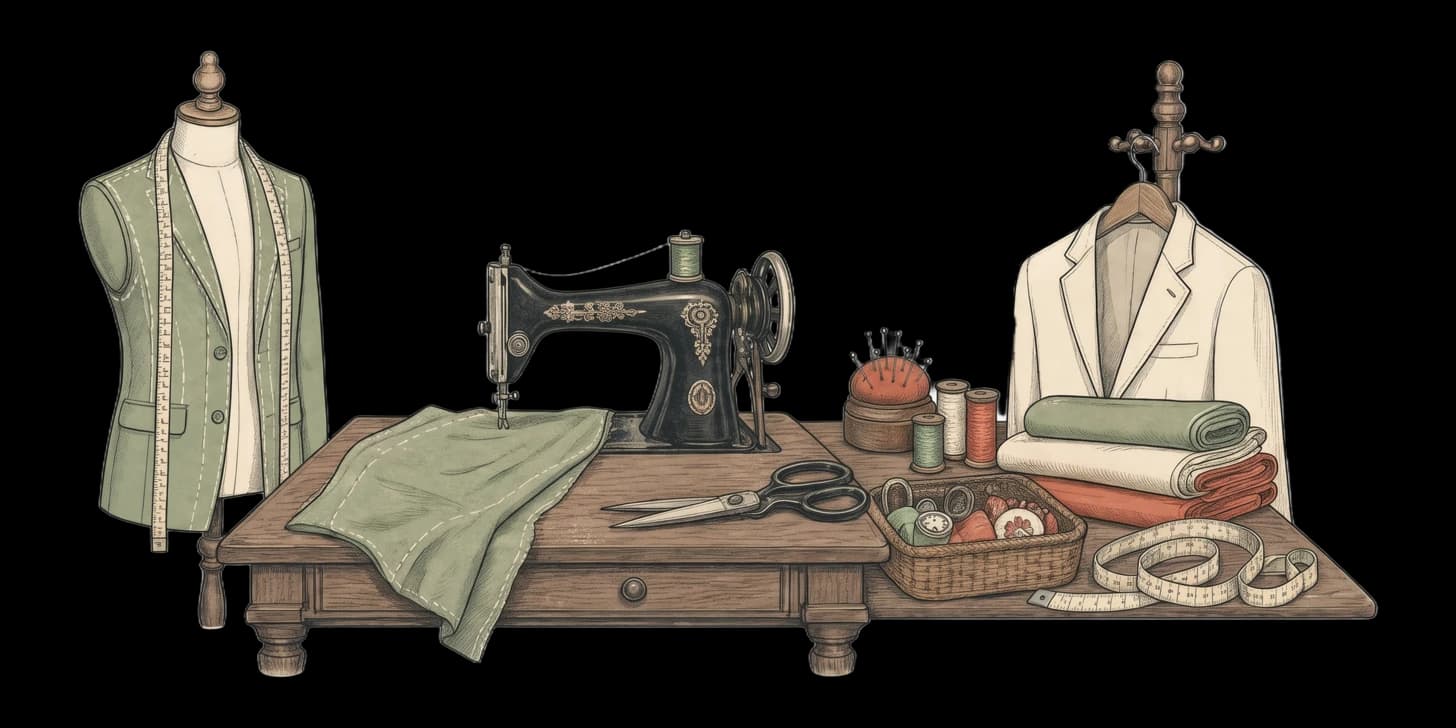
Bespoke tailoring is one of Thailand's classic visitor experiences, and Chiang Mai does it at friendlier prices than Bangkok. Shops cluster around the eastern side of the Old City and the Night Bazaar area, and the good ones will measure you, cut a garment, and refine it over several fittings — typically across three to five days. As a rough benchmark, a made-to-measure two-piece suit runs somewhere around 6,000–12,000 baht, with the cloth doing most of the work on price; simpler dresses and shirts cost considerably less. If a suit matters to you, plan for at least four days in town so the fittings never feel rushed.
How to judge a good tailor
The reliable signs are surprisingly consistent. A good tailor wants to talk about cloth before talking about price: fibre content, weight, lining, how a fabric drapes on you rather than on the hanger. They insist on at least two fittings, because that is where a suit actually gets made — the first cut is only a hypothesis. And their prices are boringly realistic. A "pure cashmere" suit for 4,000 baht is not cashmere, and a shop that quotes a third of everyone else's price has found the savings somewhere you will eventually notice, usually in the canvas, the stitching or the fabric itself.
The polite art of avoiding the tout
Thailand's tailoring scene comes with a well-documented sales machine: drivers and friendly strangers who steer you towards a particular shop and collect a commission — often quoted at 100–300 baht per delivered tourist — which is quietly baked into your bill. The tell-tale signs are false urgency ("promotion ends today"), a mysterious government export sale, and the famous "one-day suit", which by definition skips the fittings that make tailoring worth paying for. None of this requires confrontation. A smile, a "maybe later", and walking into a shop on your own steam is the entire defence. Any tailor good enough to deserve your money does not need to pay strangers to fetch you.
The everyday miracle of repair
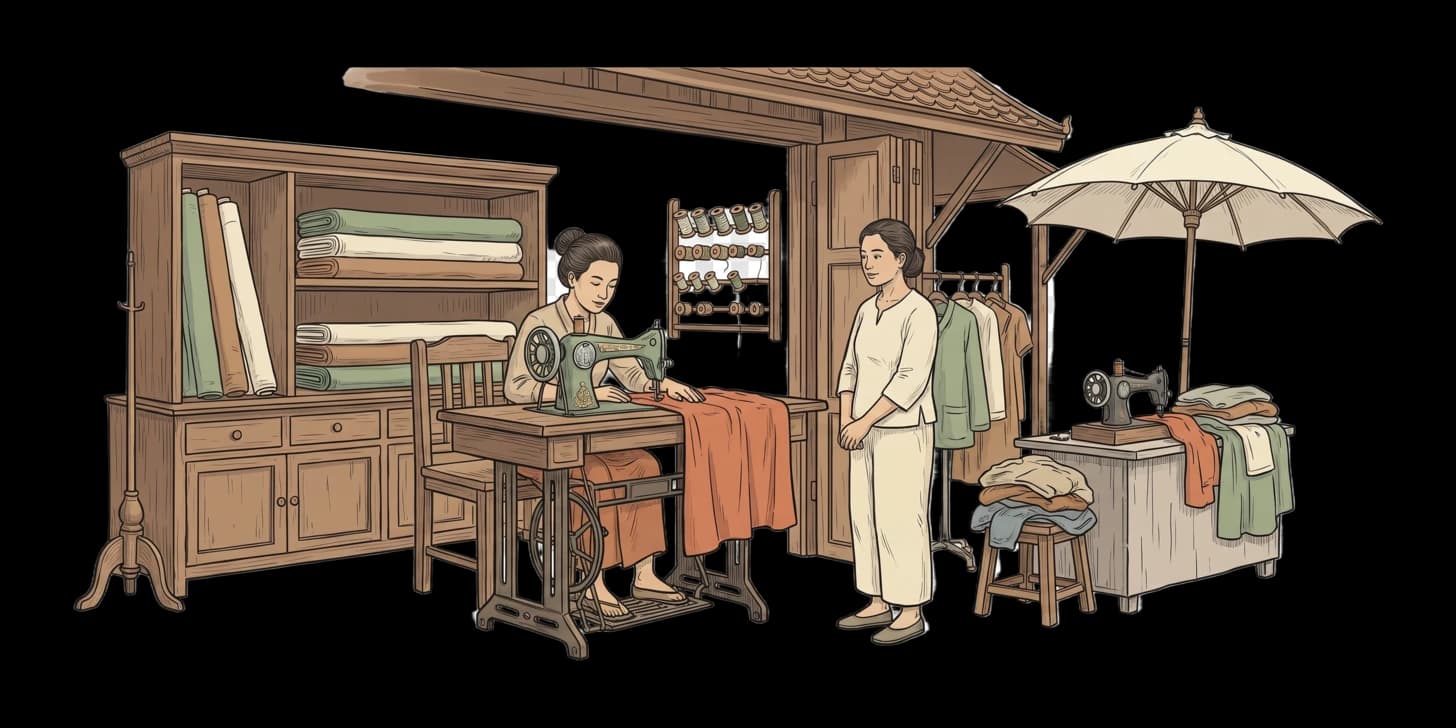
Now for the other world, which we'd argue is the more useful one for long-stayers. Thailand still has a genuine repair culture: neighbourhood seamstresses, often working at decades-old pedal machines, who treat a broken zip as a problem worth ten minutes rather than a reason to bin the garment. Hemming a pair of trousers typically costs 20–50 baht; replacing a zip or stitching up a torn backpack usually lands somewhere between 20 and 100 baht depending on the job. It is one of those small pleasures that keeps the cost of living here so gentle — and it quietly changes how you shop, because anything can be altered to fit and almost nothing is beyond saving.
Where to find a seamstress
You rarely need to look far. The densest concentration is in the lanes behind Warorot Market, where rows of stalls with sewing machines handle alterations while you wander. Beyond that, check the edges of any fresh market, the small shophouses along residential sois, and the streets near laundries — repair and washing tend to cluster together. Most stalls have no English sign; look for the machine, a rail of half-finished clothes, and a tin of spare buttons. Pointing at the problem is a perfectly good briefing. Simple jobs are often done on the spot or by the next day, which makes it painless to travel light and fix things here — a strategy we already push in our guide to what to pack.
Fabric shopping and having things made
If you'd rather start from the cloth, the fabric district around Warorot Market spreads across several blocks, from everyday cottons — often only 100–200 baht a metre — up to silks and handwoven pieces from the hill communities. It pairs beautifully with an interest in Lanna textiles if you want something with real local character. Dressmakers dotted around the city (and a few in the market itself) will then turn your fabric into clothes, usually within a few days. The most reliable trick: bring a garment that already fits you well and ask them to copy it. Measurements can lie; a beloved shirt never does.
Caring for what you've had made
Handmade clothes reward a little care, especially in a humid climate. Wash gently and air-dry — most local laundries do this by default anyway — and keep suits and dresses on proper hangers with room to breathe, because Chiang Mai's rainy season is enthusiastic about mould. Dry-clean tailoring rarely, brush it often, and when a seam eventually gives way, you already know the answer: it's a twenty-baht problem, not a tragedy.
Frequently asked questions
How long does a bespoke suit take in Chiang Mai?
Typically three to five days, with at least two fittings along the way. If a suit matters to you, plan for at least four days in town so the fittings never feel rushed — and be wary of 'one-day suit' offers, which skip the fittings that make tailoring worth paying for.
How much does a tailored suit cost in Chiang Mai?
As a rough benchmark, a made-to-measure two-piece suit runs around 6,000–12,000 baht, with the fabric doing most of the work on price. Dresses and shirts cost considerably less. Treat suspiciously cheap quotes as a red flag: a 'pure cashmere' suit for 4,000 baht is not cashmere.
How do I spot a good tailor in Chiang Mai?
Good tailors talk about cloth before price — fibre content, weight, lining, drape — insist on at least two fittings, and quote boringly realistic prices. Red flags include false urgency ('promotion ends today'), one-day suits, and shops that rely on drivers or touts to bring in customers for a commission.
Where can I get clothes repaired cheaply in Chiang Mai?
The densest concentration of seamstresses is in the lanes behind Warorot Market, but you'll also find them at the edges of fresh markets, in shophouses along residential sois, and near laundries. Hemming trousers typically costs 20–50 baht, and zip replacements or backpack repairs usually land between 20 and 100 baht.
Where do I buy fabric in Chiang Mai?
The fabric district around Warorot Market spreads across several blocks, from everyday cottons — often only 100–200 baht a metre — up to silks and handwoven hill-community textiles. Dressmakers around the city can then turn your fabric into clothes, usually within a few days.
Can a seamstress copy a garment I already own?
Yes, and it's the most reliable way to get a good fit: bring a garment that already fits you well and ask the dressmaker to copy it in your chosen fabric. Simple alteration jobs are often done on the spot or by the next day; made-from-scratch pieces usually take a few days.