Practical tips · June 29, 2026
What to Pack for Chiang Mai (and What to Leave at Home)
By The Ada House team
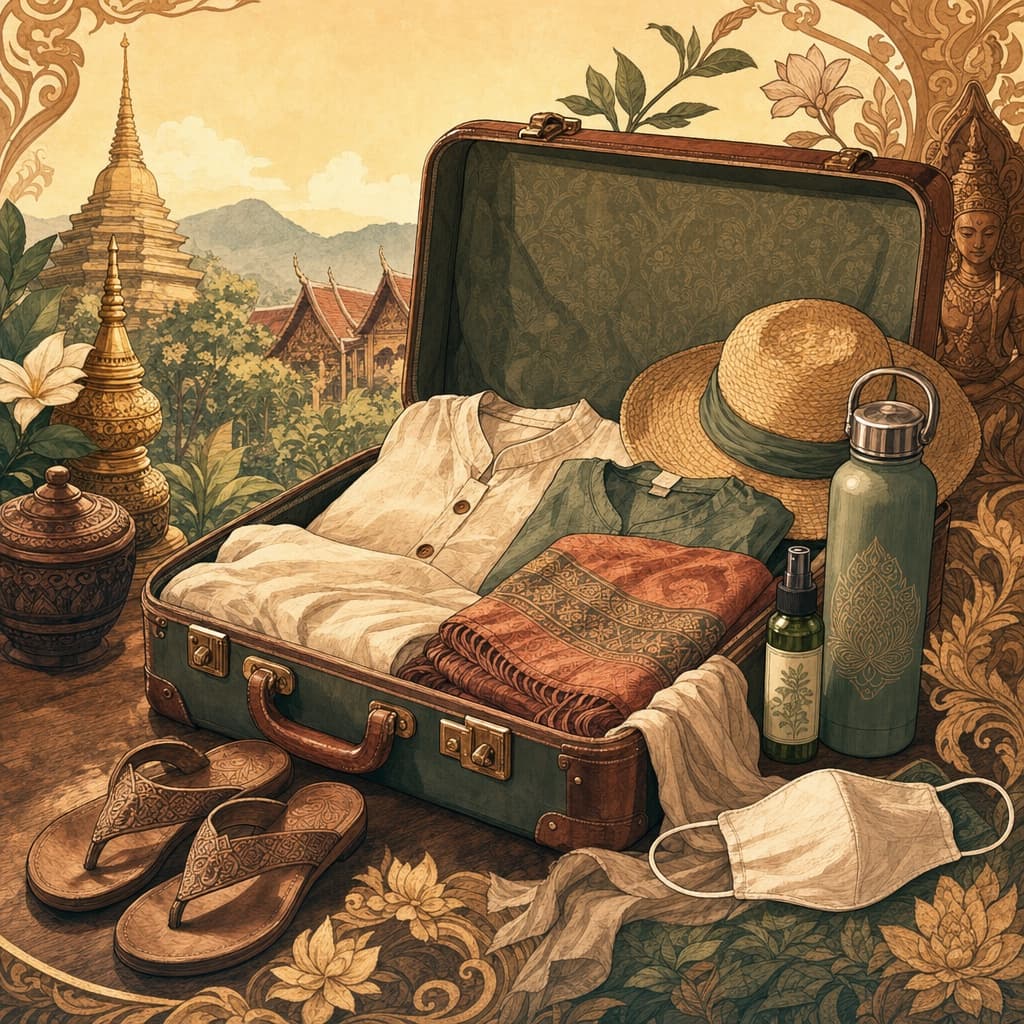
Half the messages we get before a long stay are a version of the same worry: what on earth do I pack? The honest answer is less than you think. Chiang Mai is a modern, friendly city with shopping malls, fresh markets, pharmacies and a 7-Eleven on what feels like every corner, so almost anything you forget can be bought within a day — usually for a fraction of what you'd pay at home. So pack light, leave room in the case, and bring the handful of things that are genuinely worth carrying. Here's how we'd do it.
You can buy almost everything here
Before you start stressing over a list, it helps to know how easy life is once you land. Toiletries, sunscreen, basic clothes, an umbrella, a phone charger, a cheap fan — all of it is here and inexpensive. The malls (Maya in Nimman, the Central stores) cover anything branded, the fresh markets and night bazaar handle cheap cotton clothes and sandals, and pharmacies are everywhere and well stocked. For the day-to-day, our guide to groceries and shopping in Chiang Mai shows just how little you need to bring from home. The rule of thumb: if it's bulky, cheap, or easily replaced, leave it.
Dress for the three seasons
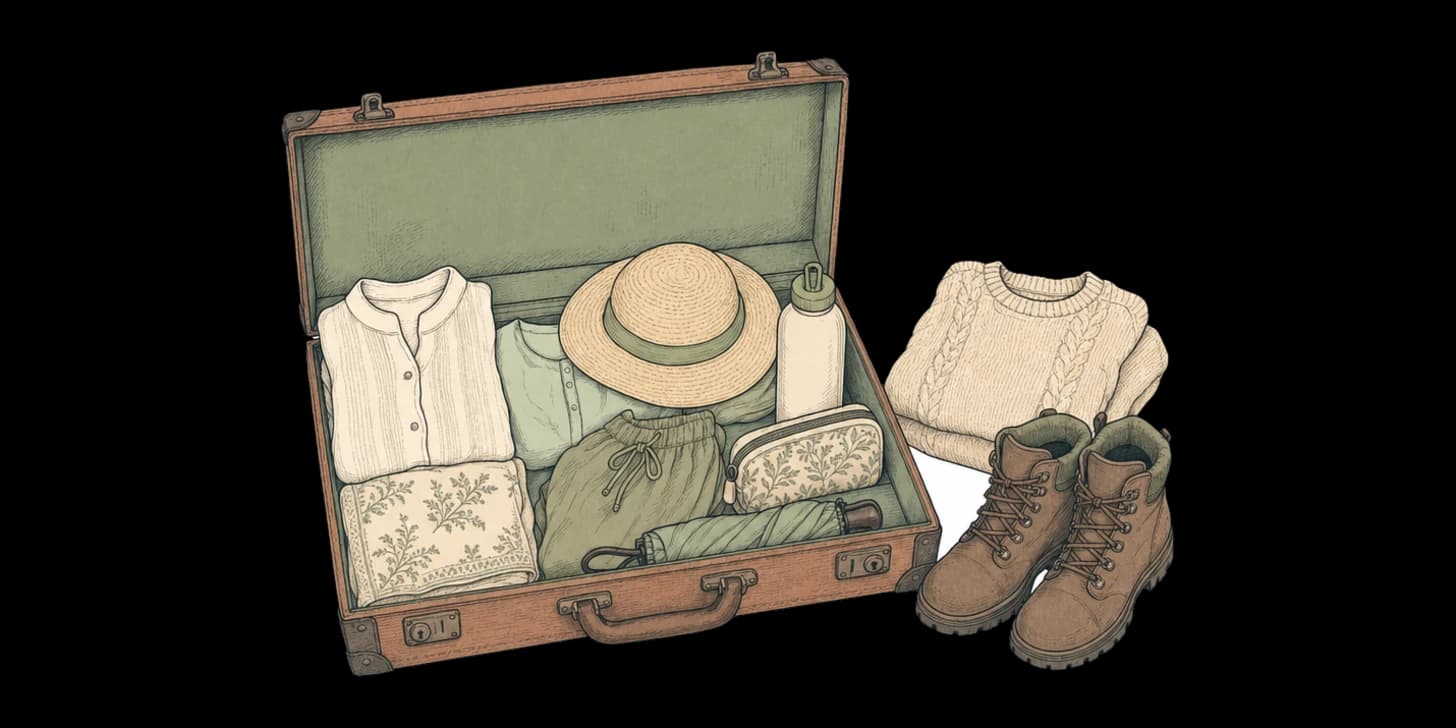
Chiang Mai has three distinct seasons, and what you pack depends a lot on when you're coming. The cool season (November to February) is the loveliest, but evenings can genuinely be chilly — especially up the mountains around Doi Suthep or on an early start to a viewpoint, where it can drop into single digits. Bring one light jumper or a long-sleeved layer and you'll be glad of it. The hot season (March to May) is exactly what it sounds like, with April topping 40°C, so breathable cotton and linen earn their place. The rainy season (June to October) brings warm, heavy downpours that usually pass within an hour — you rarely need a proper raincoat, just a light packable layer or, honestly, an umbrella you can buy here for a couple of pounds.
Temple-friendly clothes
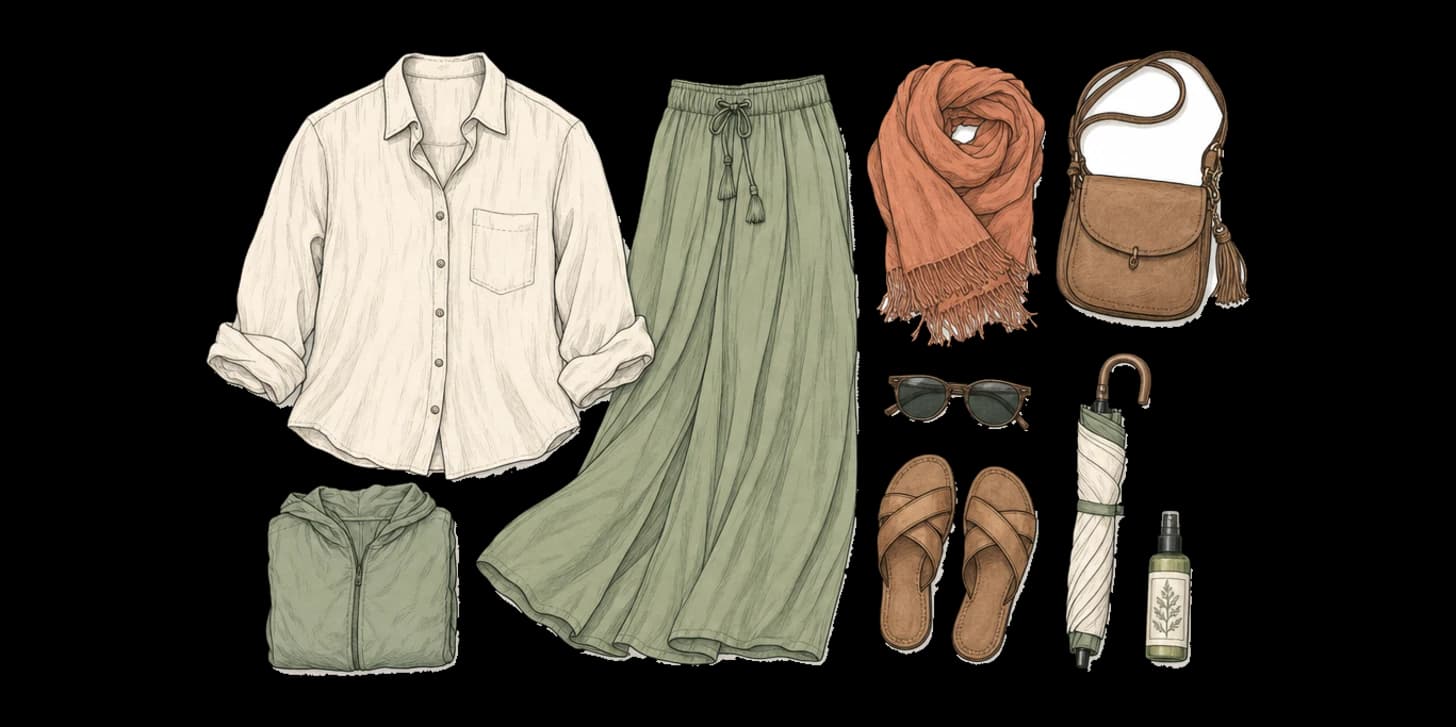
You'll almost certainly visit a few of the Old City's temples, and they have a modest dress code that's easy to respect once you're prepared. Shoulders and knees should be covered, so pack a couple of pieces that cover both — light trousers, a longer skirt, a top with actual sleeves. Slip-on shoes or easy sandals make a real difference, because you'll be taking them off at every temple entrance; fiddly laces get old fast. A light scarf or sarong is the single most useful thing you can carry: it drapes over bare shoulders, doubles as a knee cover, and folds away to nothing. Our notes on Thai etiquette for visitors cover the rest of the small courtesies.
Sun, rain and mosquitoes
The tropical sun is stronger than it feels through the haze, so a wide-brimmed hat, sunglasses and a high-SPF sunscreen are worth packing (sunscreen is sold everywhere here too, if you'd rather travel light). A good insect repellent is the one item we'd nudge you not to skimp on: mosquitoes are a fact of life and dengue is a real, if manageable, risk, so a DEET or picaridin spray is sensible — more on the realities in our guide to Chiang Mai's wildlife and bites. None of it is alarming; it's just the small, sensible kit that lets you stop thinking about it.
A few things for burning season
If you're here between roughly February and April, it's worth reading up on burning season before you pack. For a few weeks the air quality can dip, and while most people are fine, anyone with asthma, allergies or a young child will be more comfortable with a couple of N95 or KN95 masks tucked in the case. They're sold locally when the air turns, but shops sometimes sell out on the worst days, so a small supply from home is cheap insurance. An air purifier isn't worth packing — most good long-stay places, ours included, already have one.
Electronics and staying connected
Thailand runs on 220 V, and the sockets are hybrid type A, B and C, so European, Australian and US two-pin chargers usually plug straight in. UK travellers do need a simple plug adapter, but don't buy an expensive travel kit — pick one up at any 7-Eleven or hardware shop here for next to nothing. Your devices themselves are fine: nearly all modern phones and laptops handle 220 V, so you won't need a voltage converter. Worth bringing: a power bank for long temple days and an unlocked phone, so you can drop in a cheap local SIM with generous data the moment you land — it makes getting around the city far easier.
Your quick packing list
Keep it short and you'll thank yourself:
- Light, breathable clothes, plus one warm layer for cool-season evenings
- A couple of temple-modest outfits and a scarf or sarong
- Slip-on shoes or sandals, plus comfortable walking shoes
- Hat, sunglasses, high-SPF sunscreen and a good insect repellent
- An unlocked phone, a power bank and (for UK users) a plug adapter
- A small daypack and a reusable water bottle
- Any regular medication, with a copy of your prescription — and sort out travel insurance before you fly
And what to leave at home? Toiletries, a hairdryer, an umbrella, a heavy raincoat, and most of your clothes. They're all cheaper here, and a half-empty case on the way out is the surest sign you've packed Chiang Mai right.
Frequently asked questions
What should I actually pack for Chiang Mai?
Honestly, less than you think. Bring light, breathable clothes, a couple of temple-modest outfits with a scarf or sarong, slip-on shoes plus comfortable walking shoes, and your sun and mosquito kit. Add an unlocked phone, a power bank, any regular medication with a copy of your prescription, and leave plenty of room in the case, because almost anything you forget is cheap to buy once you land.
Do I need to bring warm clothes?
Just one. The cool season from November to February is lovely, but evenings can genuinely turn chilly, and up the mountains around Doi Suthep or on an early viewpoint start it can drop into single digits. One light jumper or a long-sleeved layer is all you need, and you will be glad of it.
What should I wear to visit the temples?
The Old City temples have a modest dress code that is easy to respect once you are prepared: shoulders and knees should be covered, so pack a couple of pieces that do both, like light trousers, a longer skirt or a top with actual sleeves. Slip-on shoes or easy sandals make a real difference, since you will be taking them off at every temple entrance. A light scarf or sarong is the single most useful thing to carry, as it drapes over bare shoulders, doubles as a knee cover and folds away to nothing.
Do I need a plug adapter for my devices?
Thailand runs on 220 V with hybrid type A, B and C sockets, so European, Australian and US two-pin chargers usually plug straight in. UK travellers do need a simple plug adapter, but please do not buy an expensive travel kit, as you can pick one up at any 7-Eleven or hardware shop here for next to nothing. Nearly all modern phones and laptops handle 220 V, so you will not need a voltage converter.
Do I need a mask for burning season?
If you are here roughly between February and April, it is worth tucking a couple of N95 or KN95 masks into the case. For a few weeks the air quality can dip, and while most people are fine, anyone with asthma, allergies or a young child will be more comfortable having them. Masks are sold locally when the air turns, but shops sometimes sell out on the worst days, so a small supply from home is cheap insurance. An air purifier is not worth packing, as most good long-stay places, ours included, already have one.
What can I just buy once I arrive?
Plenty, which is why we say pack light. Toiletries, sunscreen, basic clothes, an umbrella, a phone charger and a cheap fan are all here and inexpensive, with malls, fresh markets, the night bazaar and well-stocked pharmacies on hand. The rule of thumb is simple: if something is bulky, cheap or easily replaced, leave it at home. A half-empty case on the way out is the surest sign you have packed Chiang Mai right.