Food & coffee · June 28, 2026
Cha Yen, Oliang and the Blue One: A Guide to Thai Drinks
By The Ada House team
Order a drink in Chiang Mai and you quickly realise the choice runs far beyond a cold Chang or a flat white. Thailand has a whole everyday drinks culture of its own — sweet, icy and often startlingly colourful — sold from glass-fronted carts, motorbike sidecars and tiny old-school cafes for not much more than the change in your pocket. Once you know what to look for, a stroll past a row of market stalls turns into a tasting menu. Here are the classics worth knowing, what's actually in them, and how to order them the way you like.
The orange icon: cha yen
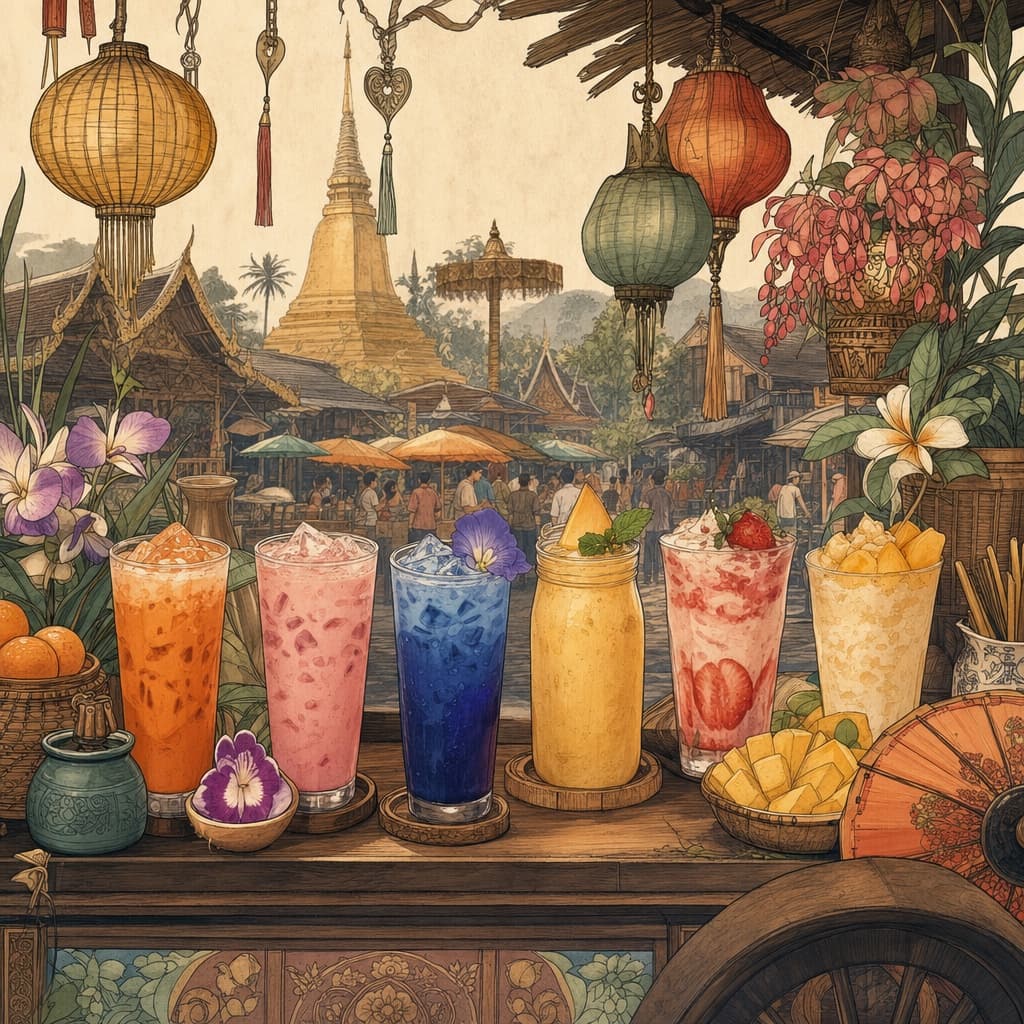
Cha yen (literally "cold tea") is the one you've almost certainly already spotted: a tall glass of sunset-orange tea over crushed ice, finished with a generous swirl of sweetened condensed and evaporated milk. The base is a strong black tea, brewed dark and sweet, then crowned with creamy milk that you stir in yourself, watching the colour soften from amber to peach. It is unapologetically dessert-adjacent — if you have a sweet tooth it sits happily alongside anything from a plate of mango sticky rice to a mid-afternoon slump. You'll find it everywhere, but the best versions come from carts that brew their tea fresh rather than ladling it from a vat.

Oliang: the old-school black coffee
Long before the third-wave roasters arrived, Thais were drinking oliang — a thick, jet-black iced coffee whose name comes from the Teochew Chinese for "black" and "cold". Traditionally the grounds are cut with a little roasted corn, soybean or sesame, brewed slowly through a long cloth sock filter, then poured over ice with a hit of sugar. The result is bittersweet, faintly smoky and bracingly strong — a world away from the meticulous single-origin pour-overs you'll find in the cafes around Nimman, and all the better for it. Look for a battered metal cart with that dangling cloth filter and you've found the real thing.
Pink milk, lime tea and green tea
A few siblings round out the cart. Nom yen ("cold milk") is the cheerful bright-pink one: milk sweetened with sala syrup, flavoured with the snakeskin fruit salak. It tastes of nothing in particular and everything nostalgic, and Thai kids adore it. Cha manao is iced lime tea — the same dark tea brewed without milk, then sharpened with fresh lime and sugar into something tangy and genuinely thirst-quenching on a hot afternoon. And Thai iced green tea is the jade-green, milky cousin of cha yen: sweet, creamy and a little grassy. Between them they cover most moods.
The herbal market coolers
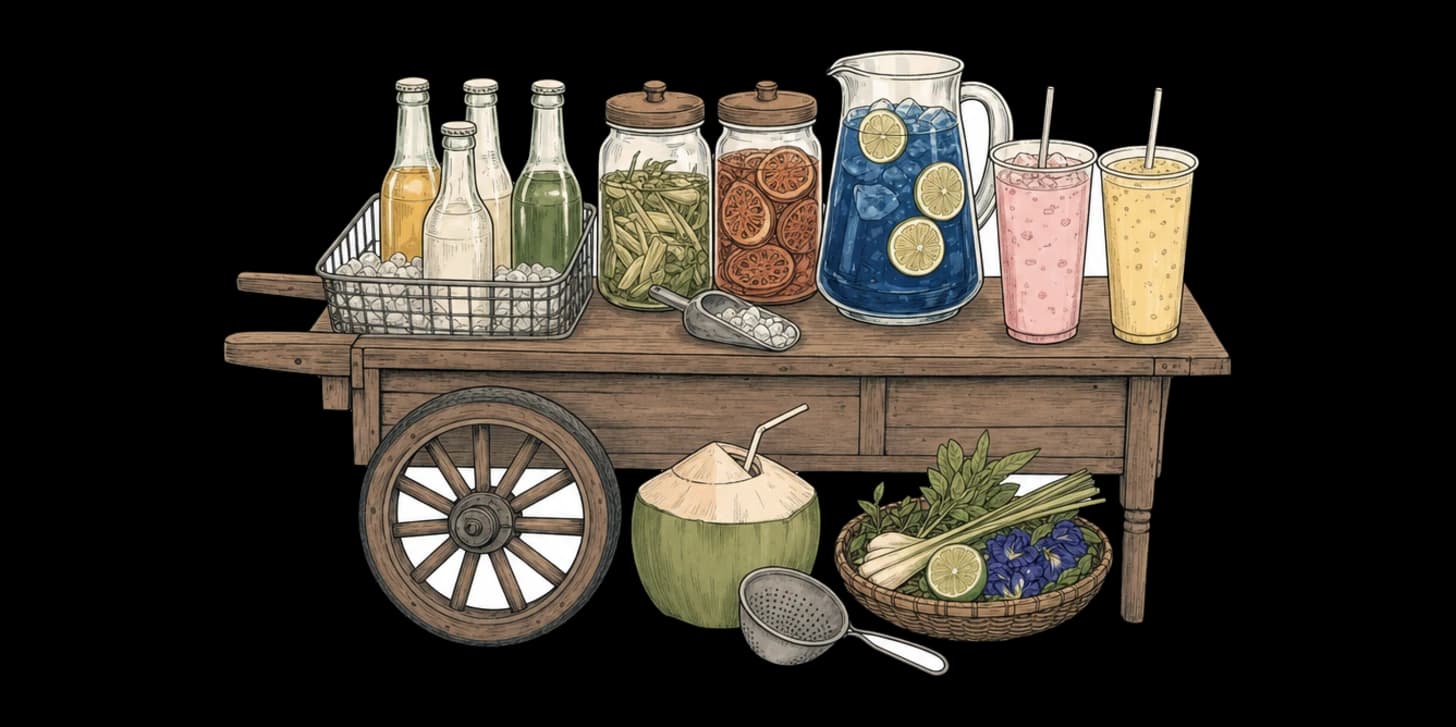
Now the rainbow. At any fresh market you'll meet rows of glass barrels and reused bottles filled with jewel-toned herbal drinks, brewed up at home and sold by the cup. Nam kek huai is golden chrysanthemum tea, floral and soothing; krachiap is roselle (hibiscus), a deep ruby red with a tart, cranberry-like bite; matoom is fragrant, mellow bael fruit, gently sweet and good for the stomach. The showstopper is anchan, butterfly-pea tea — a deep electric blue that turns violet the instant you squeeze in lime, which makes it a reliable crowd-pleaser. You'll also see cooling lemongrass (takrai) and sweet longan (lamyai). The barrels at Warorot Market and the weekend stalls at Jing Jai are a good place to work through the lot.
Fruit shakes and coconut water
The one word to learn here is pan (meaning "blended"). Point at a pile of fruit — mango, watermelon, passion fruit, pineapple — and the vendor will spin it with ice into a slushy shake on the spot. It's one of the cheapest, freshest treats in the city, and a fine way to make your way through Thailand's glorious fruit calendar. When the heat really bites, nothing beats a young coconut hacked open in front of you: cool, faintly sweet coconut water straight from the husk, with soft jelly to scoop out afterwards.
How to order it (less sweet) and where to find it
A quick word on sugar. Thai drinks are sweet by default — sometimes startlingly so — because that's how they're loved here. The magic phrase to soften the blow is wan noi (หวานน้อย), "a little sweet"; say it when you order and most vendors will happily ease off the condensed milk and syrup. Want none at all? Try mai wan, "not sweet". As for price, almost all of this is gloriously cheap — figure on roughly 20 to 60 baht a cup depending on the drink and the spot. You'll find these carts woven through the city's street-food stalls, parked outside markets and busiest at the night markets, where an icy cup of something colourful is the perfect thing to hold while you browse. Start with cha yen, be brave with anchan, and let the cart decide the rest.
Frequently asked questions
What is cha yen?
Cha yen, literally cold tea, is the tall glass of sunset-orange tea over crushed ice you've almost certainly already spotted. The base is a strong black tea brewed dark and sweet, then crowned with a swirl of sweetened condensed and evaporated milk that you stir in yourself. It's unapologetically dessert-adjacent, and the best versions come from carts that brew their tea fresh.
How do I order Thai drinks less sweet?
Thai drinks are sweet by default because that's how they're loved here. The magic phrase is wan noi (a little sweet) — say it when you order and most vendors will happily ease off the condensed milk and syrup. Want none at all? Try mai wan, meaning not sweet.
What's the bright blue drink?
That's anchan, butterfly-pea tea — a deep electric blue that turns violet the instant you squeeze in lime, which makes it a reliable crowd-pleaser. You'll find it among the herbal market coolers alongside golden chrysanthemum tea, ruby-red roselle and mellow bael fruit. Be brave and give it a try.
What is oliang?
Oliang is the old-school Thai iced coffee — thick and jet-black, its name from the Teochew Chinese for black and cold. The grounds are traditionally cut with a little roasted corn, soybean or sesame, brewed slowly through a long cloth sock filter, then poured over ice with sugar. The result is bittersweet, faintly smoky and bracingly strong. Look for a battered metal cart with a dangling cloth filter.
How much do these drinks cost and where do I find them?
Almost all of it is gloriously cheap — figure on roughly 20 to 60 baht a cup depending on the drink and the spot. You'll find the carts woven through the street-food stalls, parked outside markets, and busiest at the night markets. The barrels at Warorot Market and the weekend stalls at Jing Jai are a good place to work through the herbal coolers.
Can I get fresh fruit shakes?
Yes — the word to learn is pan, meaning blended. Point at a pile of fruit like mango, watermelon, passion fruit or pineapple and the vendor will spin it with ice into a slushy shake on the spot. It's one of the cheapest, freshest treats in the city, and when the heat really bites, a young coconut hacked open in front of you is hard to beat.