Local culture · June 27, 2026
Thai Superstitions: A Newcomer's Friendly Field Guide to Luck, Ghosts and Good Timing
By The Ada House team
Move to Chiang Mai for more than a holiday and you'll soon notice that daily life hums with quiet rules nobody printed in a guidebook. A barber waves you off on the wrong day; a friend hushes your cheerful whistle after dark; someone reads meaning into a lizard's chirp. None of this is meant to spook you. These are Thailand's beloved superstitions, and many people genuinely live by them, with a wink, a shrug or real devotion. Here at the Ada House team, we've grown fond of every one. So here's our friendly field guide.
Luck, Numbers and the Itch of Incoming Money
Numbers carry weight here, and the number 9 is the brightest star of all. In Thai, nine is gao, which echoes a word meaning to move forward, to progress. So you'll spot 9s clustered on number plates, phone numbers and chosen wedding dates, all quietly inviting good fortune. The flip side is that some numbers feel heavy, and you may notice a hotel or building skip a floor or a table without much fuss.
Closer to home, watch your hands. An itchy palm means money is on its way, a small daily delight that makes even a mosquito bite feel promising. We won't promise the universe pays out, but it's a lovely way to greet a Tuesday.
Ghosts, Whistles and the Long Thai Night
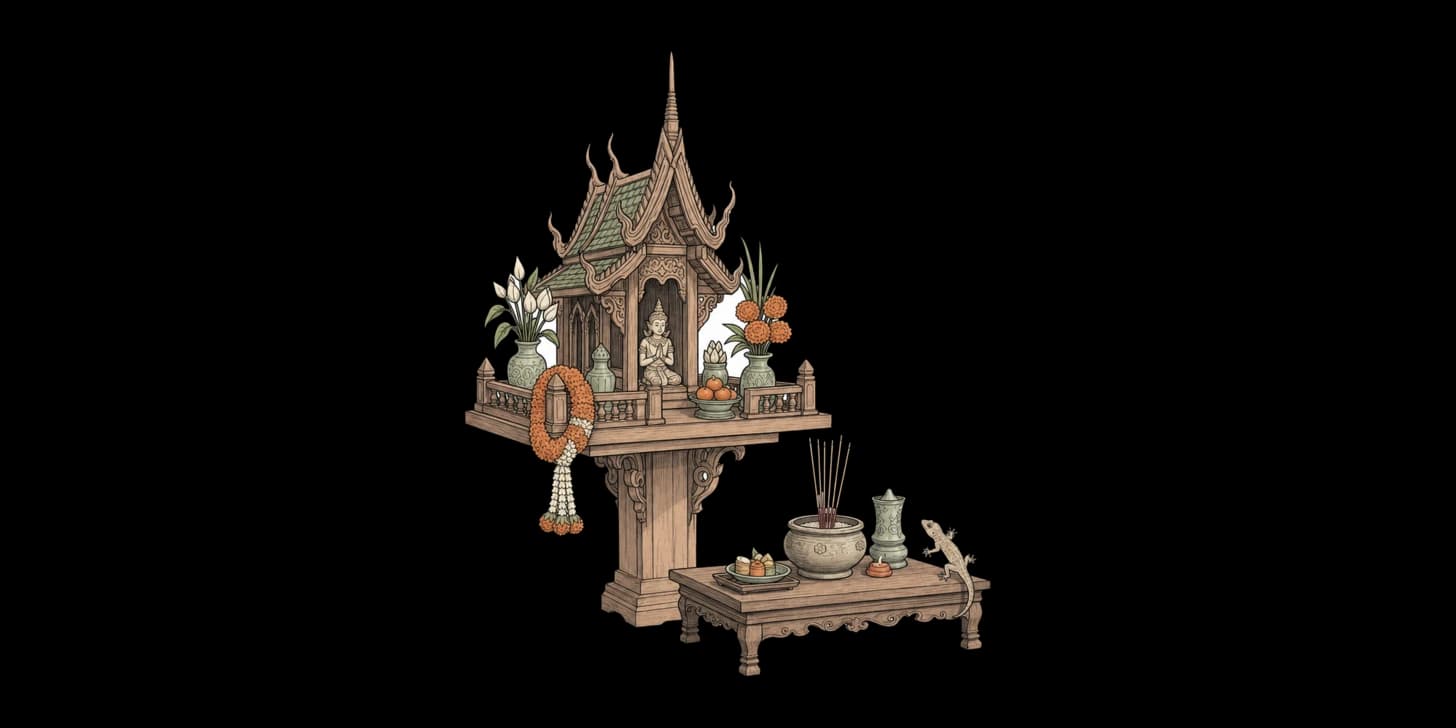
After sunset, the mood shifts. Thailand has a rich, affectionate relationship with spirits, the phi, who are felt to share the world rather than haunt it, which is exactly why so many homes keep a little spirit house in the garden to give them a welcome of their own. A few gentle night-time customs follow naturally.
The most famous: don't whistle at night, as the sound is said to call wandering spirits, and in older tellings, snakes, to your door. You'll also hear that if someone calls your name from outside in the dark, you shouldn't answer too quickly, because folktales warn of spirits borrowing familiar voices to coax people out. And never sweep the house at night, as you risk sweeping your good fortune straight out with the dust; daylight is the time for tidying, especially soon after a funeral.
The Body and Its Good Manners
Some beliefs live right on your own person. Cutting your hair on a Wednesday is unlucky, a tradition once tied to royalty, so don't be surprised if a barber happily trims your beard but politely declines the haircut until Thursday. In the same spirit, cutting your nails at night is best avoided, a habit that blends old superstition with the very sensible memory of doing it by candlelight.
The body also speaks in social ways. Feet are considered the lowest, least clean part of you, so pointing your feet at people, doorways or a Buddha image is a real misstep, just as the head is the most sacred and shouldn't be casually touched. These overlap warmly with broader Thai etiquette for visitors, and a little awareness goes a long way. One charming household rule we adore: don't leave a broom propped upright or step over it, lest you invite bad luck or, the grandmothers say, a lifetime of being unlucky in love.
Omens, Animals and the Wisdom of the Gecko
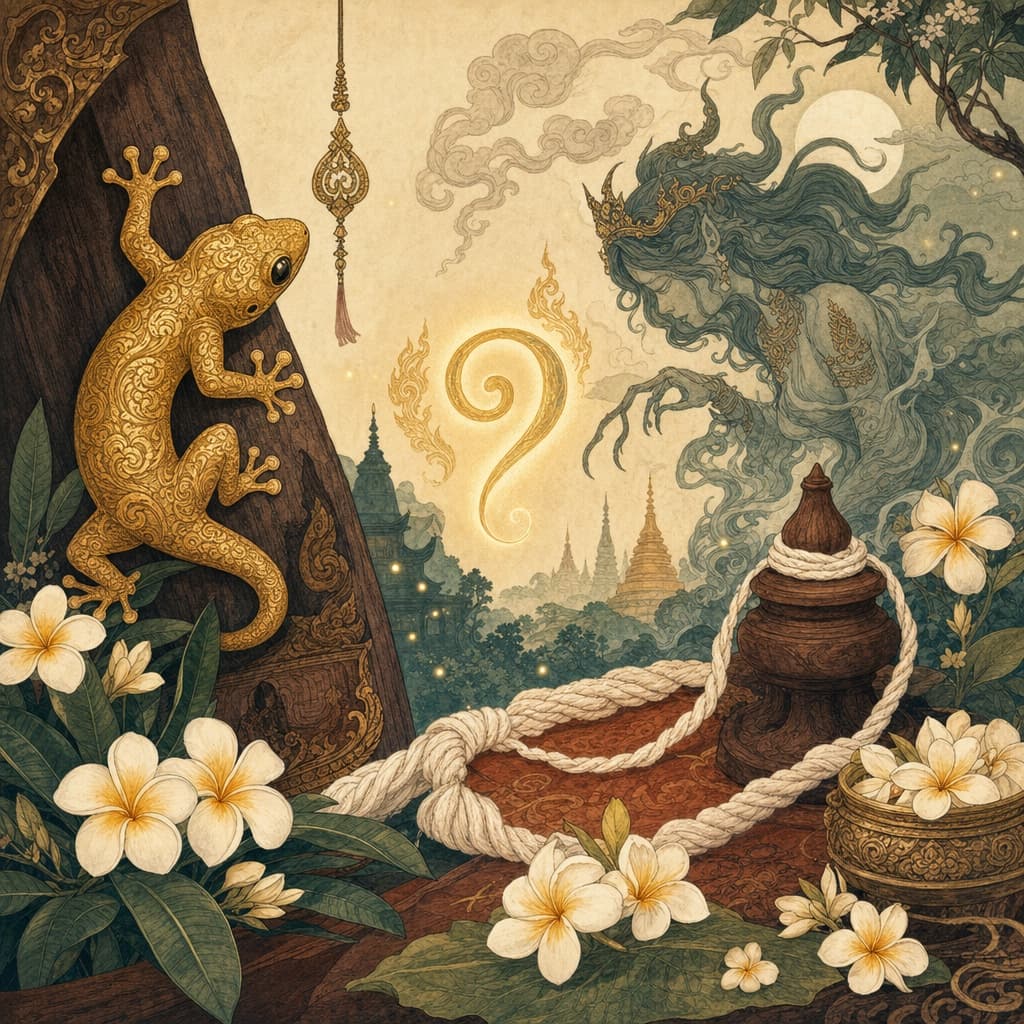
Thai homes share their walls with the jingjok, a small, chirping house lizard, and locals listen closely. When the gecko calls just as you're heading out the door, it's an omen worth a pause. Tradition can't quite agree whether a call from the right is a blessing or a warning, and regions happily disagree, but the shared idea is sweet: the house itself is gently weighing in on your day. Other creatures carry messages too, and a snake crossing your path or a bird behaving oddly may all be read as little notes from the world.
Auspicious Timing and the Blessing of the String
For anything that truly matters, a wedding, a new business, a big move, timing is everything. Many Thais consult a monk, an astrologer or the lunar almanac to find an auspicious day and sidestep an unlucky one, so a couple may marry on a date chosen by the stars rather than the calendar's convenience.
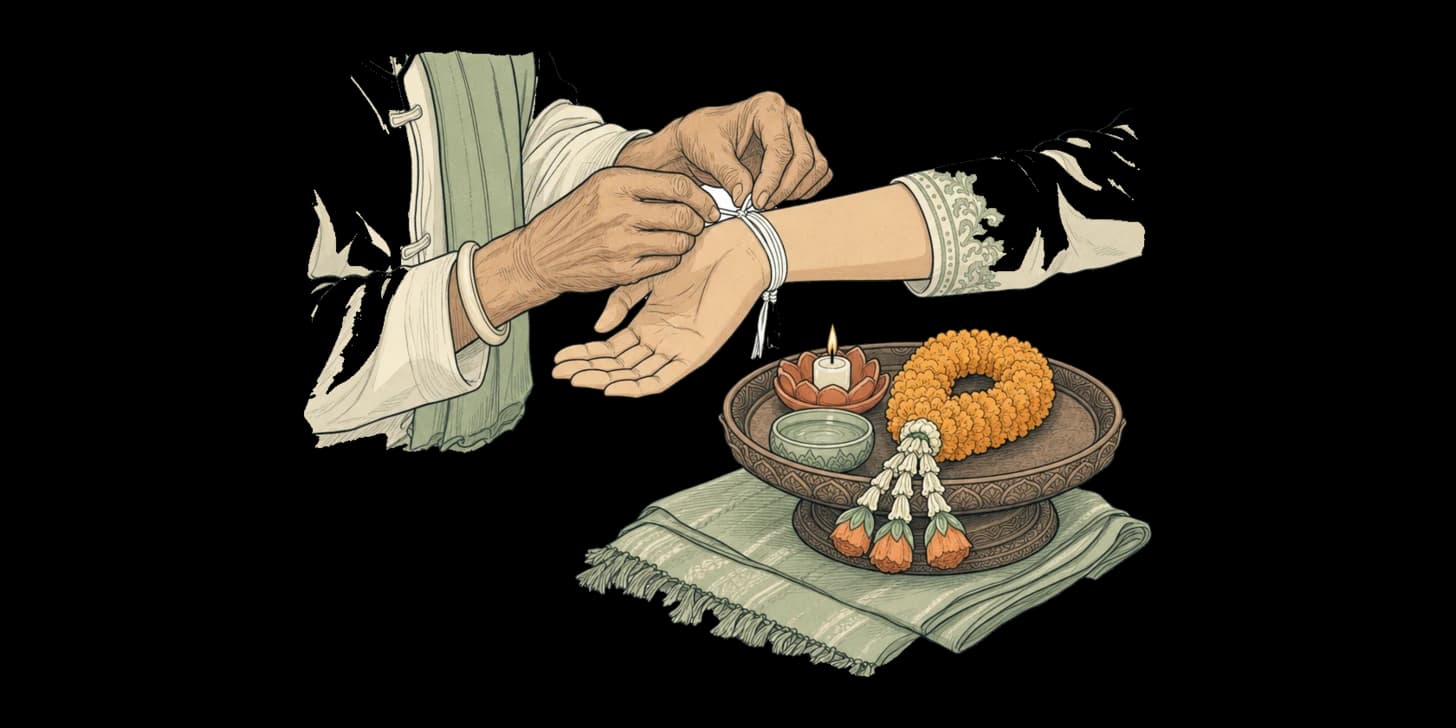
You'll feel this most at ceremonies, where elders tie a loop of blessed white cotton, the sai sin, around your wrist. Leave it on for at least three days; it carries protection and goodwill, and it's bad form to yank it off. The same instinct for protection draws people to sacred amulets blessed by Chiang Mai's monks, worn close for luck, safety and a steady heart.
Some carry that protection deeper still, in the form of sak yant — the sacred tattoos hand-tapped by monks and ajarns, every line of them a prayer in ink.
Playing Along, Gently and Gladly
You needn't believe a word of it to take part, and joining in is one of the warmest ways to feel at home. Wear the sai sin proudly. Save the haircut for Thursday. Let your whistle rest after dark, and smile at the gecko on your way out. Superstition here isn't fear; it's a soft, generous way of staying connected to family, ancestors and good fortune.
Come stay with us, listen for the lizard, and let Chiang Mai charm you the old-fashioned way.
Frequently asked questions
Why is the number 9 considered lucky?
In Thai, nine is gao, which echoes a word meaning to move forward or to progress, so you'll spot 9s clustered on number plates, phone numbers and chosen wedding dates, all quietly inviting good fortune. Some numbers feel heavy by contrast, and a hotel or building may skip a floor without much fuss.
Is it true you shouldn't whistle at night?
Yes, that's one of the most famous customs, as the sound is said to call wandering spirits, and in older tellings snakes, to your door. You'll also hear that you shouldn't answer too quickly if someone calls your name from outside in the dark, and that you should never sweep the house at night lest you sweep your good fortune out with the dust.
Why might a barber refuse to cut my hair on a Wednesday?
Cutting your hair on a Wednesday is considered unlucky, a tradition once tied to royalty, so don't be surprised if a barber happily trims your beard but politely declines the haircut until Thursday. In the same spirit, cutting your nails at night is best avoided.
What does it mean if a gecko calls as I leave the house?
Thai homes share their walls with the jingjok, a small chirping house lizard, and a call just as you're heading out the door is treated as an omen worth a pause. Tradition can't quite agree whether a call from the right is a blessing or a warning, but the shared idea is that the house itself is gently weighing in on your day.
What is the sai sin string?
At ceremonies, elders tie a loop of blessed white cotton, the sai sin, around your wrist. It carries protection and goodwill, so leave it on for at least three days, and it's considered bad form to yank it off.
Why do Thais consult someone for an auspicious date?
For anything that truly matters, like a wedding, a new business or a big move, timing is everything. Many Thais consult a monk, an astrologer or the lunar almanac to find an auspicious day and sidestep an unlucky one, so a couple may marry on a date chosen by the stars rather than the calendar's convenience.