Move here · June 29, 2026
A Guide to Chiang Mai's Neighbourhoods: Where to Live
By The Ada House team
One of the nicest things about Chiang Mai is how much it changes from one street to the next. Cross the moat, ride ten minutes north, or head out towards the mountains, and the pace, the price and the whole texture of daily life shift with you. When you're here for a week, the area barely matters. When you're staying for months, it's the single biggest decision you'll make — bigger, honestly, than the flat itself. So here's our candid take on the main neighbourhoods: who each one suits, the vibe, the rough rent feel, and the trade-offs nobody mentions until you've signed a lease.
Nimman: cafés, coworking and an easy landing
If you've read anything about remote work in Thailand, you've read about Nimman (Nimmanhaemin). It's the most walkable corner of the city and the unofficial home of the nomad crowd: speciality coffee on every block, fast wifi as standard, and a coworking space within a few minutes of wherever you land. The flip side is price — Nimman commands the highest rents in town, studios get snapped up quickly, and landlords increasingly want a year's commitment. It suits you if convenience and community matter more than square metres, and if a good flat white feels like an essential rather than a treat. We've a whole guide to the coffee around Nimman if that's your weakness.
The Old City: temples, the moat and a central base
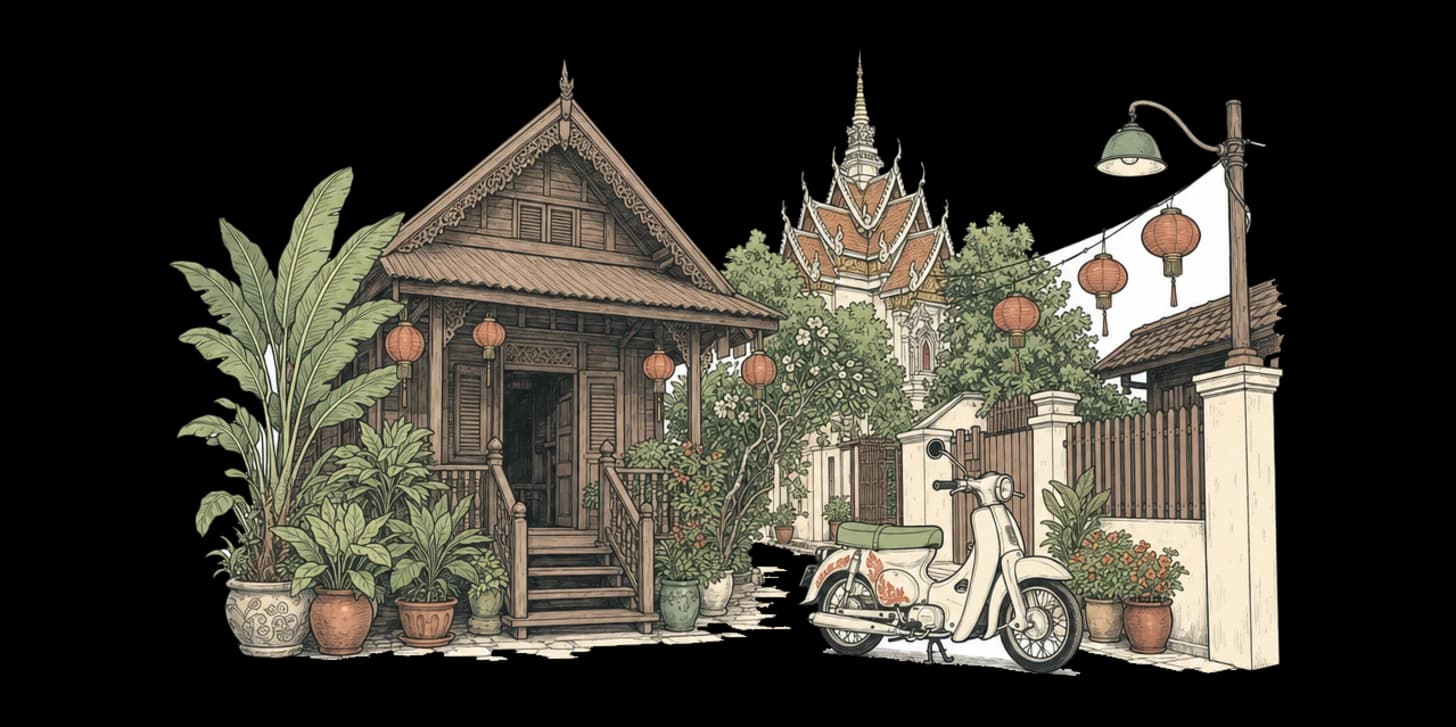
Just east of Nimman, the Old City sits inside the square moat — the historic heart, dense with temples and Lanna history. Living here means waking to monks chanting, cycling past 700-year-old chedis, and being walkable to markets and the weekend walking streets. It's central, charming and well-connected, with a mix of guesthouses, older apartment blocks and a few smarter condos. Rents sit a notch below Nimman. The trade-offs: traffic snarls at the gates, building heights are capped so there are no glossy high-rises, and the most photographed lanes can feel busy. It suits people who fell for the romance of the place and want to live right inside it.
Santitham: local life, a short ride from everything
Tuck yourself just north of Nimman and you reach Santitham — where a lot of nomads quietly move after their first month. This is ordinary Thai neighbourhood life: morning food stalls, family-run shops, small night markets, and apartment buildings made for residents rather than holidaymakers. Rents are meaningfully lower than Nimman for similar flats, which makes it some of the best value in the city; our cost-of-living guide sets out the wider picture. You're still a ten-minute scooter ride from Nimman's cafés, so you give up very little. The trade-off is polish — fewer English menus, plainer buildings — but you'll be living in the real city. It suits budget-minded long-stayers who don't mind navigating in a bit of Thai.
The Riverside: leafy, calm and a little slower
Over towards the Ping River — the Wat Ket and Charoenrat side especially — everything slows down. This was Chiang Mai's original expat quarter, and it still has a gentle, leafy, arty feel: old teak shophouses, riverside cafés, galleries and a handful of well-kept condos with actual views. It's greener and calmer than anywhere central, and a lovely antidote if Nimman starts to feel over-caffeinated. The catch is that you'll lean on a scooter to get around, and the truly walkable cluster is small. It suits couples, families and anyone after a quieter, more settled rhythm without leaving the city behind.

Hang Dong and Mae Hia: space, gardens and the mountains
Head south and the city loosens into suburbs. Hang Dong and Mae Hia are where you go for room to breathe — houses with gardens, gated estates, and the lowest rents in the area, often a whole home for the price of a Nimman studio. You're near Doi Suthep's foothills, international schools and big shopping centres. A scooter or car is non-negotiable here; without one you'll feel stranded. It suits families, remote workers who want a proper home office, and anyone happy to swap walkable cafés for space and quiet. One honest note: the southern and rural fringes tend to feel the smoke more during burning season, so weigh that in.
Chang Khlan and the Night Bazaar: better to visit than to live
Between the Old City and the river sits Chang Khlan, home to the famous Night Bazaar. It's lively and well-placed, thick with hotels and serviced condos, and perfectly fine for a short stay. For actually living, though, most long-termers find it too touristy — pricier than its charm warrants, noisy after dark, and thin on everyday local life. We'd come for the markets rather than rent here, unless you genuinely love the buzz.
So, where should you live?
Honestly? Don't overthink the first month. Most people we know booked somewhere central and walkable to begin with — usually Nimman or the Old City — then moved once they'd found their own rhythm. If you're weighing up places, our guides to finding accommodation and the practicalities of renting will save you some pain. The right neighbourhood isn't the one with the best reputation; it's the one whose daily rhythm matches the life you actually want here. Come and walk a few — you'll feel it surprisingly quickly.
Frequently asked questions
Which neighbourhood is best for digital nomads?
Nimman (Nimmanhaemin) is the unofficial home of the nomad crowd, with speciality coffee on every block, fast wifi as standard and a coworking space within a few minutes of wherever you land. It is the most walkable corner of the city, so it suits you if convenience and community matter more than square metres. The catch is price, as Nimman commands the highest rents in town and landlords increasingly want a year's commitment.
Where is the best value for a longer stay?
Santitham, just north of Nimman, is some of the best value in the city, with rents meaningfully lower than Nimman for similar flats. It is where a lot of nomads quietly move after their first month, since you are still only a ten-minute scooter ride from Nimman's cafés and give up very little. You trade a bit of polish, with fewer English menus and plainer buildings, but you will be living in the real city. For even more space, Hang Dong and Mae Hia offer the lowest rents around, often a whole home for the price of a Nimman studio.
Which area is the most walkable?
Nimman is the most walkable corner of the city, with cafés, coworking and just about everything else a few minutes from your door. The Old City is the other genuinely central, well-connected base, where you can walk to markets and the weekend walking streets. Beyond those two, the truly walkable clusters get small quickly, so most other areas lean on a scooter.
Do I really need a scooter?
It depends entirely on where you settle. In Nimman or the Old City you can happily walk, but over by the Ping River the walkable cluster is small and you will lean on a scooter to get around. Out in the southern suburbs of Hang Dong and Mae Hia a scooter or car is non-negotiable, and without one you will feel stranded.
Which neighbourhood is quietest for couples or families?
The Riverside, especially the Wat Ket and Charoenrat side, has a gentle, leafy, arty feel that is greener and calmer than anywhere central. It suits couples, families and anyone after a more settled rhythm without leaving the city behind. For room to breathe with gardens and gated estates, Hang Dong and Mae Hia in the south are worth a look too, though do weigh up that the rural fringes tend to feel the smoke more during burning season.
Where should we live for our first month?
Honestly, do not overthink it. Most people we know booked somewhere central and walkable to begin with, usually Nimman or the Old City, then moved once they had found their own rhythm. The right neighbourhood is not the one with the best reputation; it is the one whose daily rhythm matches the life you actually want here.