Move here · June 24, 2026
Coworking spaces in Chiang Mai: where nomads get work done
By The Ada House team
Chiang Mai has been near the top of every digital nomad's shortlist for over a decade, and a big part of why is the work infrastructure. Fast internet, cheap coffee, and a deep bench of coworking spaces mean you can land here and be productive by your second morning. The hard part isn't finding somewhere to work — it's choosing.
Why Chiang Mai is a coworking mecca
The city runs on a virtuous loop: cheap rent and a steady stream of remote workers keep new spaces opening, and the competition keeps quality high and prices low. You'll find everything from no-frills desk farms to polished offices with phone booths and barista bars. Just as importantly, the internet is genuinely good — fibre is widespread, and most serious spaces run backup connections so a thunderstorm doesn't kill your video call. Pair a space with a local SIM and a data plan and you've got redundancy most home offices would envy.
The main areas
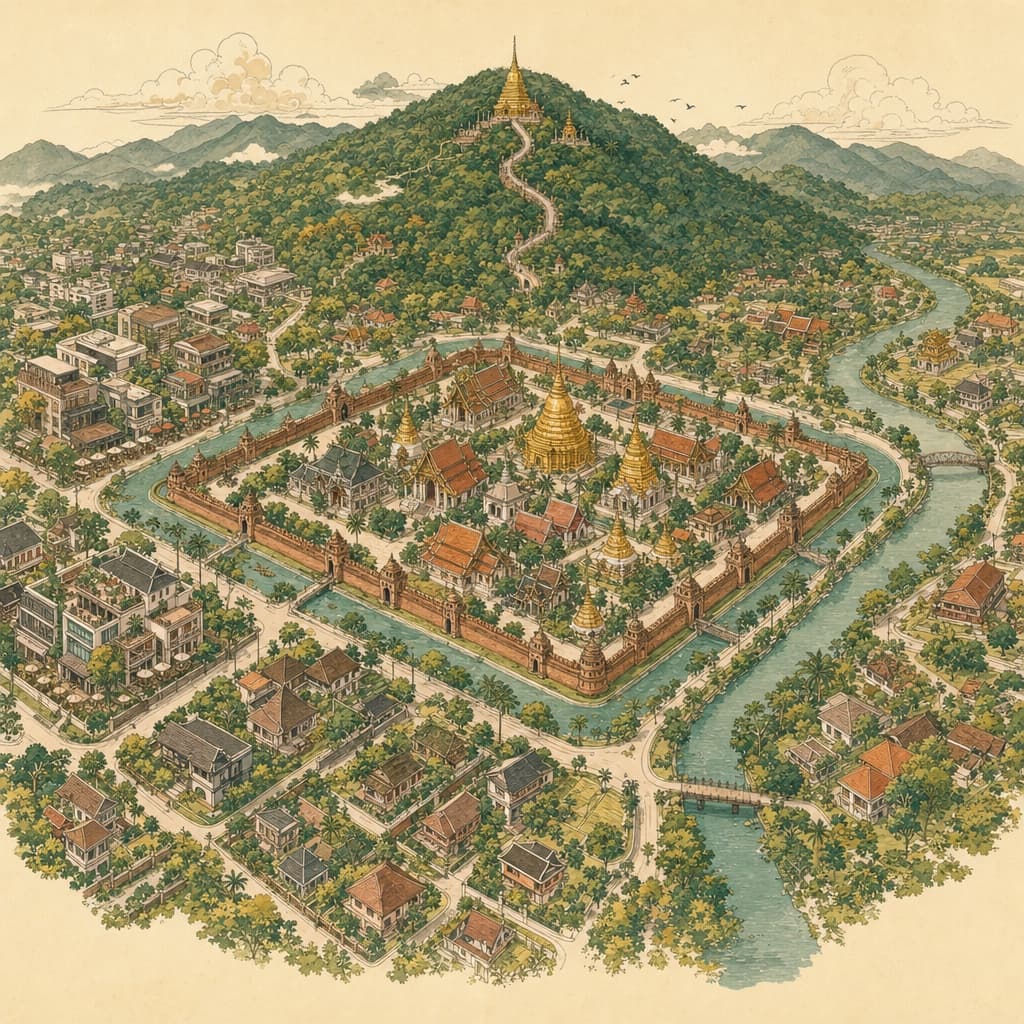
Nimman (Nimmanhaemin) is the undisputed hub — a leafy grid of cafés, condos and coworking just west of the old city, where most nomads end up basing themselves. It's walkable, well-caffeinated, and dense with options, which is why so many people who are settling in start their search here.
The old city, inside the moat, suits anyone who wants temples and street food on their lunch break. And Santitham, the scruffier neighbourhood just north of Nimman, is where budget-minded long-stayers cluster — cheaper rooms, local markets, and a few quieter spaces.
The spaces worth knowing
Punspace is the original, open since 2013, with branches at Tha Phae Gate (old city), Wiang Kaew and Nimman. A monthly pass gets you fingerprint-secured 24-hour access across locations, plus regular community events — day passes run roughly 250–350 THB. Yellow sits in the thick of Nimman and is a perennial favourite for its bright, social feel, though it sits at the pricier end. Hub53, also on Nimmanhaemin, has the most corporate polish: proper meeting rooms, phone booths, a reception desk, and one of the better-value day passes in town.
For something more design-led, Alt_Chiang Mai pitches itself as the premium option — quiet, comfortable, and priced to match at around 4,000 THB a month. Mana, Heartwork and Santitham's smaller hideaways round out the spectrum if you want calm over buzz. And then there's CAMP on the fifth floor of Maya mall: open 24 hours, free to sit in, with a buy-a-drink wifi model (a 50-baht order gets you online). It's enormous, social, and the default late-night and weekend backup when everywhere else has locked up — just take the side lift when the mall is shut.
As a rule of thumb, expect day passes around 150–300 THB and monthly hot-desk memberships in the 2,000–4,000 THB range. When you compare, look past the desk: reliable backup wifi, strong air-con, a bookable meeting room, 24-hour entry, decent coffee, and an events calendar are what separate a space you tolerate from one you look forward to. For a sense of how this slots into your overall budget, our cost of living guide puts the numbers in context.
Cafés, and the honest trade-offs
There's a middle ground worth naming. Chiang Mai's café scene is so strong that plenty of people skip memberships entirely and rotate between work-friendly cafés, nursing a 60-baht latte instead of paying a day rate. It's cheaper and flexible — but you trade away the reliable wifi, the dedicated chair, the air-con you can't argue with, and crucially the community. Coworking's real dividend isn't the desk; it's the people. The lunch invitations, the skill-shares, the "what visa run are you doing?" chats — that's how a lot of nomads end up making friends here, and it's the same warmth we try to build into life at the house. If you're arriving on your own, a coworking space is one of the easiest first footholds — something we go into more in our honest guide to solo female travel in Chiang Mai.
Our honest take: if you're here for more than a couple of weeks, buy a monthly pass at one space you like and keep a café or two in rotation for variety. You get the focus and the social safety net without feeling tied to a single room.
Wherever you plug in, you'll quickly notice that working in Chiang Mai rarely feels like work in the grim sense. Close the laptop and a night market, a mountain temple, or a bowl of khao soi is ten minutes away — which is, after all, why you came.
Frequently asked questions
Which are the best coworking spaces in Chiang Mai?
A few names come up again and again. Punspace is the original, open since 2013, with branches at Tha Phae Gate, Wiang Kaew and Nimman, plus fingerprint-secured 24-hour access and community events. Yellow is a perennial Nimman favourite for its bright, social feel, Hub53 brings the most corporate polish with proper meeting rooms and phone booths, and Alt_Chiang Mai is the premium, design-led pick if you want calm and comfort.
How much does a coworking space cost — day pass or monthly?
As a rule of thumb, expect day passes around 150 to 300 THB and monthly hot-desk memberships in the 2,000 to 4,000 THB range. Punspace day passes run roughly 250 to 350 THB, while a premium space like Alt_Chiang Mai sits at around 4,000 THB a month. If you are here for more than a couple of weeks, a monthly pass at one space usually works out better than paying a day rate over and over.
Should I use cafes instead of paying for a coworking space?
It is a genuine middle ground, and plenty of people do exactly that — Chiang Mai's cafe scene is strong enough to rotate between work-friendly spots, nursing a 60-baht latte instead of paying a day rate. It is cheaper and more flexible, but you trade away the reliable wifi, the dedicated chair, the air-con you can't argue with, and crucially the community. Our honest take is to buy a monthly pass at one space you like and keep a cafe or two in rotation for variety.
Which area of Chiang Mai should I base myself in for work?
Nimman (Nimmanhaemin) is the undisputed hub — a leafy grid of cafes, condos and coworking just west of the old city, where most nomads end up basing themselves. The old city, inside the moat, suits anyone who wants temples and street food on their lunch break, while Santitham just north of Nimman is where budget-minded long-stayers cluster for cheaper rooms and local markets. Most people start their search in Nimman because it is walkable, well-caffeinated and dense with options.
Is there a free place to work late at night or at the weekend?
Yes — CAMP, on the fifth floor of Maya mall, is open 24 hours and free to sit in, with a buy-a-drink wifi model where a 50-baht order gets you online. It is enormous and social, and it is the default late-night and weekend backup when everywhere else has locked up. Just take the side lift when the mall itself is shut.
Is the internet in Chiang Mai's coworking spaces actually reliable?
It genuinely is — fibre is widespread, and most serious spaces run backup connections so a thunderstorm doesn't kill your video call. When you compare spaces, look past the desk to things like reliable backup wifi, strong air-con and 24-hour entry. Pair a space with a local SIM and data plan and you'll have redundancy most home offices would envy.