
Health & wellness · July 4, 2026
Annual health check-ups in Chiang Mai: how the packages work
By The Ada House team
Every year, a quiet stream of travellers and long-stay expats books a morning at one of Chiang Mai's private hospitals — not because anything is wrong, but precisely to check that nothing is. The annual check-up has become one of the city's most practical rituals: a fasted morning, a couple of hours drifting between stations in a hospital gown, and a doctor talking you through your numbers before lunch. Here's how it works and roughly what it costs. One note before we begin: this is general information, not medical advice — please discuss what's appropriate for you with a doctor.
Why Chiang Mai has become a check-up city
Thailand has been a medical-tourism heavyweight for decades, and Chiang Mai offers much of what draws people to Bangkok, at a calmer pace. The private hospitals here are modern and genuinely used to international patients: English-speaking doctors and coordinators, international desks and printed price lists are the norm rather than the exception. The economics seal it. A comprehensive executive-style screening that would cost thousands of pounds or dollars at a private clinic in the West — or in Singapore or Hong Kong — typically comes in at roughly 50–80% less here, and a sensible basic panel can cost less than a decent dinner for two back home. For the bigger picture, our guide to healthcare in Chiang Mai is the place to start.
How the packages work
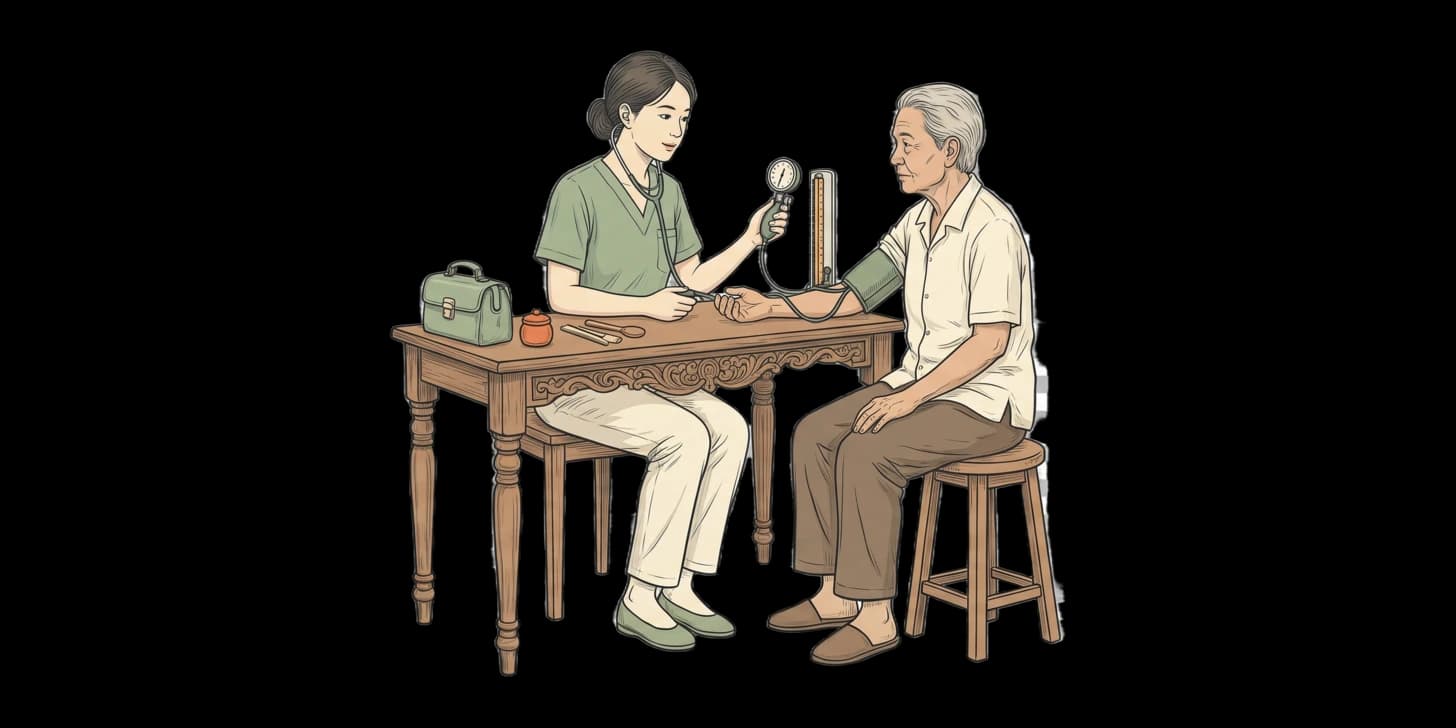
Thai private hospitals sell check-ups as tiered packages, usually organised by age and sex, and the logic is consistent everywhere. Entry-level tiers cover the essentials: a physical exam, blood counts, blood sugar and cholesterol, kidney and liver function, a urine test, a chest X-ray and an ECG — typically roughly 2,000–4,000 baht. Mid tiers layer on things like abdominal ultrasound, thyroid tests and stool screening, often landing somewhere around 5,000–12,000 baht. At the top sit the executive panels, adding cardiac stress tests, bone density scans and more advanced imaging, which run roughly 15,000–30,000 baht and beyond. Treat every figure as a ballpark: prices change yearly, and the hospitals run near-constant promotions, so check the current lists before you commit.
The hospitals to know
Four well-established names come up again and again, and all run dedicated check-up programmes. Bangkok Hospital Chiang Mai is the most polished of the group, with a Health Promotion Center and a long menu of programmes sorted by age and sex. Chiang Mai Ram, in the city centre, is a long-standing expat favourite with its own check-up lounge. Sriphat Medical Center is the private wing of Chiang Mai University's Faculty of Medicine — many of its physicians teach at the medical school, and it publishes a yearly check-up programme at gentler prices. McCormick Hospital, founded by missionaries in 1888, is the unfussy, budget-friendlier option by the Ping River. Honestly, the differences are more about atmosphere and budget than quality.
What the day actually looks like
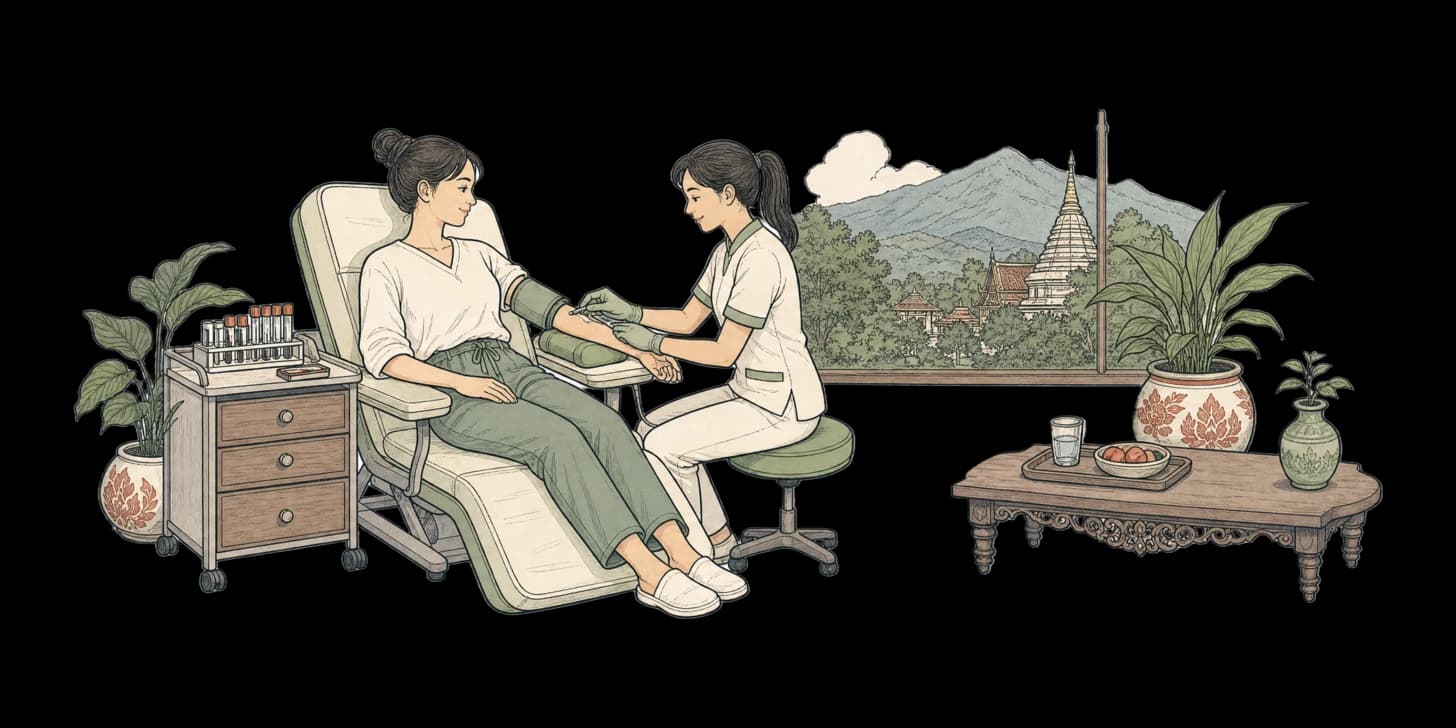
Book a few days ahead — walk-ins are sometimes possible, but popular packages and the cooler months fill up. You'll be asked to fast beforehand, typically 8–12 hours, so the blood sugar and cholesterol readings are meaningful; plain water is usually fine, but follow whatever instructions your hospital gives you. Arrive early in the morning, register, change into a gown, and let the nurses shepherd you between stations — bloods, blood pressure, X-ray, ECG, ultrasound if your tier includes it. The whole circuit takes two to four hours depending on the package, and many include a light meal once the fasting tests are done. Results are often ready the same day, capped by a sit-down debrief where a doctor walks through your numbers line by line; a few tests, such as Pap smears and certain lab work, take days and are sent on afterwards.
What's included — and what's worth adding
Read the item list, not the package name. Women's health screening — mammograms and Pap smears — sometimes appears only in higher tiers, and eye or skin checks vary from hospital to hospital. Some things almost never come bundled: teeth are a separate world, though Chiang Mai's dental clinics make it easy to tack a cleaning and check onto the same trip, and jabs live with the travel clinics rather than the screening desk. Colonoscopy and gastroscopy are separate procedures with their own prep days. Everything can be added individually at booking — the staff are used to mixing and matching.
Taking your results home
The major private hospitals can produce your report in English — usually a tidy booklet or PDF with your values set against reference ranges — but confirm this when you book rather than on the day. Keep a copy for your GP at home, and hold on to previous years' reports: the trend line matters more than any single number. And if the debrief flags something mechanical — posture, an old knee, a stiff back — the city's physiotherapy and rehab scene is a natural next stop.
When a package isn't the right tool
A screening package is for people who feel well. If you have symptoms — chest pain, unexplained weight loss, anything that worries you — see a doctor, not a screening menu: a fixed package may not include the tests your situation actually needs, and waiting for a check-up date delays a proper work-up. Resist the urge to simply book the biggest panel, too; more tests aren't automatically better, and a short conversation about your age, history and risk factors will shape a wiser check-up than any brochure. General information gets you to the door — the plan itself belongs to you and your doctor.
Frequently asked questions
How much does an annual health check-up cost in Chiang Mai?
As a rough guide, entry-level packages (bloods, urine, chest X-ray, ECG) run around 2,000–4,000 baht, mid tiers with ultrasound and extra labs around 5,000–12,000 baht, and executive panels with advanced imaging roughly 15,000–30,000 baht and beyond. Prices change yearly and promotions are constant, so always check the hospital's current list.
Which hospitals in Chiang Mai offer check-up packages?
Four well-established names all run dedicated programmes: Bangkok Hospital Chiang Mai (the most polished, with its Health Promotion Center), Chiang Mai Ram (a city-centre expat favourite with its own check-up lounge), Sriphat Medical Center (the private wing of Chiang Mai University's Faculty of Medicine) and McCormick Hospital (the budget-friendlier mission hospital by the Ping River). The differences are more about atmosphere and budget than quality.
Do I need to fast before a health check-up?
Typically yes — hospitals usually ask for 8–12 hours without food so the blood sugar and cholesterol readings are meaningful. Plain water is usually fine, but follow the specific instructions your hospital gives you when you book.
How long does the check-up take, and when do I get results?
Plan for two to four hours in the morning, moving between stations in a hospital gown; many packages include a light meal once the fasting tests are done. Results are often ready the same day, finished with a sit-down debrief where a doctor walks through your numbers — though a few tests, such as Pap smears, take days and are sent on afterwards.
Can I get my check-up results in English?
The major private hospitals can produce reports in English, usually as a booklet or PDF with your values set against reference ranges — but confirm this when you book rather than on the day. Keep copies year to year: the trend matters more than any single number.
Should I book a check-up package if I already have symptoms?
No — screening packages are designed for people who feel well. If something is worrying you, see a doctor for a targeted work-up instead: a fixed package may not include the tests your situation needs, and waiting for a check-up date delays proper care. This is general information, not medical advice — discuss what's appropriate for you with a doctor.