
Health & wellness · July 2, 2026
Physiotherapy and rehab in Chiang Mai: a guide
By The Ada House team
Somewhere around month two, the laptop tends to catch up with you: a dull ache between the shoulder blades, a neck that clicks, a lower back that grumbles when you stand. Or maybe it's a running niggle, a Muay Thai strain that won't settle, or the long tail of a surgery back home. Whatever brought you looking, Chiang Mai has proper clinical physiotherapy — and this is our honest guide to finding it. One thing up front: this is general information, not medical advice. For a diagnosis, or if something feels seriously wrong, please see a doctor first.
Physio isn't a massage — and when each helps
This is the distinction that trips people up, so it's worth being clear. A traditional Thai massage is a wonderful thing — fully clothed, no oils, all assisted stretches and pressure — and it's brilliant for general tension, stiffness and stress. It sits in the same broad world as the country's traditional medicine, and it's everywhere and affordable.
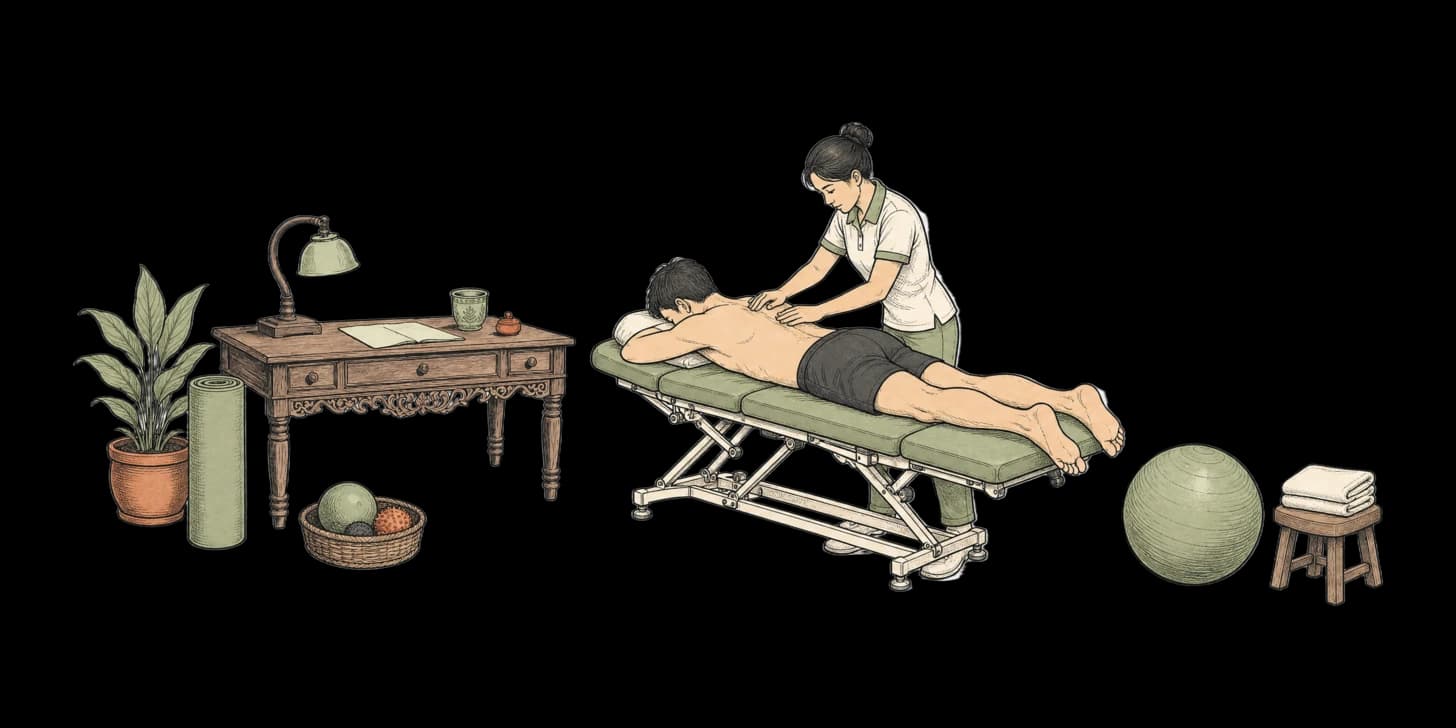
Clinical physiotherapy is a different job. A licensed physiotherapist assesses you, tries to find the root cause of the problem, and builds a plan around it: hands-on manual therapy, a prescribed set of exercises to do between sessions, and sometimes ultrasound or heat. The goal isn't an hour of relief — it's getting the tissue, joint or movement pattern working properly again.
Rough rule of thumb: if you're tight, tired and knotted, a massage may be exactly right. If you have a recurring pain, a specific injury, weakness, or something that simply isn't getting better, that's physio territory.
The aches that bring long-stayers in
The classics we hear about, more or less in order:
- Desk-and-laptop back and neck — the remote-worker special, made worse by sofas, café stools and travel.
- RSI and wrist strain — from long typing days without a proper setup.
- Running and cycling injuries — knees, calves, Achilles, IT bands; Chiang Mai is a great place to train, which is exactly how these creep in.
- Muay Thai strains — shins, shoulders and rolled ankles are common if you take up the sport.
- Post-surgery and post-injury rehab — regaining strength and range after an operation or a break.
Chronic pain wears on your mood as much as your body, too, so don't be surprised if sorting it out helps more than the ache — and if the stress side needs its own attention, that's worth looking after.
Where to go
Your most reliable starting points are the rehabilitation departments at the big hospitals, where you'll find physiatrists (rehab doctors) working alongside licensed physiotherapists.
- Bangkok Hospital Chiang Mai runs a Rehabilitation Medicine department with orthopaedic and sports rehab, and even hydrotherapy — the polished, international-facing option.
- Chiang Mai Ram Hospital has a Physical Therapy centre treating the usual neck, back, shoulder and knee complaints, with English-speaking staff and international accreditation.
- Maharaj Nakorn Chiang Mai Hospital — the CMU teaching hospital, known locally as Suan Dok — has a rehabilitation medicine department with physical and occupational therapy. It's busier and more local, but excellent value.
Beyond the hospitals, Chiang Mai also has a number of dedicated private physiotherapy clinics, some run by therapists who trained abroad. They're easy to find through Google or the local expat groups — just verify a clinic's credentials yourself rather than taking a forum shout-out as gospel. All of this sits within a reassuringly good wider healthcare scene.
What a first session looks like
At the international hospitals you can usually book by phone or online, and walk-ins are often possible; English is spoken. Bring anything relevant — scans, X-rays, surgical reports, a referral letter — as it saves time and guesswork.
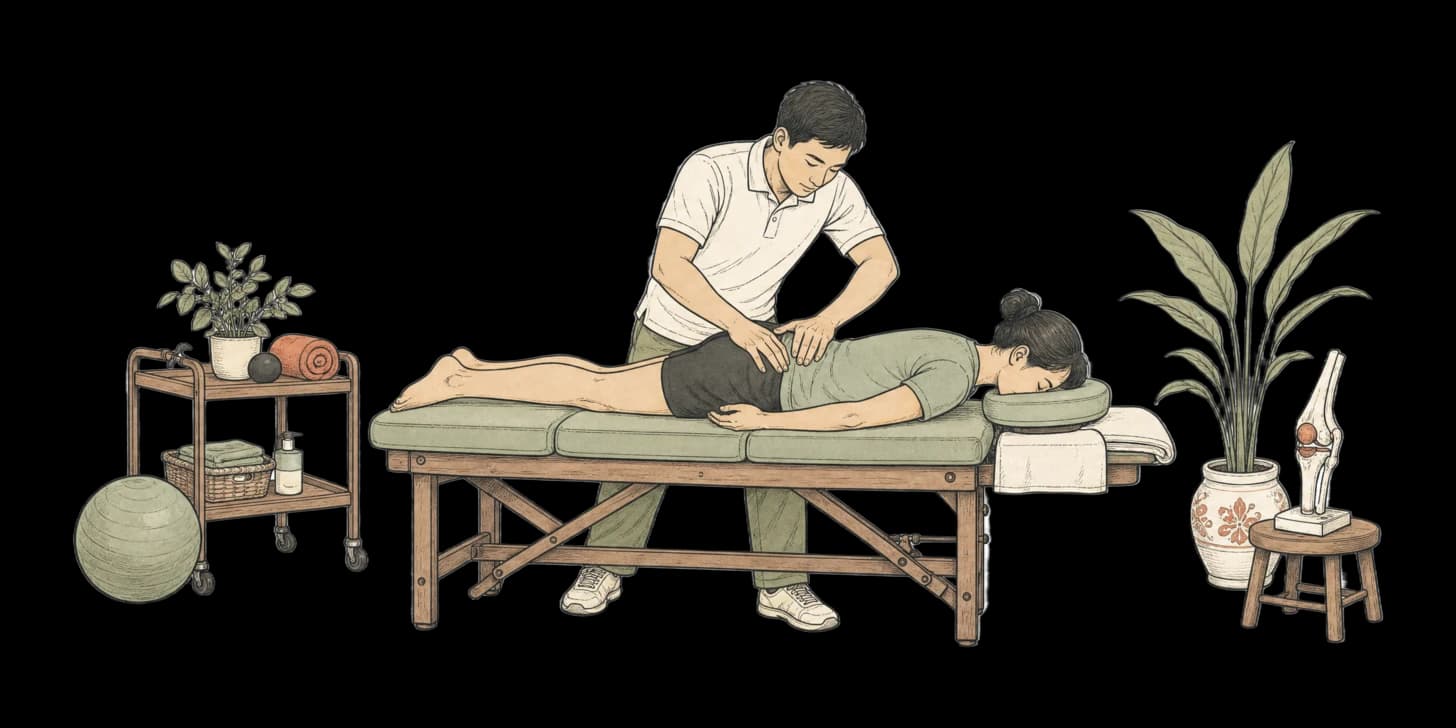
The first appointment is mostly an assessment: your history, some movement and strength testing, and a conversation about what you're trying to get back to. From that, the physiotherapist builds a plan — hands-on treatment on the day plus, crucially, exercises to do at home between visits. Wear comfortable clothes you can move in. Progress usually comes from a short course of sessions rather than a single visit, so ask what they'd expect when you book.
Cost and insurance
By Western standards, physiotherapy here is affordable — but we'll give no hard figures, since they vary by hospital, clinic and treatment, and they change. Ask when you book, and confirm the likely number of sessions so you can picture the total; a full course adds up, and it's a real line in many people's cost of living.
Good news on cover: many travel and health policies do include physiotherapy, usually when it follows a diagnosis or referral rather than something booked on a whim. Read the small print and check with your insurer before your first session — our travel insurance guide is a sensible place to start.
When to see a doctor first
Physio is for musculoskeletal aches and recovery — not for diagnosing something serious. See a doctor before a physiotherapist if you have any of these: numbness or pins-and-needles, real weakness in a limb, severe or steadily worsening pain, pain following a fall or accident, a fever alongside back pain, or any loss of bladder or bowel control. After a genuine trauma, get properly examined and imaged first. These are red flags, and they deserve a medical opinion, not a treatment table.
A calm word to finish
For the everyday aches of a long stay — the desk back, the running knee, the shoulder that never came right — Chiang Mai makes it easy to get skilled, affordable help. Book an assessment, do your exercises, and most of these things quietly improve. Just remember this is general information, not medical advice: if in doubt, see a doctor first. We'll keep the kettle on.
Frequently asked questions
Is physiotherapy the same as Thai massage?
No. Traditional Thai massage is wonderful for general tension, stiffness and stress, but clinical physiotherapy is a different job: a licensed physiotherapist assesses you, looks for the root cause, and builds a plan of manual therapy plus prescribed exercises to get a joint or movement pattern working again. As a rule of thumb, tight and knotted suits a massage, while a specific injury or a pain that isn't improving is physio territory. This is general information, not medical advice.
Where can I get physiotherapy in Chiang Mai?
The most reliable starting points are the rehabilitation departments at the main hospitals: Bangkok Hospital Chiang Mai, Chiang Mai Ram, and Maharaj Nakorn Chiang Mai (Suan Dok, the CMU teaching hospital), where rehab doctors work alongside licensed physiotherapists. There are also dedicated private physiotherapy clinics, some run by therapists trained abroad; verify a clinic's credentials yourself rather than relying on a forum recommendation.
How much does physiotherapy cost in Chiang Mai?
By Western standards it is affordable, but costs vary by hospital, clinic and treatment and they change, so we won't quote hard figures. Ask when you book and confirm the likely number of sessions, since a full course adds up. Many travel and health insurance policies cover physiotherapy when it follows a diagnosis or referral, so read your small print and check with your insurer first.
Can I just walk in, or do I need a referral for physio?
At the international hospitals you can usually book by phone or online and walk-ins are often possible, with English spoken. Bring anything relevant, such as scans, X-rays, surgical reports or a referral letter, as it saves time and guesswork. Note that insurance often only covers physiotherapy that follows a diagnosis or referral, so check your policy before your first session.
What happens at a first physiotherapy session?
The first appointment is mostly an assessment: your history, some movement and strength testing, and a conversation about what you want to get back to. From that the physiotherapist builds a plan, with hands-on treatment on the day plus exercises to do at home between visits. Wear comfortable clothes you can move in, and expect progress over a short course of sessions rather than a single visit.
When should I see a doctor instead of a physiotherapist?
See a doctor first if you have numbness or pins-and-needles, real weakness in a limb, severe or steadily worsening pain, pain after a fall or accident, a fever alongside back pain, or any loss of bladder or bowel control. After a genuine trauma, get properly examined and imaged before any hands-on treatment. These are red flags that deserve a medical opinion, and this article is general information, not medical advice.