Things to do · June 27, 2026
Night Safari and the Zoo: an evening with the family
By The Ada House team
Some evenings in Chiang Mai are made for slowing down — but every so often the children want a little adventure after dark, and the grown-ups want something that runs on its own momentum. That's exactly the gap a trip out to the Chiang Mai Night Safari or Chiang Mai Zoo is built to fill: a few hours of wide eyes, plenty of fresh air, and the easy magic of spotting animals just as the sky turns to indigo.
Both sit on the south-western edge of the city, near the foot of Doi Suthep, so neither is a five-minute hop — but with a little planning they make one of the more relaxed family outings you can have from the house. Here's how the Ada House team would approach an evening of it.
An easy win for families
If you're travelling with little ones, the appeal is simple: there's room to roam, the pace is gentle, and no one has to keep quiet the way they would in a temple. We'd file it alongside the other low-stress days in our guide to Chiang Mai with kids — the kind of outing where the children set the tempo and the adults happily trail behind. An evening start also sidesteps the hottest part of the day, which makes a real difference when small people are involved.
Inside the Night Safari
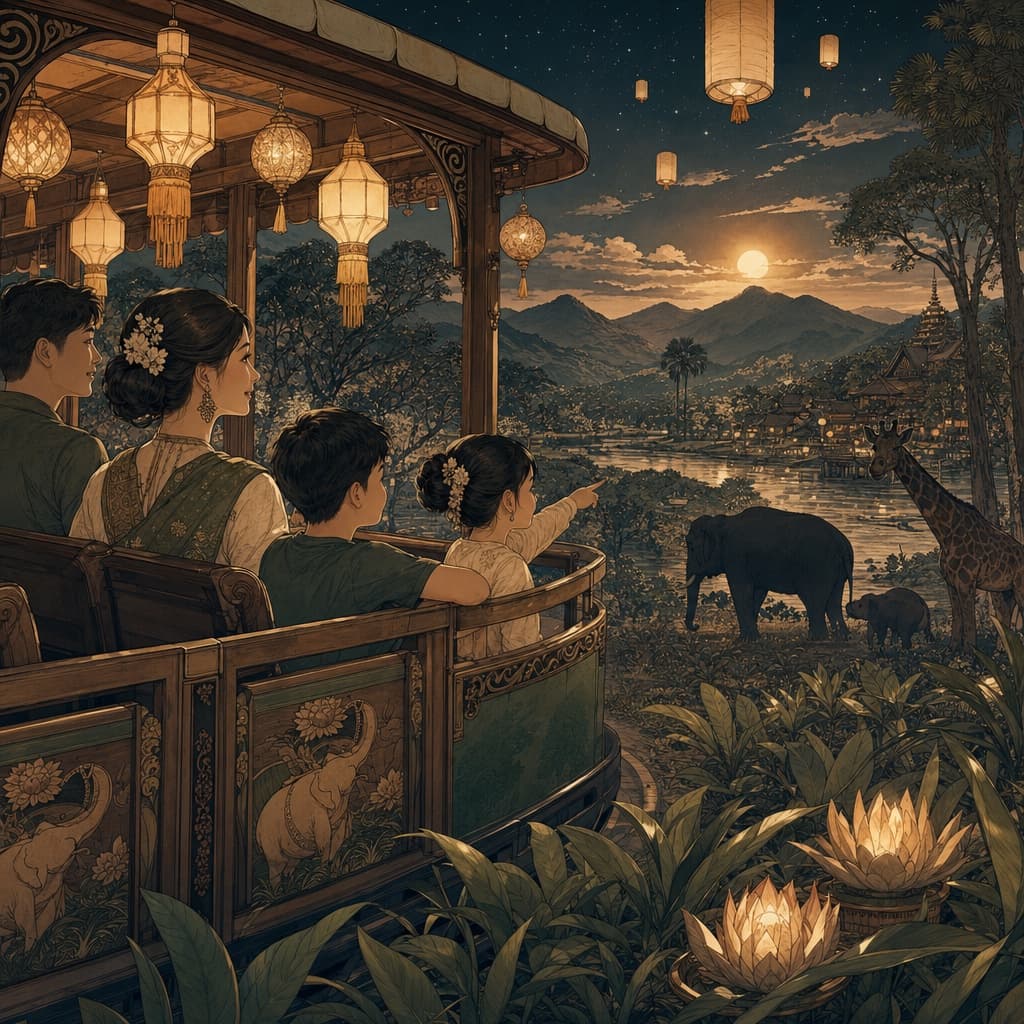
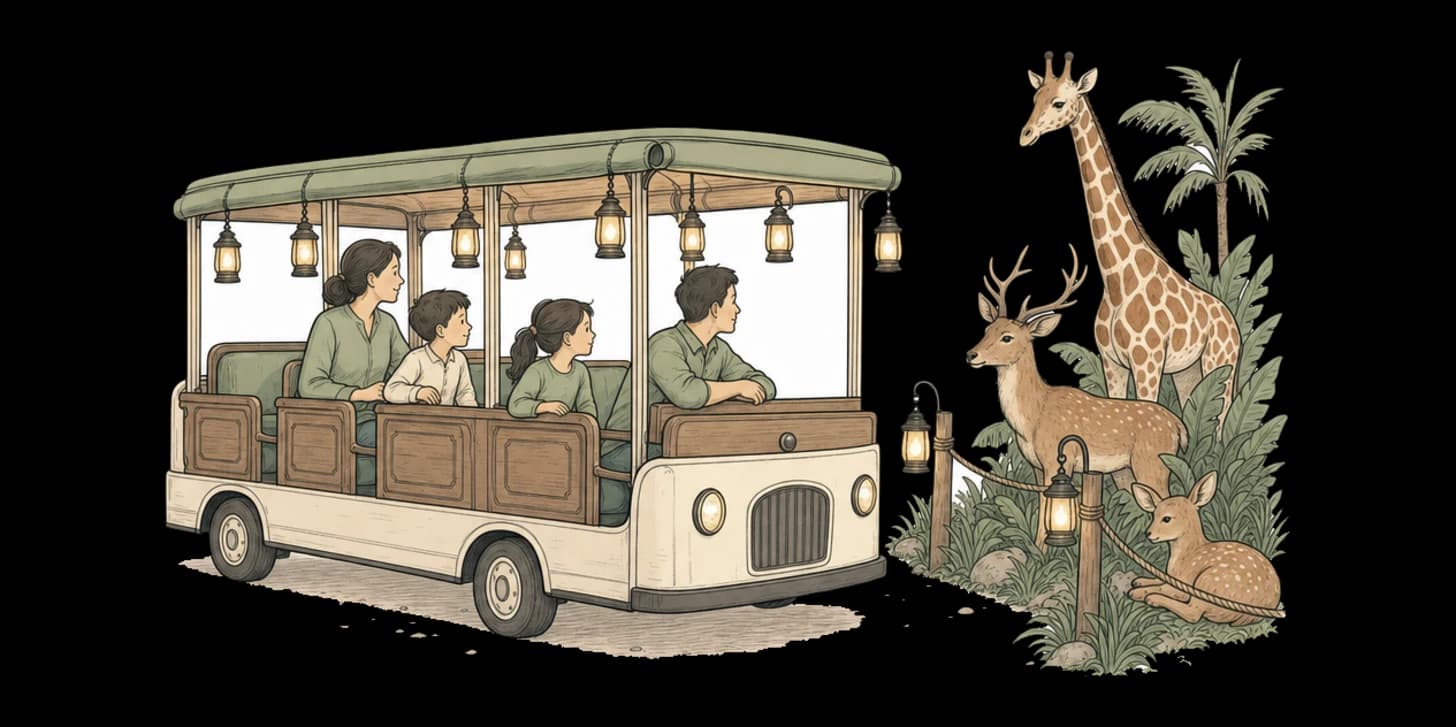
The Night Safari is the headline act, and it's a proper after-dark experience rather than a daytime zoo with the lights turned low. The main event is an open-sided tram that loops slowly through two night zones: the Savanna Safari, home to giraffes, zebras, rhinos and other plains animals that often amble right up to the rail, and the Predator Prowl, where tigers, lions, bears and hyenas watch back from the dark. A guide narrates as you go, and the whole loop takes about an hour.
There's more on foot, too. The Jaguar Trail is a walking circuit of around a kilometre around a lake, open from late morning, so early arrivals can stretch their legs before the trams start. Across the evening you'll also find scheduled shows and a musical fountain display near the entrance. Trams generally run well into the night, with one leaving every fifteen minutes or so — aim to arrive before sunset so you catch the last of the daylight on the walking trail and roll into the tram just as it turns properly dark.
Chiang Mai Zoo, at the foot of the mountain
A little closer to town, tucked against the green slope right below Doi Suthep, sits Chiang Mai Zoo — the older, sprawling, hillside option. It's a daytime visit rather than a night one, and worth knowing that it is genuinely large and genuinely hilly: expect a lot of walking, often uphill, with trams and shuttle buggies running between sections for tired legs. For years its best-known residents were its giant pandas, and it has long been famous for its aquarium, once billed among the largest in the region with a long underwater tunnel. Both have had their ups and downs over the years, so it's worth checking what is actually open before you build a day around either.
Because the zoo sits at the base of the mountain, it pairs naturally with a temple morning — many people fold it into our weekend at Doi Suthep, doing the temple early and the zoo after, or the other way round.
A gentle word on animal welfare
We'll be honest with you, because we'd want the same. Animal attractions anywhere sit on a spectrum, and experiences here vary from enclosure to enclosure and from year to year. Our quiet steer is to treat the visit as a chance to observe rather than to handle: enjoy the tram and the trail, skip anything that involves close contact or photo props, and let the children watch how animals behave when they're simply left in peace. Trust your own eyes on the day — if something doesn't sit right with you, it's perfectly fine to walk on. Approaching the evening thoughtfully is, we think, part of what it can teach.
Getting there, and timing it right
Both venues are out of town, so transport is the one thing to sort in advance — this isn't somewhere to stroll to. A pre-booked Grab or a chartered red songthaew that waits for you is the least stressful choice with children in tow; our rundown on getting around Chiang Mai covers the options and rough fares. Bring mosquito repellent, a light layer for the cooler night air, water, and a little cash for snacks and tram tickets. Go on a full stomach, or plan an early dinner nearby, as the little ones will flag if they're hungry on top of being out late.
Whichever you choose, it's the kind of evening that sends everyone home happily worn out — come and tell us which animal stole the show.
Frequently asked questions
What is the difference between the Night Safari and the Zoo?
The Night Safari is a proper after-dark experience built around an open-sided tram that loops through night zones, rather than a daytime zoo with the lights turned low. Chiang Mai Zoo is the older, sprawling hillside option, a daytime visit set against the slope right below Doi Suthep. Both sit on the south-western edge of the city, near the foot of the mountain.
What animals will we see on the Night Safari tram?
The tram loops slowly through two night zones. The Savanna Safari is home to giraffes, zebras, rhinos and other plains animals that often amble right up to the rail, while the Predator Prowl is where tigers, lions, bears and hyenas watch back from the dark. A guide narrates as you go, and the whole loop takes about an hour.
What time should we arrive at the Night Safari?
Aim to arrive before sunset, so you catch the last of the daylight on the walking Jaguar Trail and roll into the tram just as it turns properly dark. The Jaguar Trail is a circuit of around a kilometre around a lake, open from late morning, so early arrivals can stretch their legs first. Trams run well into the night, with one leaving every fifteen minutes or so.
Is it a good outing for young children?
Very much so. There is room to roam, the pace is gentle, and no one has to keep quiet the way they would in a temple. An evening start also sidesteps the hottest part of the day, which makes a real difference when small people are involved.
How do we get there and what should we bring?
Both venues are out of town, so sort transport in advance; a pre-booked Grab or a chartered red songthaew that waits for you is the least stressful choice with children in tow. Bring mosquito repellent, a light layer for the cooler night air, water, and a little cash for snacks and tram tickets. Go on a full stomach or plan an early dinner nearby, as the little ones will flag if they are hungry and out late.
What should we know about animal welfare here?
We will be honest, animal attractions anywhere sit on a spectrum, and experiences vary from enclosure to enclosure and year to year. Our quiet steer is to treat the visit as a chance to observe rather than to handle, enjoying the tram and the trail and skipping anything that involves close contact or photo props. Trust your own eyes on the day, and if something does not sit right, it is perfectly fine to walk on.