Local culture · July 4, 2026
How to read Lanna architecture: a field guide
By The Ada House team
Once you learn to read it, Chiang Mai never looks the same again. The city is written in a distinct architectural language — one that arrived with the Lanna kingdom in the thirteenth century and never entirely left. You don't need a degree to decode it, just a short vocabulary and a willingness to look up. This is a field guide in the most literal sense: read it once, then go for a walk. Everything below is hiding in plain sight.
Start with the roof
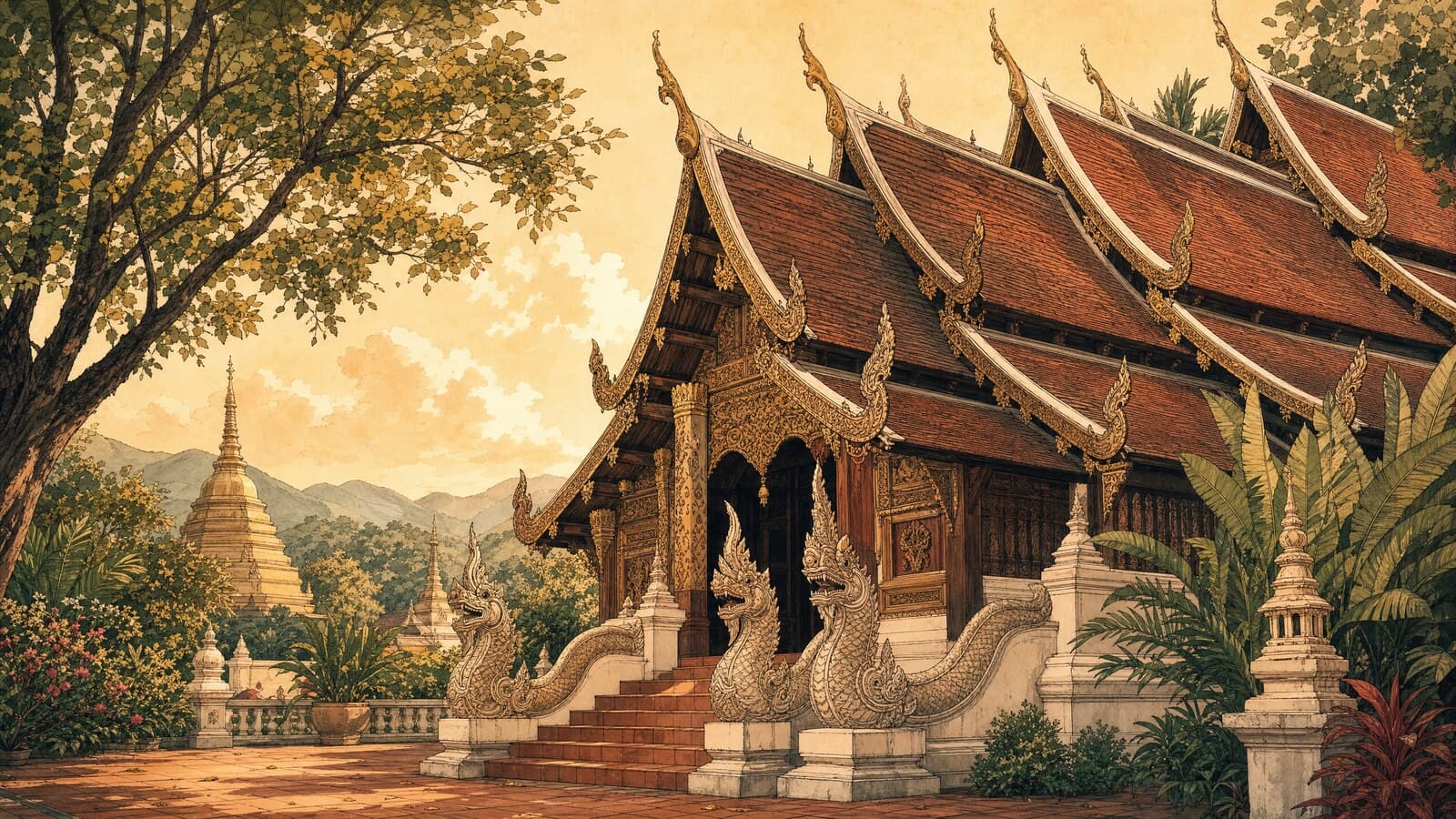
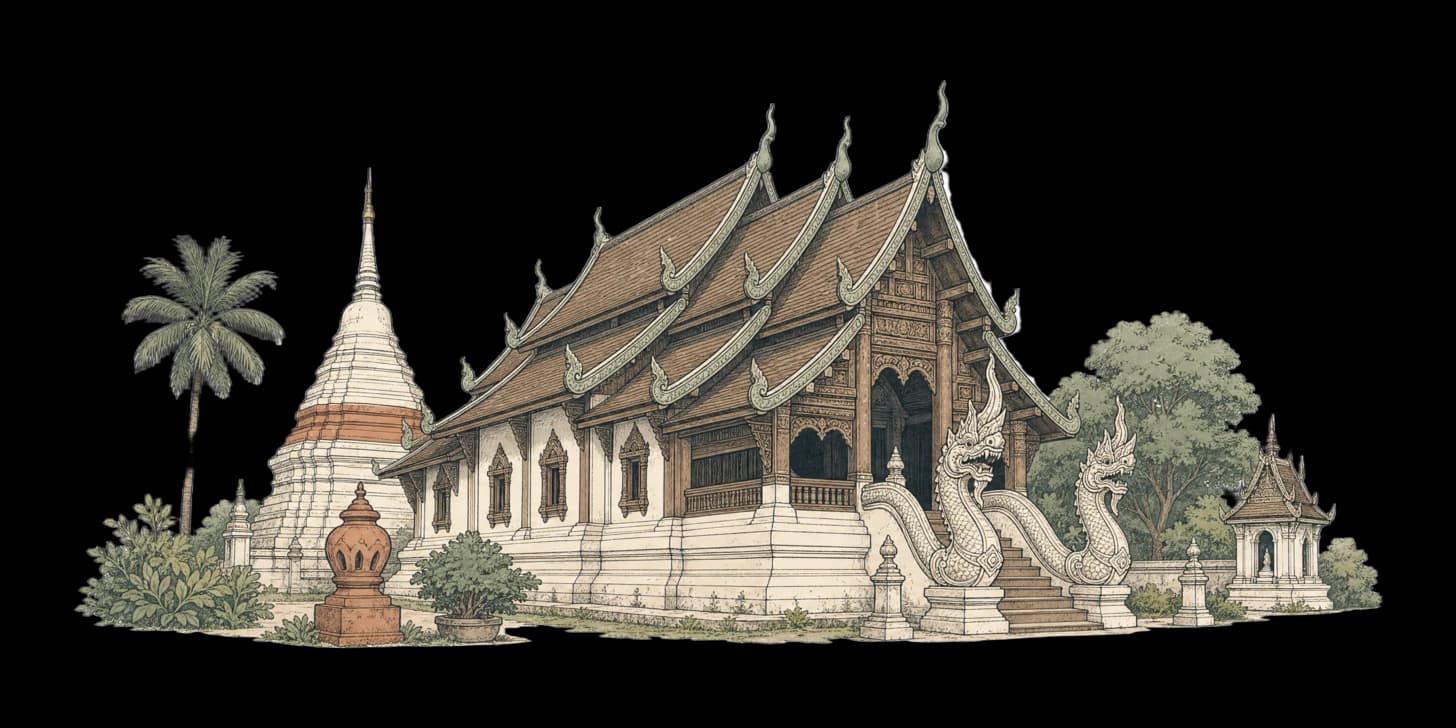
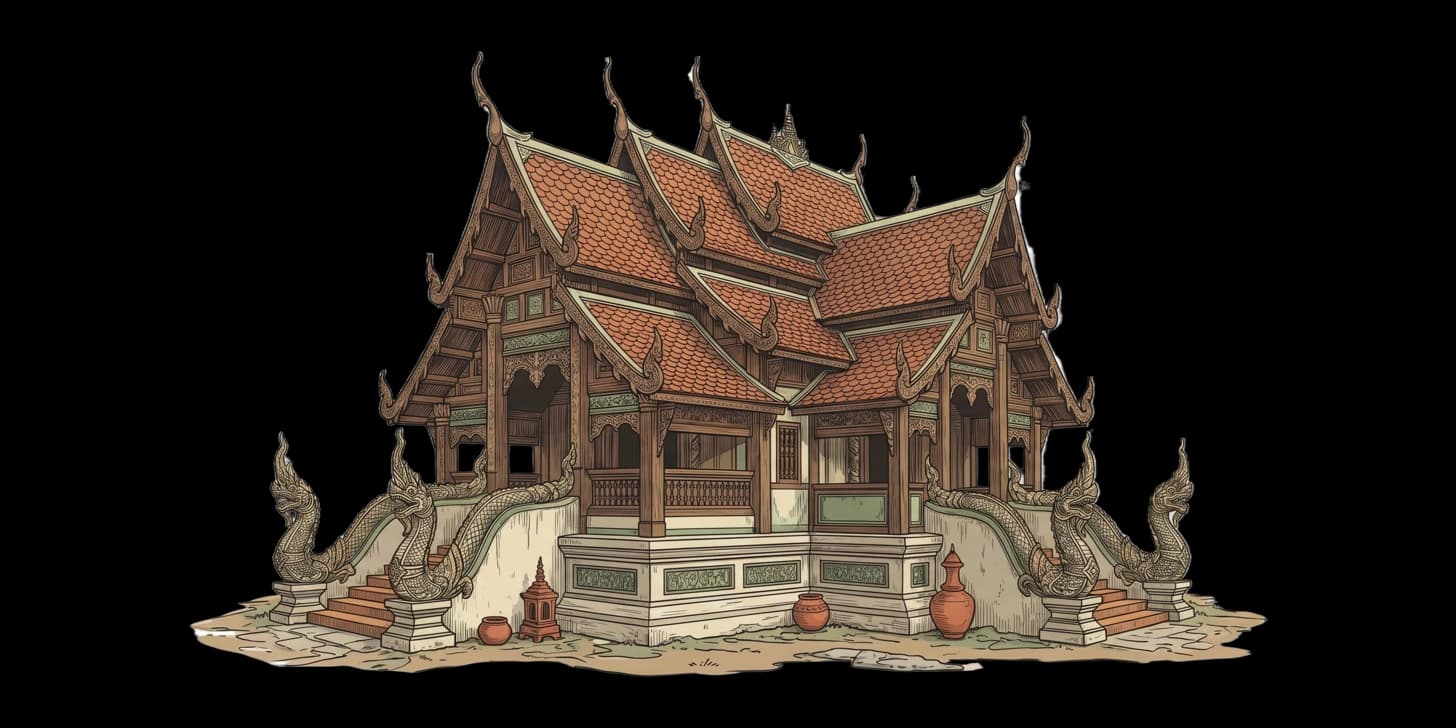
The quickest way to tell a Lanna temple from a central Thai one is the silhouette. Bangkok's roofs climb — steep, glittering, straining skyward. Lanna roofs do the opposite. They sweep low and wide, in two or three stacked tiers that step down and outward like a bird settling its wings, until the lowest eaves hang not far above your head. The layering is practical — deep overhangs shade the walls and shrug off monsoon rain — but the effect is emotional: sheltering, grounded, almost humble. Stand in front of any old viharn in the Old City and trace the tiers with your eye. Count them. Notice how each one shortens and drops. That descending rhythm is the signature of the North.
Kalae: the crossed horns on the roofline
Now look at houses rather than temples. On traditional northern homes, the gable peaks carry kalae — a pair of carved boards that extend past the roof ridge and cross in a V, like horns. What they mean is genuinely contested, which is half the charm. Some say buffalo horns, a quiet boast of household wealth. Others see a pair of stylised birds, or a marker that once distinguished local homes during the Burmese centuries. The least romantic theory is probably the truest: they began as structural pieces pinning down a thatched roof, and stayed on as ornament after tiles arrived. Today the kalae is shorthand for "Lanna" itself — you'll spot it on resort gateways, café signage and half the logos in the province.
Guardians at the threshold
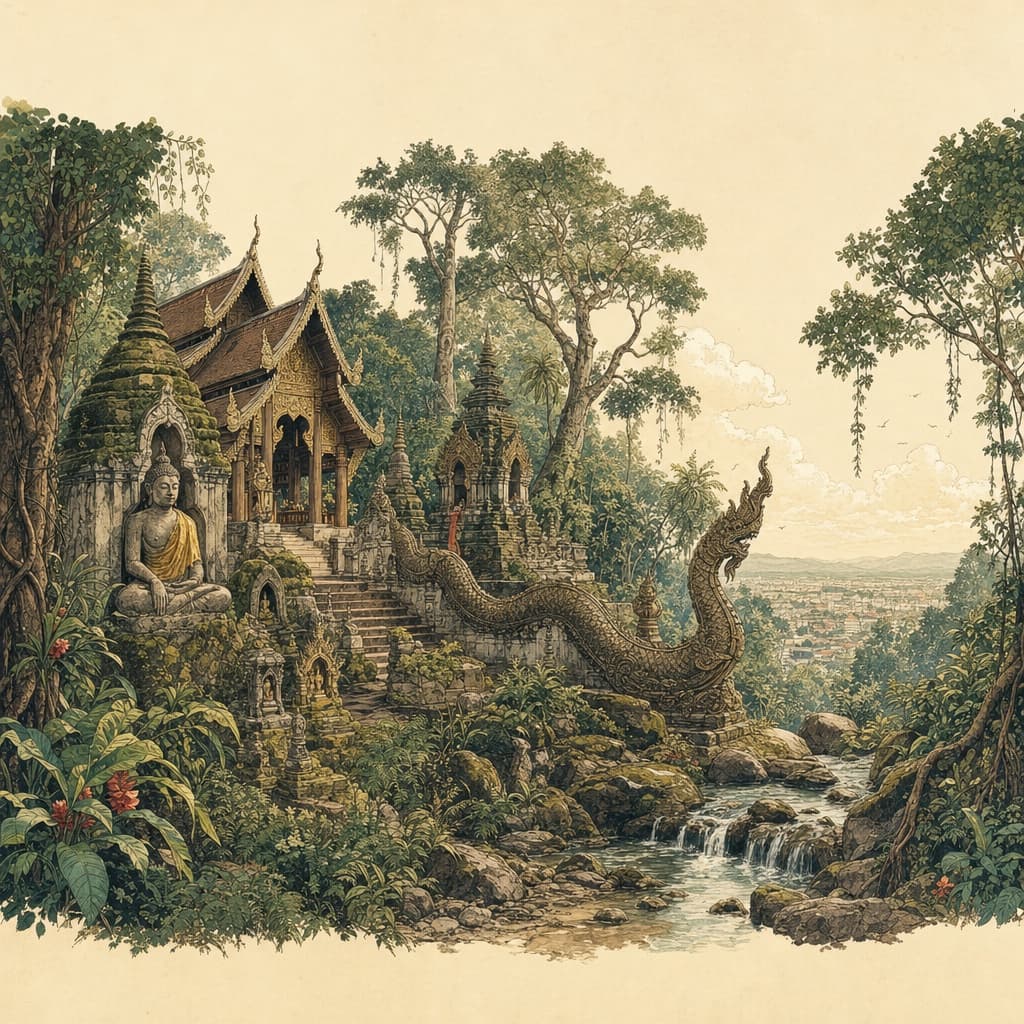
Back to the temples, and down to eye level. The peak of a temple roof carries a chofa — the slim, beak-like finial whose name translates roughly as "sky tassel", usually read as a garuda or a sacred swan. Follow the roof edge downward and the bargeboards often ripple like a serpent's body, because that is what they are: nagas, the water spirits of local belief, flowing down from the sky towards the entrance. Then they reappear at your feet. The balustrades flanking temple stairways are almost always paired naga serpents, mouths open, scales gleaming — so that you enter every sacred space by walking, symbolically, along the body of its protector.
Viharn or ubosot? One clue gives it away
Every temple compound has several buildings, and two get confused constantly. The viharn is the assembly hall — open to everyone, usually the largest and most lavish building, where visitors sit and Buddha images preside. The ubosot is the ordination hall, consecrated for monastic rites, and in the North it's typically smaller, quieter and sometimes locked. The giveaway is at ground level: an ubosot is ringed by bai sema, eight boundary stones marking consecrated ground. No stones, and you're looking at a viharn. Lanna temples in particular poured their artistry into the viharn, which is why the building you're allowed to wander into is so often the most beautiful one there.
The library on stilts
The most quietly moving building in a Lanna temple is often the smallest: the ho trai, or scripture library. You'll recognise it because it stands apart, raised high on a base or stilts — and occasionally built over a pond. The logic is beautifully practical. Buddhist texts were written on palm leaf, a feast for termites and ants and easily ruined by damp; lifting the library defeated the floods, and a moat of still water stopped the insects entirely. The masterpiece of the genre sits at Wat Phra Singh: a jewel-box ho trai dating to 1477, its high stucco base ringed with serene guardian figures, and widely considered among the finest in Thailand.
Where to see the best of it
For teak, start at Wat Phan Tao on Ratchadamnoen Road, next door to Wat Chedi Luang. Its dark, fragrant viharn rests on 28 teak pillars and began life not as a temple at all but as a royal throne hall, built in the mid-nineteenth century and rebuilt here as a temple hall in 1876 — look for the glass-inlaid peacock over the entrance, an emblem of northern royalty. For the purist's pilgrimage, drive half an hour south to Wat Ton Kwen (formally Wat Inthrawat) in Hang Dong: a small wooden viharn of 1858, one of very few Lanna temples surviving largely in its original state, with a textbook three-tiered roof amid the rice fields. It's usually near-silent, which is exactly how it should be seen.
The revival you can drink coffee in
Lanna architecture never became a museum piece. Walk through Nimman or the Old City today and you'll see its vocabulary quoted everywhere — tiered roofs on café pavilions, kalae motifs on hotel gates, whitewashed walls under dark teak in a hundred renovated shophouses. Some of it is pastiche; the best of it is a living tradition passed through new hands. Either way, the spotting game never ends. Learn these few words of the language and every walk in Chiang Mai becomes a conversation with seven centuries of builders — which is, we think, the best free entertainment in the city.
Frequently asked questions
How is a Lanna temple different from a central Thai temple?
Look at the roof. Central Thai roofs are steep and climb skyward, while Lanna roofs sweep low and wide in two or three stacked tiers that step down and outward, with the lowest eaves hanging close to head height. The deep overhangs shade the walls and shed monsoon rain, giving Lanna buildings a grounded, sheltering silhouette.
What are kalae, the crossed pieces on northern Thai rooftops?
Kalae are pairs of carved boards on traditional Lanna houses that extend past the roof ridge and cross in a V shape, like horns. Their meaning is contested — buffalo horns signalling wealth, stylised birds, or a marker from the Burmese era — though they probably began as structural pieces pinning down thatched roofs and remained as ornament. Today the kalae is visual shorthand for Lanna identity.
What is the difference between a viharn and an ubosot?
The viharn is the assembly hall, open to everyone and usually the largest, most decorated building in the compound. The ubosot is the ordination hall, consecrated for monastic rites and often smaller and sometimes locked in northern temples. The giveaway is the ring of eight bai sema boundary stones around an ubosot — no stones means you are looking at a viharn.
Why are ho trai scripture libraries raised on stilts or built over ponds?
Buddhist texts were written on palm leaf, which termites and ants devour and damp quickly ruins. Raising the library on a high base or stilts protected the manuscripts from flooding, and building it over a pond created a barrier of still water that insects could not cross. Wat Phra Singh's ho trai, dating to 1477, is considered among the finest in Thailand.
Where can I see the best Lanna architecture around Chiang Mai?
In the Old City, start with Wat Phan Tao on Ratchadamnoen Road, a teak viharn on 28 pillars that began life as a royal throne hall before being rebuilt as a temple hall in 1876. For a purer example, drive about half an hour south to Wat Ton Kwen (Wat Inthrawat) in Hang Dong, a small wooden viharn from 1858 with a classic three-tiered roof, one of the few Lanna temples surviving largely in its original state.
Why do temple staircases in Chiang Mai have serpent balustrades?
The paired serpents flanking temple stairways are nagas, water spirits of local belief and protectors of sacred spaces. Their bodies often also ripple down the temple's bargeboards from the chofa finial at the roof peak, so that visitors symbolically enter the temple by walking along the body of its guardian.