Things to do · June 29, 2026
Ziplining in Chiang Mai: a flight through the jungle canopy
By The Ada House team
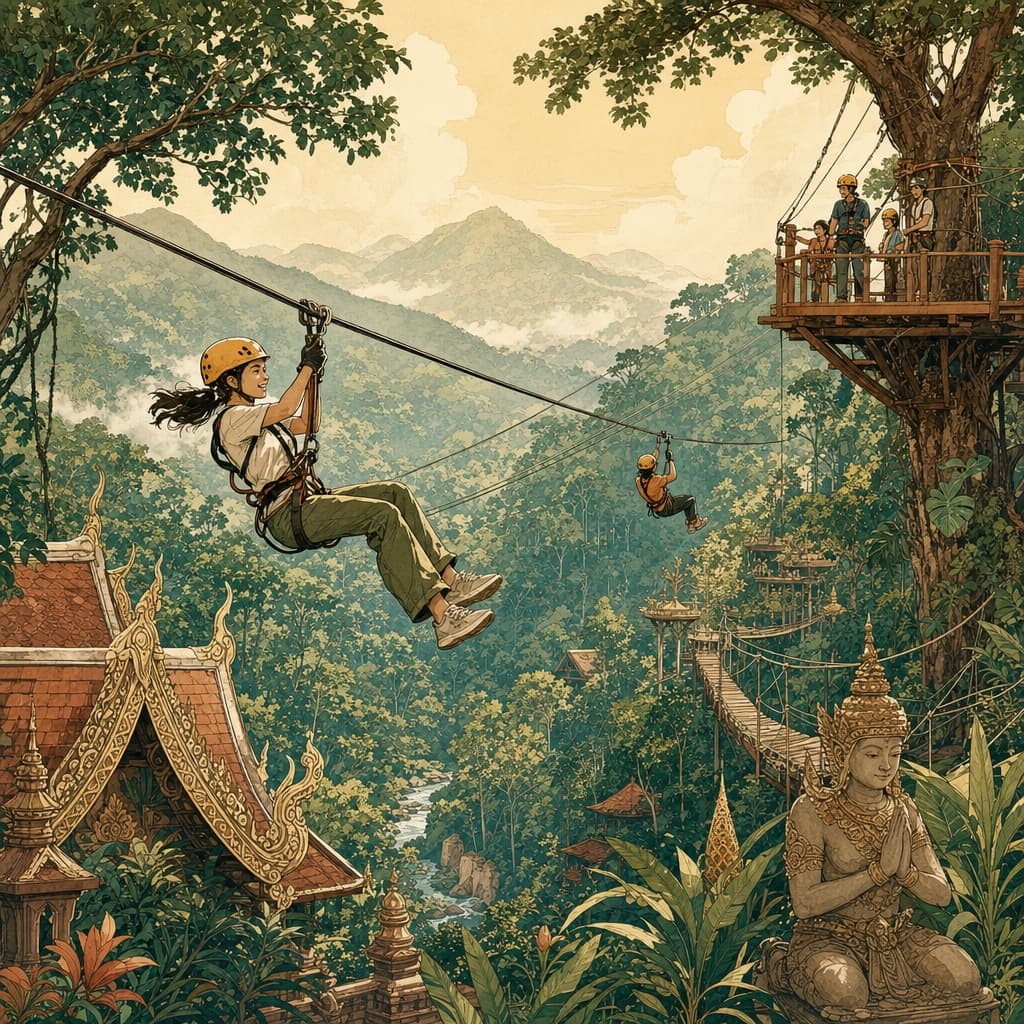
Few things wake you up like stepping off a platform forty metres up and letting a steel cable carry you out over the treetops. Ziplining is the signature thrill of the hills around Chiang Mai, and for good reason: the forest here is genuinely beautiful, the courses are long, and you don't need an ounce of experience to fly. It's the most accessible of the city's big adventures and one of the easiest to share with nervous first-timers. Here's what to expect, who to fly with, and how to do it safely.
What a jungle zipline tour is actually like
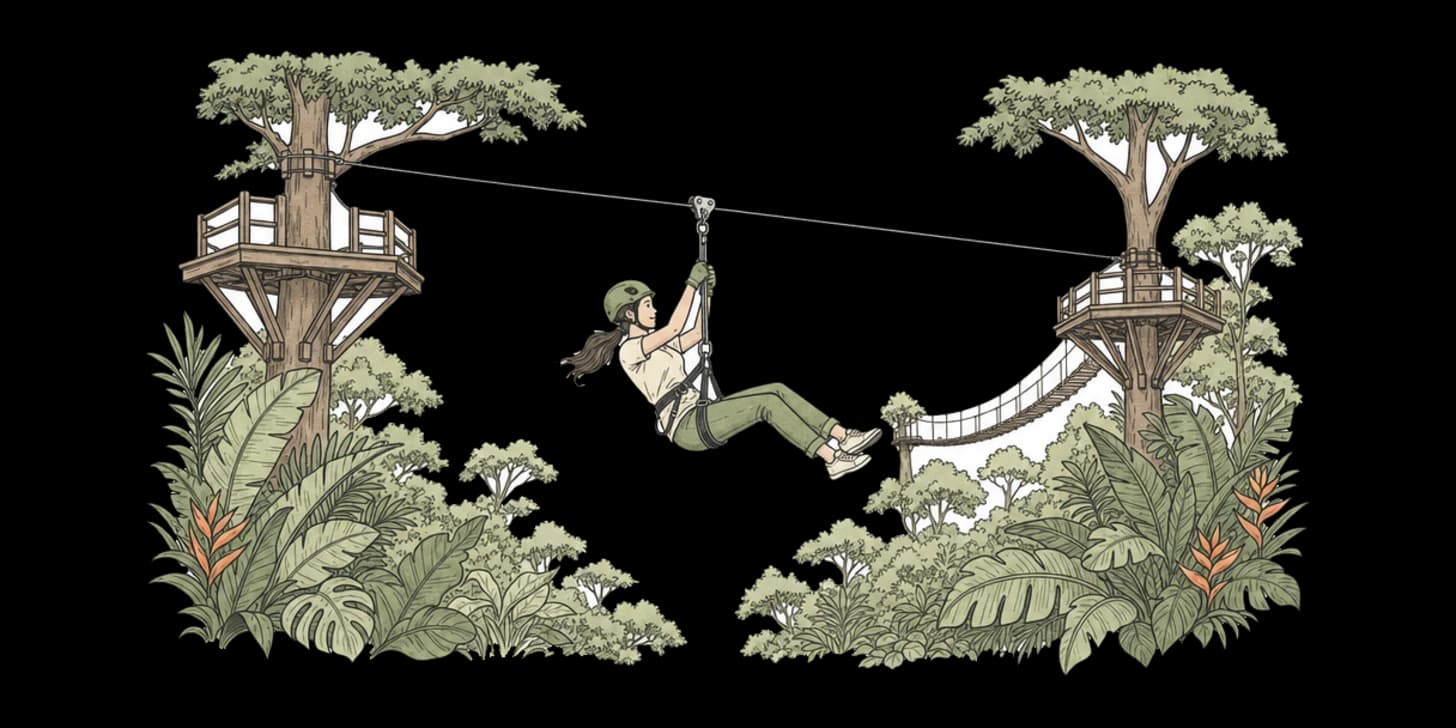
A canopy tour is a strung-together circuit through the rainforest: a series of timber or steel platforms bolted high in the trees, linked by long ziplines you glide across one at a time, with guides clipping and unclipping you at every station. Between the flights you'll cross swaying sky-bridges, and on most courses you'll abseil straight down through the canopy to reach the next section. Some of the single cables run close to a kilometre, fast enough to make your stomach lurch in the best way; others are short, gentle hops that ease you in.
It's slower and more scenic than a theme-park ride. You're moving through real forest — birdsong, dappled light, the occasional glimpse of the valley below — rather than just chasing speed. If you'd rather keep your feet on the ground, the same hills are laced with walking trails and jungle treks, but the zipline gives you the canopy from an angle almost nothing else does.
The operators worth knowing (and one to double-check)
A handful of established operators run courses within an hour or so of town. Pongyang Jungle Coaster & Zipline in Mae Rim, about 30km north, is the family favourite: alongside its 30-odd zipline stages it has a two-person alpine-style jungle coaster, a jungle swing and a café, so the whole group stays busy whether they fly or not. Jungle Flight runs a long forest course with dozens of platforms and ziplines plus a zipline roller coaster, with hotel pick-up included. Skyline Adventure (now branded Skyline Jungle Luge) pairs a big zipline circuit with a long downhill luge track — good if you want two different thrills in one trip.
You'll also see Flight of the Gibbon mentioned everywhere as the pioneer that put Chiang Mai ziplining on the map, on a spectacular course out toward the cloud-forest village of Mae Kampong. Its Chiang Mai operation has been on and off in recent years, though, so treat it as the one to confirm directly before you bank on it. Whichever name you book, this is just one item on a wider adrenaline menu of rafting, quad bikes and rock climbing.
How long it takes, and what to expect to pay
Budget a half-day. The flying itself usually runs two to three hours, but with hotel pick-up, the winding drive up into the hills, a safety briefing, kitting up and lunch, most tours swallow four to six hours door to door. Transfers are almost always included; if you're weighing up the trip against getting yourself there, our guide to getting around Chiang Mai covers the alternatives, but for ziplining the bundled pick-up is by far the easiest option.
On price, be honest with yourself: this is a premium activity by local standards, several times the cost of a temple day or a cooking class, and noticeably pricier than most things you'll do here. Rates shift with the operator, the season and how many flights are on the course, so check current prices when you book rather than trusting an old figure. What you're paying for is maintained gear, insurance and trained guides — not a corner to cut.
Safety: harnesses, carabiners and choosing well
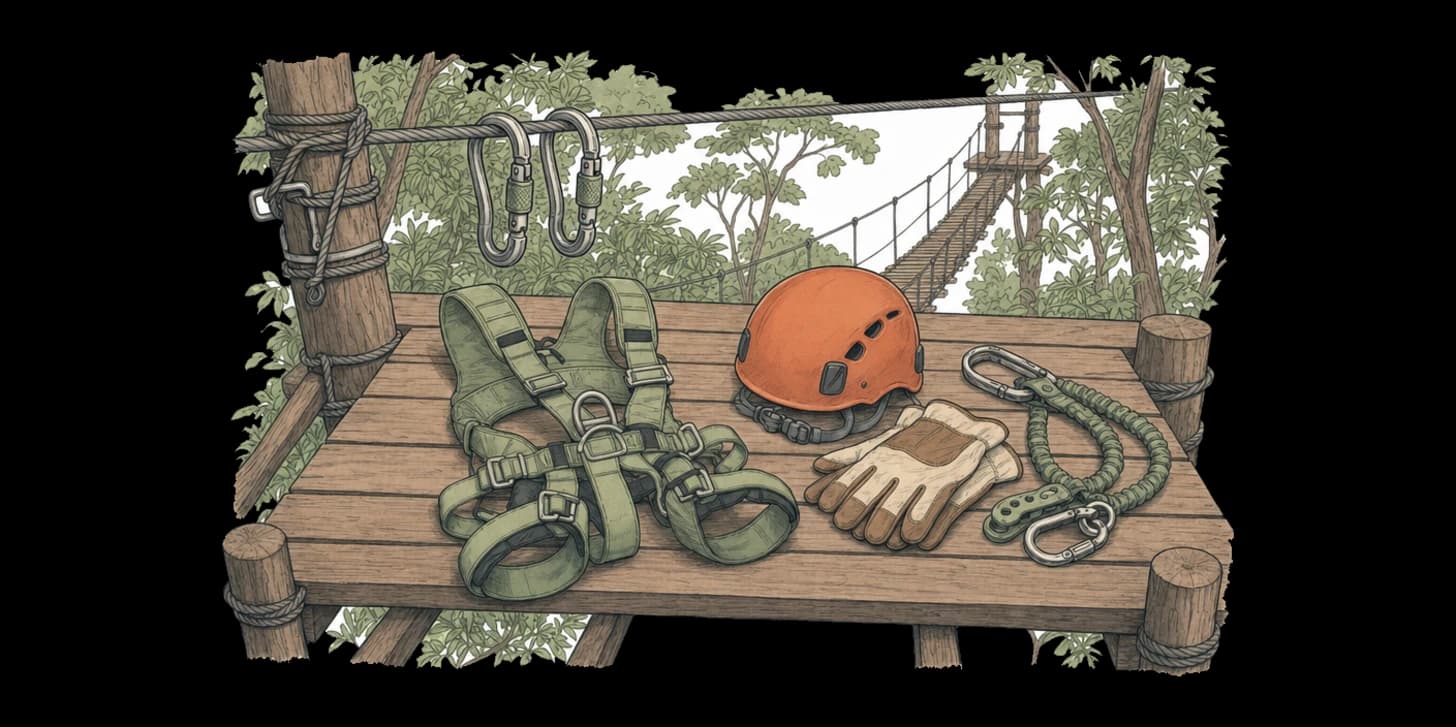
Done properly, ziplining is very safe, and the gear is the whole story. A reputable operator will put you in a full-body or seat harness, clip you on with two carabiners at all times so you're never attached by a single point, and have a trained guide manage every launch and landing. You should get a proper briefing and see kit that looks well looked-after. If anything feels slapdash — frayed webbing, a guide who shrugs off your questions, no real briefing — that's your cue to walk away.
There are limits worth knowing before you turn up. Most courses set a weight range (roughly 30–40kg at the bottom and around 120–125kg at the top) so the braking works as designed, plus minimum ages for children and sensible exclusions for pregnancy, recent surgery, serious heart or back conditions. None of it is meant to spoil the fun — it's how the physics stays friendly. One more thing people forget: check your travel insurance actually covers adventure sports, as plenty of standard policies quietly exclude ziplining.
What to wear and bring
Keep it simple. Wear closed-toe shoes — trainers are perfect, sandals are a no — and comfortable clothes you don't mind getting a little muddy or sweaty. A harness sits snugly around your hips and thighs, so shorts or trousers beat a skirt or a loose dress. Tie long hair back, leave the floppy hat at home (it will fly off), and use a strap or a zipped pocket for your phone, because a dropped camera in the canopy is gone for good. Bring a little cash for drinks and guide tips, and in the wet months a light layer for the cooler, damper air up in the hills.
Best season to fly, and going with kids
You can zipline year-round, but the cool, dry months from November to February are the sweet spot: comfortable temperatures, clear views and firm trails underfoot. The forest is at its most lush green during and just after the rains, roughly June to October — flights still run, though a downpour can pause things briefly and the platforms get slippery. The one stretch to think twice about is the hazy burning season around March and April, when the views can flatten to grey.
It's a genuinely good family outing. Several operators take children from around seven to ten upwards depending on weight, and the guides are reassuring with first-timers, so it's a regular fixture on our list of things to do with kids. Two last bits of housekeeping: skip any package that bundles in elephant riding and read why in our guide to ethical elephant encounters; and pick a clear-skied morning if you can, when the canopy is at its glittering best.
Frequently asked questions
Is ziplining in Chiang Mai safe?
Done properly, it is very safe, and the gear is the whole story. A reputable operator will put you in a full-body or seat harness, clip you on with two carabiners at all times so you are never attached by a single point, and have a trained guide manage every launch and landing. Expect a proper briefing and well looked-after kit; if anything feels slapdash, like frayed webbing or a guide who shrugs off your questions, that is your cue to walk away.
How much does it cost, and how long does it take?
Be honest with yourself here: this is a premium activity by local standards, several times the cost of a temple day or a cooking class. Rates shift with the operator, the season and how many flights are on the course, so check current prices when you book rather than trusting an old figure. Budget a half-day overall, as the flying runs two to three hours but most tours swallow four to six hours door to door once you add hotel pick-up, the drive into the hills, the briefing and lunch.
Are there weight or age limits I should know about?
Yes, and they exist so the physics stays friendly rather than to spoil the fun. Most courses set a weight range of roughly 30 to 40kg at the bottom and around 120 to 125kg at the top so the braking works as designed. There are also minimum ages for children and sensible exclusions for pregnancy, recent surgery, and serious heart or back conditions.
What should I wear and bring?
Keep it simple: wear closed-toe shoes, as trainers are perfect and sandals are a no, plus comfortable clothes you do not mind getting a little muddy. The harness sits snugly around your hips and thighs, so shorts or trousers beat a skirt or loose dress. Tie long hair back, leave the floppy hat at home as it will fly off, and use a strap or zipped pocket for your phone; bring a little cash for drinks and guide tips, and a light layer in the wet months.
When is the best season to fly?
You can zipline year-round, but the cool, dry months from November to February are the sweet spot, with comfortable temperatures, clear views and firm trails. The forest is at its most lush green during and just after the rains, roughly June to October, though a downpour can pause things briefly and the platforms get slippery. The one stretch to think twice about is the hazy burning season around March and April, when the views can flatten to grey.
Is it good for kids, and which operator should we choose?
It is a genuinely good family outing; several operators take children from around seven to ten upwards depending on weight, and the guides are reassuring with first-timers. Pongyang Jungle Coaster and Zipline in Mae Rim is the family favourite, with a jungle coaster, a jungle swing and a cafe so the whole group stays busy. You will see Flight of the Gibbon mentioned everywhere as the pioneer, but its Chiang Mai operation has been on and off in recent years, so treat it as the one to confirm directly before you bank on it.