Health & wellness · June 19, 2026
Yoga & meditation retreats in Chiang Mai
By The Ada House team
Somewhere between the cafés and the coworking desks, Chiang Mai quietly became one of Asia's favourite wellness hubs. It's calm, affordable, surrounded by mountains and temples, and home to a big international wellness crowd — which makes it the perfect place to slow down, whether you want a single yoga class or a deep silent retreat. Here's the full spectrum.
Why here
The relaxed northern pace, low cost, dense community of studios and therapists, and a backdrop of forest temples and mountains make Chiang Mai unusually good for this. You can sample a lot — a class here, a massage there, a weekend retreat in the hills — without spending a fortune or committing before you're ready.
Drop-in yoga
Around Nimman and the Old City, small, friendly studios run daily classes — vinyasa, hatha, yin, sometimes Ashtanga or aerial, plus breathwork workshops. Most offer pay-per-class or discounted class packs, prices well below Western cities. It's the easy entry point: low commitment, great for variable work hours, and you'll often leave with tips for the next thing. Perfect for a remote worker who just wants to move between deep-work days.
Multi-day retreats
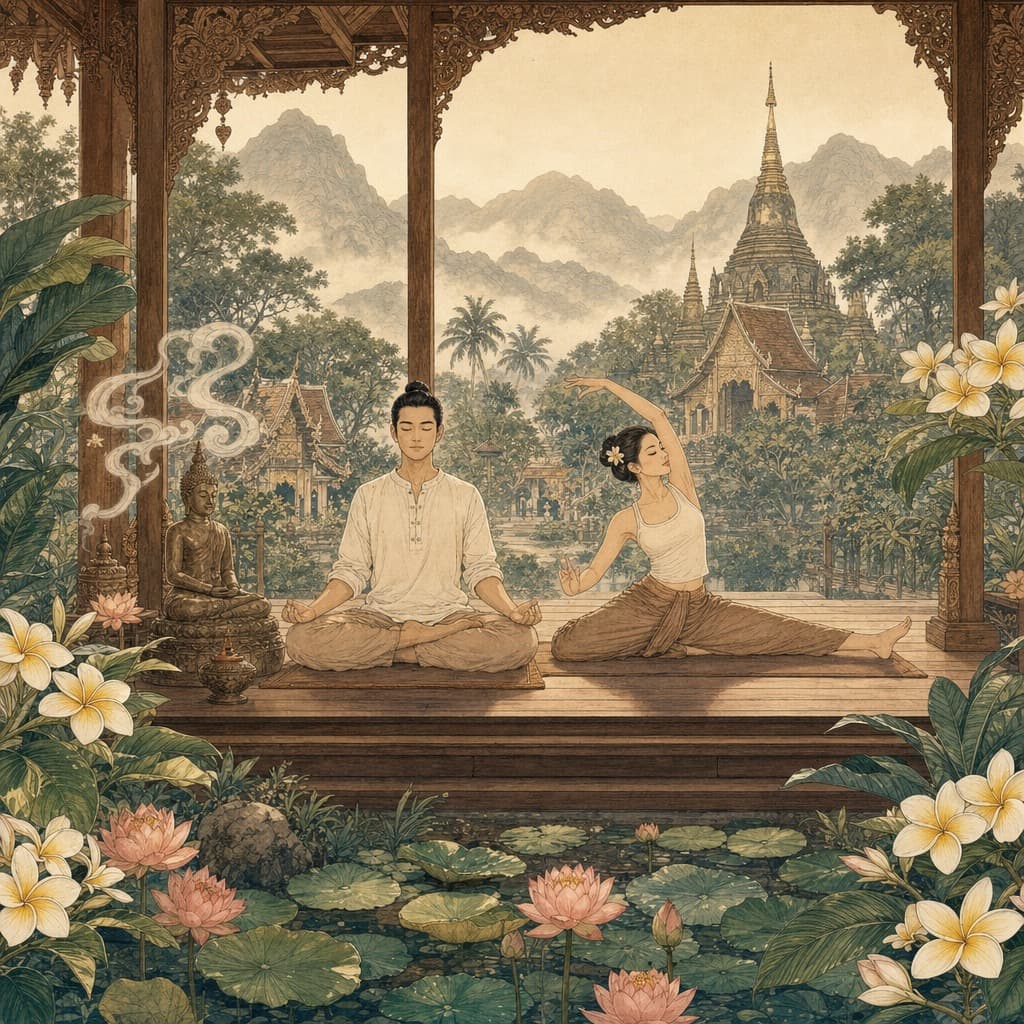
To unplug properly, head to a mountain or countryside retreat: accommodation, meals and daily practice in a quiet rural setting. A typical day is morning yoga and meditation, free time or a guided hike, an evening session, and a shared healthy dinner. They range from weekend resets to 10-day immersions, themed around deep yoga, stress relief, detox or mindfulness — ideal if you're burnt out and can step away from the laptop for a few days.
Meditation & vipassana
Chiang Mai's Buddhist heart makes it a natural place to learn meditation — from gentle to serious:
- Introductions — temple monk chats and short guided sits (open to all, low pressure) are a lovely first step; see our monk chat & meditation guide. Forest temples like Wat Umong are naturally contemplative.
- Silent vipassana retreats — dedicated centres (such as the Northern Insight Meditation Center / Wat Ram Poeng) run multi-day to multi-week silent retreats. Expect plain white clothing, the Eight Precepts (including no solid food after midday), pre-dawn starts, silence, and a donation-based model. Challenging, and for many people profoundly worth it.

The wider wellness scene
Beyond yoga and meditation, the ecosystem runs deep: traditional Thai massage on every street, sound healing and Reiki, breathwork workshops, detox and fasting retreats, and women's circles and community gatherings. Easy to weave one into a normal week — a massage after a work sprint, a sound bath some evening. And if your idea of a reset leans more sweat than stillness, our guide to gyms and staying fit in Chiang Mai maps out the weights-and-cardio side of the scene.
Practical tips
- Drop-in vs commit — start with a few classes to find a style and teacher; book a retreat once something clicks.
- Book ahead for popular retreats and vipassana courses (especially Nov–Feb high season); drop-in classes and massages are usually fine last-minute.
- Temple etiquette — dress modestly (or the required white for retreats), remove shoes, keep quiet, be discreet with photos.
- Costs — studios charge per class/pack; retreats are fixed packages; temple meditation is donation-based or low-cost.
Schedules, prices and course availability change often, so confirm directly with each studio, retreat or temple before you go. Not sure where to start? Tell us at the house what you're after — a gentle class, a serious sit, or a full mountain reset — and we'll point you to the right people nearby.
Frequently asked questions
I just want to try a class without committing to a retreat. Is that possible?
Absolutely. Small, friendly studios around Nimman and the Old City run daily drop-in classes such as vinyasa, hatha and yin, with pay-per-class or discounted class packs. It is the easy, low-commitment entry point, ideal if your work hours vary, and you will often leave with tips for what to try next.
How long do the multi-day retreats run?
They range from weekend resets to 10-day immersions, themed around deep yoga, stress relief, detox or mindfulness. A typical day is morning yoga and meditation, free time or a guided hike, an evening session, and a shared healthy dinner in a quiet rural or mountain setting.
What should I expect from a silent vipassana retreat?
Dedicated centres such as the Northern Insight Meditation Center run multi-day to multi-week silent retreats. Expect plain white clothing, the Eight Precepts (including no solid food after midday), pre-dawn starts, silence, and a donation-based model. It is challenging, but for many people profoundly worth it.
How much does it all cost?
It varies by format. Studios charge per class or per pack, well below Western city prices; multi-day retreats are fixed packages; and temple meditation is donation-based or low-cost. You can sample widely without spending a fortune before you commit.
Do I need to book ahead?
Book ahead for popular retreats and vipassana courses, especially in the November to February high season. Drop-in classes and massages are usually fine to arrange last-minute. Schedules and availability change often, so confirm directly with each studio, retreat or temple before you go.
Is there a gentle way to start with meditation?
Yes. Temple monk chats and short guided sits are open to all and low pressure, making a lovely first step. Forest temples like Wat Umong are naturally contemplative, so they are a calm place to begin before considering anything more serious.