Things to do · June 28, 2026
Bua Tong Sticky Waterfalls: The Cascade You Can Climb
By The Ada House team
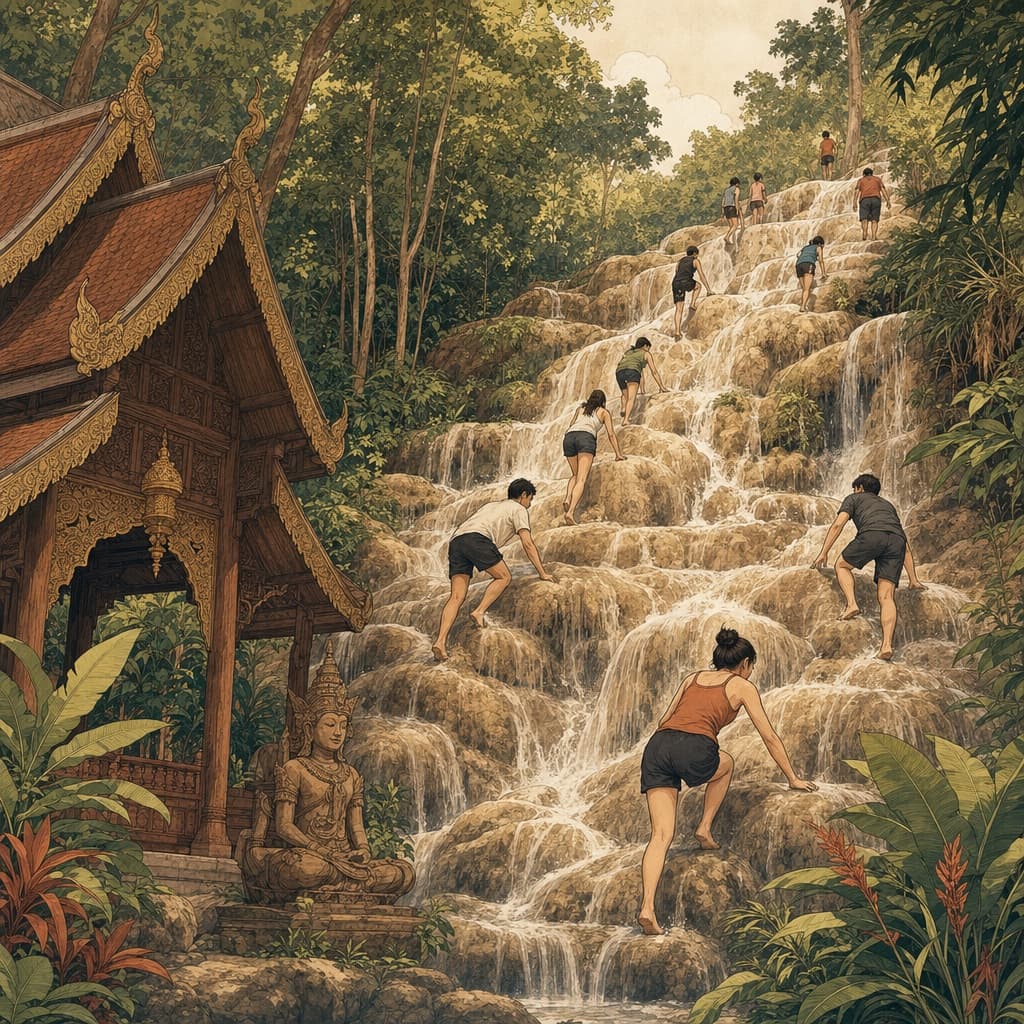
Most waterfalls in northern Thailand come with the same quiet warning: those rocks are slick, so watch your footing. Bua Tong breaks that rule entirely. Here the rock grips back. You can kick off your sandals, plant a bare foot on the cascade, and walk straight up the falling water as if it were a staircase. It is one of the strangest and most joyful half-days you can have near the city, and unlike most of the spots in our round-up of the region's waterfalls, this one earns a guide all to itself.
Why you can walk up a waterfall
The magic is mineral, not myth. The spring that feeds Bua Tong rises through limestone, so the water arrives loaded with dissolved calcium bicarbonate. As it tumbles over the falls and meets the air, that calcium crystallises onto the rock, building a pale, porous crust the geologists call tufa, a soft cousin of travertine. Run your hand over it and you will feel exactly why it works: the surface is faintly rough, almost like very fine sandpaper, packed with microscopic ridges that catch the soles of your feet. Slippery algae never gets a foothold on it. So where other cascades are treacherous, this one is reassuringly sticky. It really is that simple, and that surreal.
Climbing the three tiers
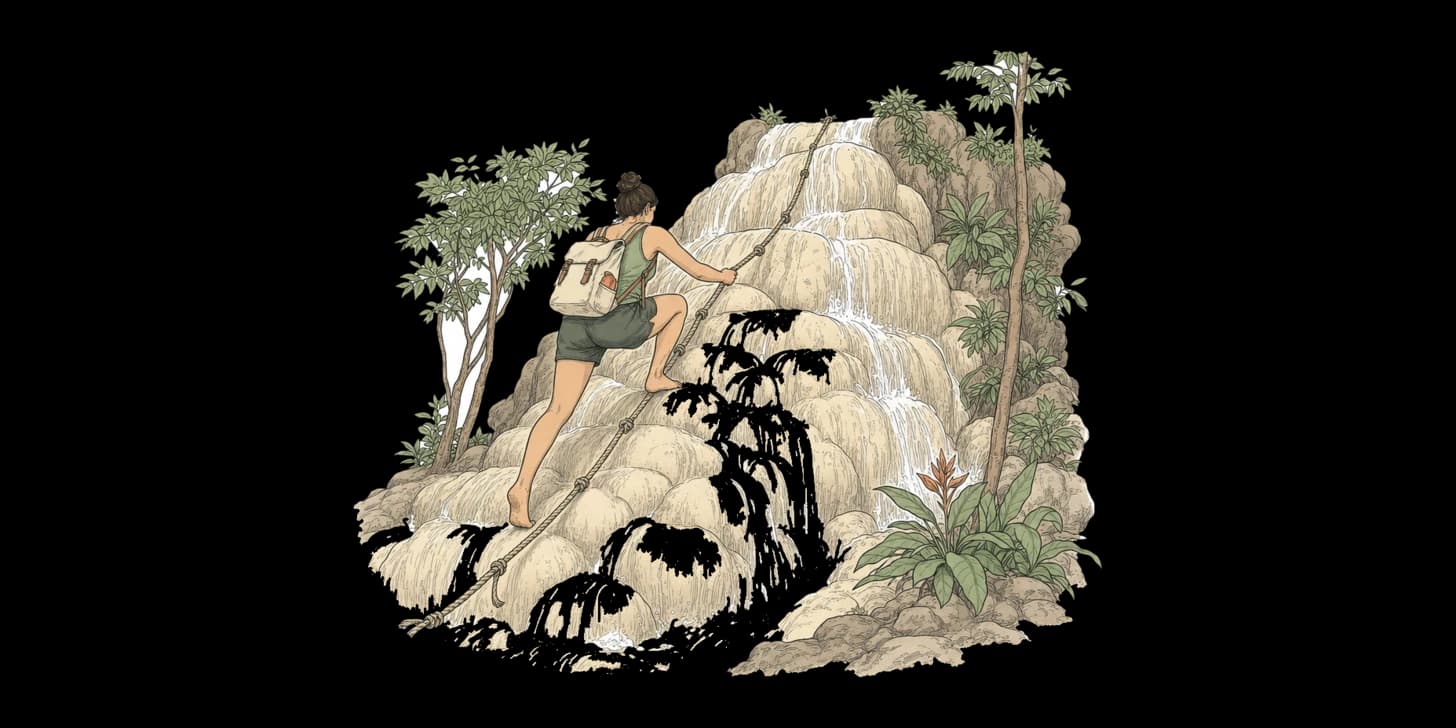
The falls drop in roughly three tiers down a forested hillside, around 100 metres of climbable rock in total. Some stretches are a gentle, ankle-deep scramble; others tilt steeper, and the national park has bolted fixed ropes alongside the trickier sections so you always have something to hold. The trick is to trust the grip, keep your weight over your feet, and go slowly. You will see Thai families doing it in flip-flops and grandparents inching up beside teenagers. It is genuinely one of the better outdoor outings to do with children in the region, equal parts swimming hole and adventure playground, though small ones still want a hand on the steeper steps. Climb up, walk down the shaded staircase beside the falls, and do it all over again.
The bubbling spring at the top
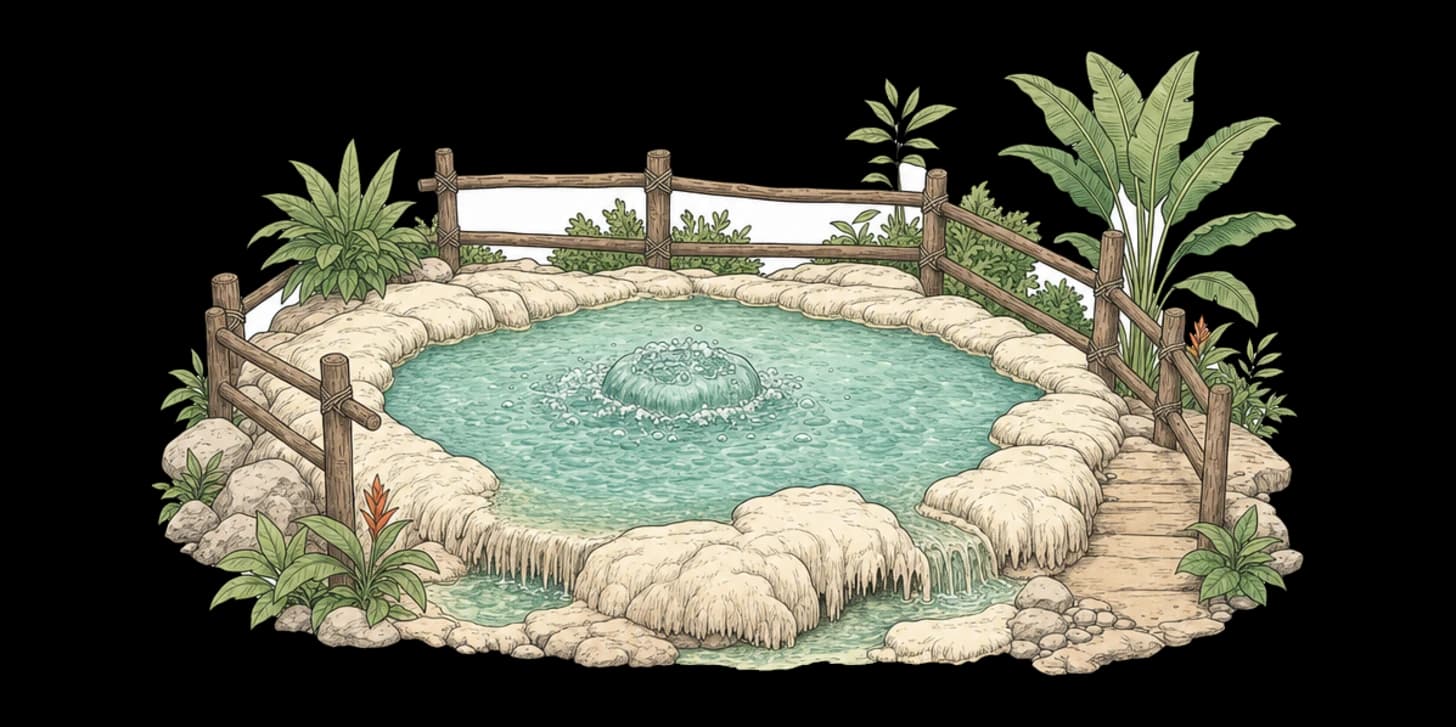
Follow the path above the highest tier and you reach the source: a quiet, almost otherworldly pool where the Chok Ka Bin spring bubbles up out of the ground. This is the head of Nam Phu Chet Si, the "spring of seven colours", and the water has a faintly blue-green, mineral cast to it. Stand and watch the surface fizz and churn and you are looking at the very calcium-rich source that makes the whole cascade below climbable. It is a five-minute detour most visitors skip, which is precisely why it is worth doing.
Getting there
Bua Tong sits inside Si Lanna National Park in Mae Taeng district, roughly 60 kilometres north of the old town. Realistically that is an hour to an hour and a half of driving, heading up Highway 107 in the direction of Chiang Dao before turning off east into the hills. There is no public transport that drops you at the gate, so you have three options: drive yourself, take a tour, or hire a private car for the day. If you are comfortable on two wheels it makes a lovely ride, though the final stretch is winding; our notes on getting around and on renting a scooter will help you decide whether to self-drive or sit back and let someone else handle the bends.
What it costs, and what to bring
Here is the happiest part: entry is free. The park is generally open daily from around 8am to 5pm, and the facilities are better than you would expect for somewhere this unspoilt, with a car park, toilets, a sala and shaded picnic tables, and food vendors near the entrance selling drinks, snacks and simple Thai dishes. You barely need to pack a thing. Wear clothes you do not mind soaking and quick-drying shorts; the rock grips bare feet beautifully, so river shoes are optional rather than essential, though some people like a thin pair for peace of mind. Bring a towel, a dry bag for your phone, sun cream and water, and you are set.
Best time to go
Bua Tong is a genuine year-round pleasure, but a few things are worth knowing. The dry season, roughly November to April, gives you the most predictable footing and the easiest climb, which dovetails neatly with the cooler months we cover in when to visit. The falls flow harder in and after the rains, which is dramatic but means a touch more care on the steeper tiers. And go on a weekday if you possibly can: weekends draw cheerful crowds of local families, which is lovely for the atmosphere but busy on the rock.
Make a day of it
Because you are already this far north, it would be a shame to turn straight back. The same corner of the province holds the calm, island-dotted reservoir behind the Mae Ngat dam, and our guide to Mae Ngat and the Sri Lanna lake pairs perfectly with a sticky-footed morning here. If you set off early and fancy a scenic loop, you can also fold in the cool-climate viewpoints and strawberry farms of Mon Cham on the way back down. Climb a waterfall, eat lunch by the water, and roll home grinning. That is a very good day out of Chiang Mai.
Frequently asked questions
Why can you actually climb this waterfall?
The magic is mineral, not myth. The spring feeding Bua Tong rises through limestone, so the water arrives loaded with dissolved calcium that crystallises onto the rock as a pale, porous crust geologists call tufa. Its surface is faintly rough, packed with microscopic ridges that catch your feet, and slippery algae never gets a foothold, so the cascade is reassuringly sticky.
Is the climb safe, and is it suitable for children?
The falls drop in roughly three tiers, around 100 metres of climbable rock, with the national park bolting fixed ropes alongside the trickier sections so you always have something to hold. Trust the grip, keep your weight over your feet, and go slowly. It is genuinely one of the better outings to do with children, equal parts swimming hole and adventure playground, though small ones still want a hand on the steeper steps.
What is the bubbling spring at the top?
Above the highest tier you reach the source, a quiet pool where the Chok Ka Bin spring bubbles up out of the ground. This is the head of Nam Phu Chet Si, the 'spring of seven colours', with a faintly blue-green mineral cast. It is a five-minute detour most visitors skip, which is precisely why it is worth doing.
How do I get there?
Bua Tong sits inside Si Lanna National Park in Mae Taeng district, roughly 60 kilometres north of the old town, an hour to an hour and a half of driving up Highway 107 towards Chiang Dao before turning off east into the hills. There is no public transport to the gate, so you drive yourself, take a tour, or hire a private car for the day.
What does it cost and what should I bring?
The happiest part is that entry is free. The park is generally open daily from around 8am to 5pm, with a car park, toilets, a sala, shaded picnic tables and food vendors near the entrance. Wear clothes you do not mind soaking and quick-drying shorts, and bring a towel, a dry bag for your phone, sun cream and water; river shoes are optional since the rock grips bare feet.
When is the best time to go?
It is a year-round pleasure, but the dry season from roughly November to April gives the most predictable footing and easiest climb. The falls flow harder in and after the rains, which is dramatic but needs more care on the steeper tiers. Go on a weekday if you can, as weekends draw cheerful crowds of local families.