Local culture · June 27, 2026
Why everyone in Thailand has a nickname (and it might be 'Benz')
By The Ada House team
On your first week here, something quietly delightful happens. You meet a dozen lovely people — the woman at the coffee cart, the fellow who fixes scooters, the smiling barista who already knows your order — and not one of them tells you their real name. They tell you they are Beer. Or Apple. Or, gloriously, Benz. And you nod along, because of course they are, and a little later you wonder whether you misheard. You didn't. You've just been welcomed into one of the warmest, funniest, most human traditions in Thai life.
The name you'll never need to remember
Here's the gentle truth: the friendly name everyone uses almost certainly isn't the name on anyone's ID card. Thai formal names are long, elegant, and frequently of Sanskrit or Pali origin — beautiful, multi-syllable affairs that even Thai friends will admit they rarely use for each other. So in daily life, that grand official name mostly sleeps in a drawer, and everyone goes by something shorter, softer, and far more fun.
You may know somebody for months — your neighbour, your gym buddy, your favourite noodle vendor — and never once learn their formal name. That is completely normal. The nickname is the real name, socially speaking. It's the one written in phones, called across markets, and shouted affectionately between friends.
Meet the 'chue len', the play name
The Thai word for nickname is chue len, which translates rather charmingly as "play name." And play is exactly the spirit of it. Nearly every Thai person has one, usually a single bright syllable, given in infancy and carried for life. It sits entirely separate from the formal name rather than being a shortening of it — so Somchai on paper might be Golf to the whole world.
Part of the tradition has lovely old roots. Generations ago, families gave babies humble, even unflattering little names to keep jealous spirits from noticing a precious newborn. A baby called "pig" was, the thinking went, a baby left safely alone. Most families today don't dwell on the spirits, but the warm habit of a small, affectionate everyday name happily endures.
Who hands it out, and when
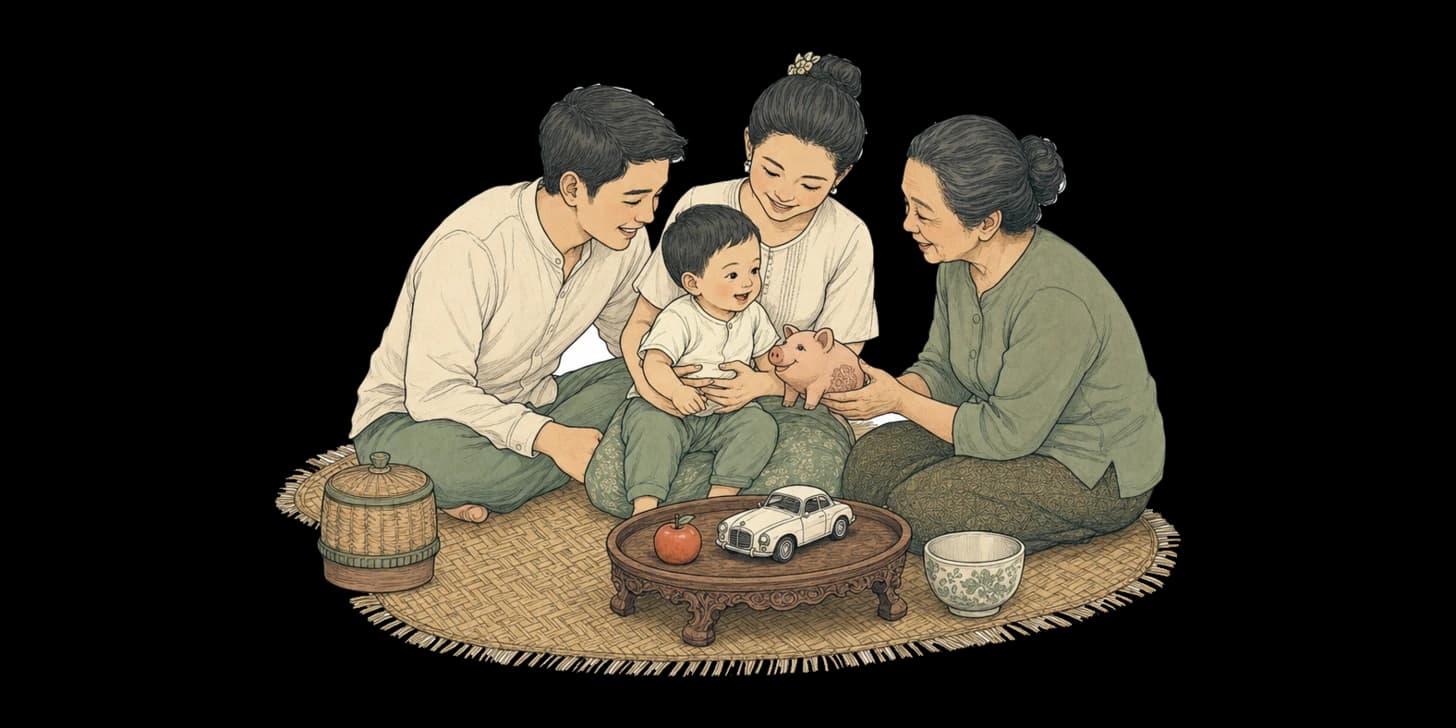
The chue len usually arrives in the cradle, bestowed by parents or grandparents within the first days or weeks — long before the child can object. Sometimes it captures something about the baby (chubby, tiny, the firstborn), sometimes it's simply a sound the family loved that month. Because it's given so early and so fondly, it tends to stick like glue, following someone from nursery to grandparenthood with complete cheerfulness.
From little pigs to Mercedes
Now for the part that makes everyone grin. The range of chue len is magnificently broad. On one side sit the sweet, traditional Thai words: Nung (one), Lek (small), Noi (little), Ploy (a gem), Fon (rain), and yes, the affectionately self-deprecating Moo (pig) and Gai (chicken). Discovering what these mean is one of the small joys of starting to pick up a little Thai while you're here — suddenly the names tell tiny stories.
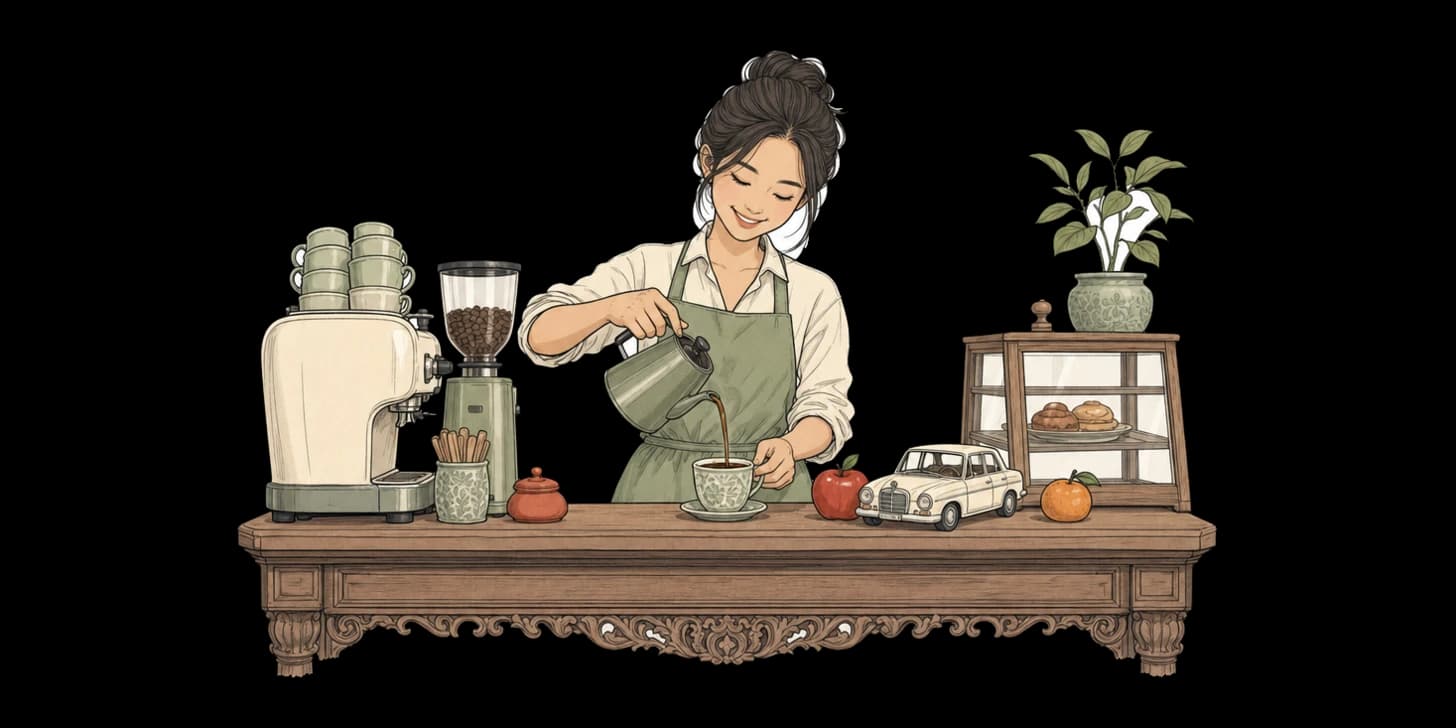
On the other side is the modern, marvellously random parade of borrowed English and brand words: Benz, Beer, Boss, Bank, Apple, Pop, Mint, and Golf. These are chosen for sound and good vibes far more than literal meaning — they feel cheerful, stylish, or lucky, and that's reason enough. So no, Benz wasn't named after the car for reasons of wealth; the word just sounded crisp and happy. We adore it completely.
How to use it (it's a gift, honestly)
The kindest thing to know is that all of this is normal and affectionate, not a barrier. When someone offers you their nickname, they're handing you the everyday, friendly version of themselves — use it freely and warmly. There's no need to hunt for a "real" name; the play name is the relationship. Pair it with a soft "khun" before it for politeness, and you're golden. If you'd like to feel sure-footed with the small graces around names, greetings and the wai, our notes on everyday Thai etiquette are a gentle companion.
A warm word for newcomers
If you're just landing in Chiang Mai, let the nicknames be your first easy doorway in. They're genuinely the simplest icebreaker we know — remembering that the barista is Mint and the night-market vendor is Boss is half of making friends in this city. People light up when you remember, because their chue len is intimate and theirs, and using it says I see you, friend.
So come and collect a few. Before long you'll have your own little roll-call of Beers and Apples and Benzes — and we promise it never stops being lovely.
Pull up a chair at Ada House, and we'll introduce you to half the street by Friday.
Frequently asked questions
Why does almost everyone in Thailand go by a nickname?
Thai formal names are long, elegant and frequently of Sanskrit or Pali origin, beautiful multi-syllable affairs that even Thai friends rarely use for each other. So in daily life the formal name mostly sleeps in a drawer, and everyone goes by something shorter, softer and far more fun. Socially speaking, the nickname is the real name.
What is the chue len?
Chue len is the Thai word for nickname, and it translates charmingly as play name. Nearly every Thai person has one, usually a single bright syllable given in infancy and carried for life. It sits entirely separate from the formal name rather than being a shortening of it, so Somchai on paper might be Golf to the whole world.
Where do humble nicknames like Moo (pig) come from?
Generations ago, families gave babies humble or even unflattering little names to keep jealous spirits from noticing a precious newborn, the thinking being that a baby called pig was left safely alone. Most families today don't dwell on the spirits, but the warm habit of a small, affectionate everyday name happily endures.
Why are some nicknames English words like Benz or Apple?
Alongside traditional Thai words like Lek (small) or Ploy (a gem), there's a modern parade of borrowed English and brand words such as Benz, Beer, Boss, Bank, Apple, Mint and Golf. These are chosen for sound and good vibes far more than literal meaning; Benz simply sounded crisp and happy, not a nod to wealth.
Who gives the nickname, and when?
The chue len usually arrives in the cradle, bestowed by parents or grandparents within the first days or weeks. Sometimes it captures something about the baby, such as chubby, tiny or the firstborn, and sometimes it's simply a sound the family loved that month. Given so early and so fondly, it tends to stick for life.
How should I use someone's nickname?
Use it freely and warmly. When someone offers you their nickname, they're handing you the everyday, friendly version of themselves, and there's no need to hunt for a real name. Pair it with a soft khun before it for politeness, and you're golden.