Things to do · June 25, 2026
Huay Tung Tao: Chiang Mai's lake escape
By The Ada House team
There's a moment, after a few busy weeks in the city, when you crave somewhere that doesn't want anything from you. No temples to admire, no markets to bargain in. Just water, mountains, and a plate of something grilled. Huay Tung Tao is that place — a calm reservoir tucked against Doi Suthep, fifteen to twenty minutes northwest of town, where locals have unwound on lazy afternoons for generations.
The lake and the huts
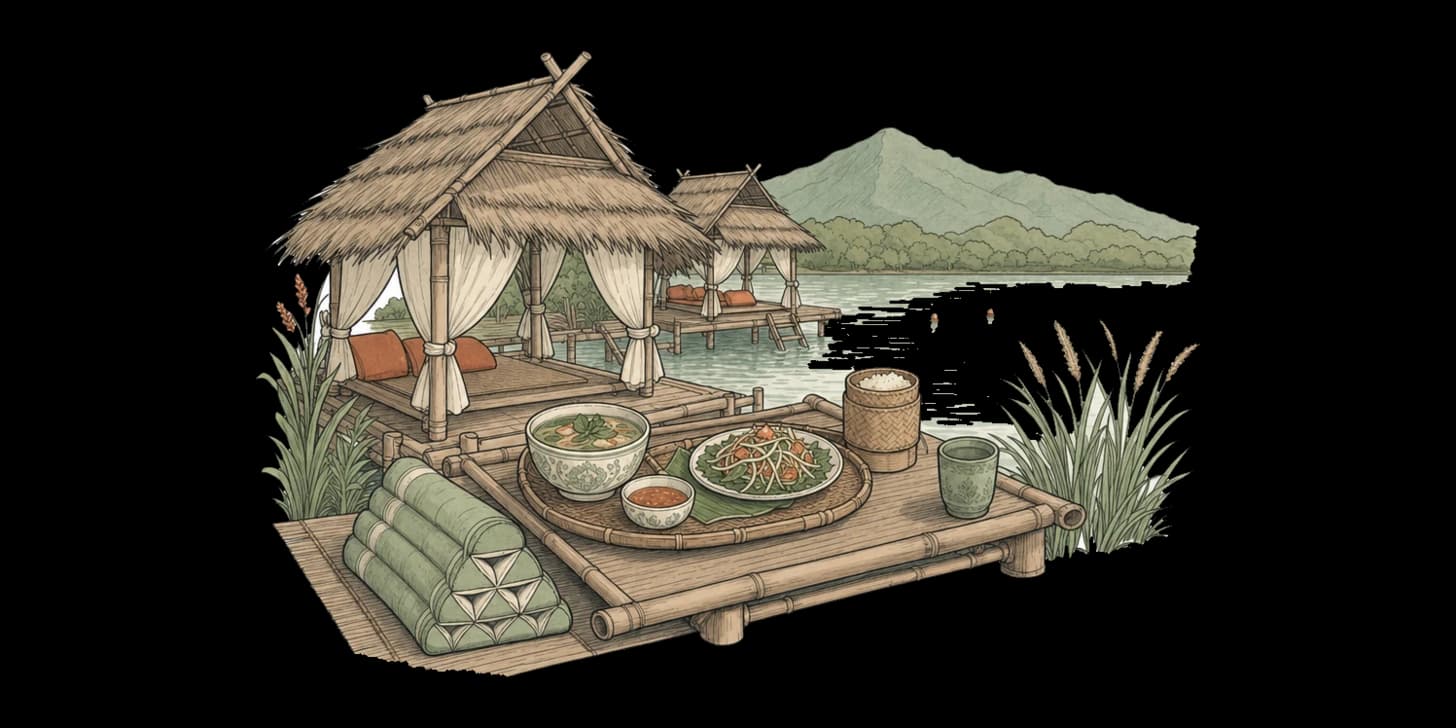
The first thing you notice is the bamboo huts (sala) — dozens of them, perched on stilts over the shallows, each one a little wooden room open to the breeze. You slip off your shoes, settle onto woven mats, and order from the family who runs it. The hut itself costs only a few baht; what you're really paying for is a private patch of shade with your feet practically over the water and Doi Suthep rising green behind the lake.
Spread out, lie back, doze. Nobody is rushing you. Stay long enough and the light starts to soften, the surface turns gold, and you'll understand why people linger until closing.
Eating by the water
This is proper Northern lakeside fare, and it's half the reason to come. Order som tam (green papaya salad, spicy enough to wake you up), grilled chicken, sticky rice in its little basket, and a whole grilled fish pulled from the reservoir, salt-crusted and smoky. Wash it down with something cold — fresh coconut, or a beer if the afternoon allows. Dishes hover around 40–80 baht, so a feast for the table costs very little. It's the same generous, shareable spirit we love about Northern Thai food everywhere in the region, only here you're eating it over open water.
Swim, paddle, or simply float
When the heat builds, wade into the marked bathing area — the water is warm and shallow, and modest swimwear is appreciated, since this is a family spot first and foremost. You can hire a pedal boat (around 80 baht for half an hour), a kayak, or a paddleboard, or just bob about doing nothing in particular. A flat loop runs the whole way around the reservoir, lovely on foot or by bicycle if you've followed our notes on cycling Chiang Mai. It's wonderfully easygoing with little ones, the kind of unstructured afternoon that Chiang Mai with kids is full of.
Getting there and timing it right
There's a small entrance fee at the gate — a modest per-person charge, a touch higher for foreign visitors, and waived altogether if you arrive late in the day. The easiest way out is by scooter; if you haven't sorted wheels yet, our guide to renting a scooter covers the basics. No scooter? A Grab runs cheap and direct, and a songthaew works too — see getting around Chiang Mai for the lie of the land. From Huay Kaew Road you pass Maya mall, turn onto the Canal Road, and follow the signs in.
Come in the morning for stillness, or late afternoon for the sunset and the cooling air. Weekdays are quietest; weekends fill with Thai families and a happy, picnic-blanket buzz. Either way, you're stitching together one of those slow Chiang Mai days that pair beautifully with a Doi Suthep weekend or a morning chasing waterfalls on the mountain above. And if this afternoon by the water leaves you wanting to actually sleep on it, the floating bamboo raft houses at Mae Ngat Dam in Sri Lanna are the overnight version, an hour to the north.
We send guests here when the week has been a little too full and they need the city to soften at the edges. Take a towel, take your time, and let the lake do the rest. See you back at the house with sun on your shoulders.
Frequently asked questions
Where is Huay Tung Tao and how do I get there?
It is a calm reservoir tucked against Doi Suthep, fifteen to twenty minutes northwest of town. The easiest way out is by scooter, but a Grab runs cheap and direct, and a songthaew works too. From Huay Kaew Road you pass Maya mall, turn onto the Canal Road, and follow the signs in.
What are the bamboo huts, and how much do they cost?
They are dozens of sala perched on stilts over the shallows, each a little wooden room open to the breeze. You slip off your shoes, settle onto woven mats, and order from the family who runs it. The hut itself costs only a few baht; what you are really paying for is a private patch of shade with your feet practically over the water.
What is the food like?
It is proper Northern lakeside fare and half the reason to come: som tam, grilled chicken, sticky rice, and a whole grilled fish pulled from the reservoir, salt-crusted and smoky, washed down with fresh coconut or a cold beer. Dishes hover around 40 to 80 baht, so a feast for the table costs very little.
Can I swim, and what is on the water?
Yes. When the heat builds you can wade into the marked bathing area, where the water is warm and shallow, and modest swimwear is appreciated since this is a family spot first and foremost. You can also hire a pedal boat for around 80 baht for half an hour, a kayak or a paddleboard, or just float about doing nothing.
Is there an entrance fee?
There is a small entrance fee at the gate, a modest per-person charge that is a touch higher for foreign visitors, and it is waived altogether if you arrive late in the day. A flat loop runs the whole way around the reservoir, lovely on foot or by bicycle.
When is the best time to go?
Come in the morning for stillness, or late afternoon for the sunset and the cooling air. Weekdays are quietest, while weekends fill with Thai families and a happy, picnic-blanket buzz. It pairs beautifully with a Doi Suthep weekend or a morning chasing waterfalls on the mountain above.