Food & coffee · June 25, 2026
The khantoke dinner: a Northern Lanna feast in Chiang Mai
By The Ada House team
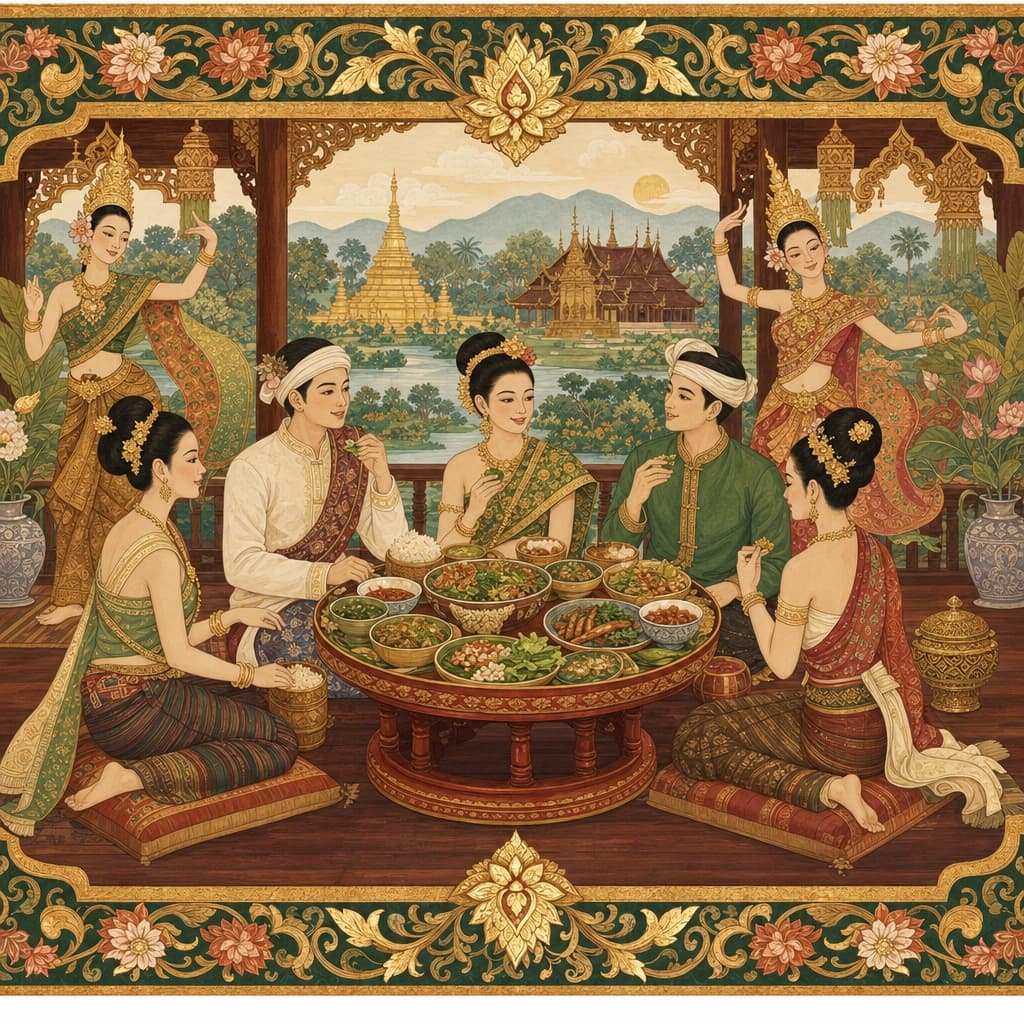
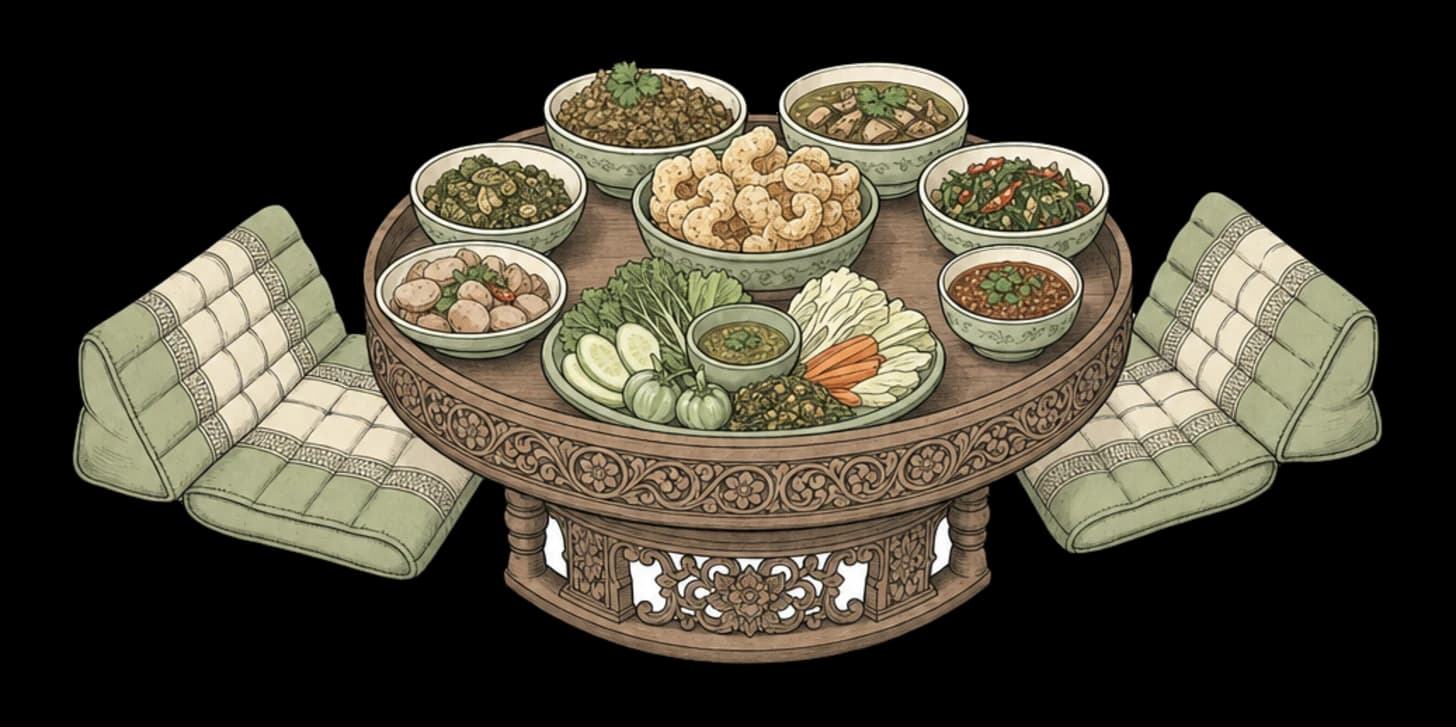
You sit on a cushion on the floor. In front of you is a round, raised tray loaded with little bowls — curries, a herby sausage, chilli dips, a basket of sticky rice steaming gently. Someone pours you a drink, the music starts, and for the next hour or two you do nothing but eat, share and watch. This is a khantoke, and it's the most Lanna way there is to spend an evening in Chiang Mai.
What a khantoke actually is
The word tells you most of what you need to know. A "khan" is a bowl or food vessel; a "tok" (or toke) is the low table a Northern Thai family gathers around to eat. Put them together and you get the khan tok — a round pedestal tray, traditionally teak or woven rattan, lacquered and sometimes carved, that holds the whole meal at once.
There's no procession of courses here. Everything arrives together, in the middle, and you reach in and share. You sit cross-legged on the floor, you eat sticky rice with your hands — rolling a little ball, dipping it into whatever you fancy — and the meal stretches out as long as the conversation does. It's relaxed, communal and a little ceremonial all at once.
A way of welcoming guests
The khantoke isn't a restaurant invention. It's a hosting tradition that goes back to the Lanna kingdom, which ruled the North from the late 13th century, and it's still wheeled out for the big moments — weddings, housewarmings, a son's ordination into the monkhood, funerals. To lay a khantoke for someone is, at heart, to make them welcome. If you want the longer story of the people behind it, our guide to the Lanna kingdom's history is a good place to start; the same craft tradition runs through Chiang Mai's handicrafts, and the trays themselves are lovely examples of it.
What's on the tray
This is the part you came for. A khantoke is essentially a sampler of Northern classics, so it's the easiest way to taste the whole region in one sitting:
- Sai ua — the fragrant grilled pork sausage, all lemongrass and kaffir lime.
- Nam prik — chilli dips, usually a smoky green-chilli one and a tomato-and-pork one, scooped up with fresh veg and khaep mu, crispy pork rinds.
- Gaeng hung lay — a rich, gingery pork-belly curry with Burmese roots.
- Fried chicken, a clear soup, and often a curry or two more.
- Sometimes a bowl of khao soi, the North's famous coconut-curry noodles.
- And always sticky rice, kept warm in its little bamboo basket.
If you've read our Northern Thai food guide, you'll recognise most of this — the khantoke is simply all of it, on one tray, at once.
The dinner shows — and an honest take
The version most visitors meet is the dinner show: a big hall, long rows of khantoke trays, and a stage. The Old Chiang Mai Cultural Center on Wualai Road has run one since the early 1970s, and a handful of others do similar evenings. You eat while traditional Lanna music and dance unfold — the graceful fingernail dance (long brass nails extending the dancers' fingers), candle dances, sword dances — usually rounded off with hill-tribe performances from the North's ethnic communities.
Here's the honest bit. These big shows are touristy — coach groups, a fixed menu, photo moments — and the hill-tribe segment is a performance staged for visitors rather than a window into daily life, so take it as the friendly cultural showcase it is, not the full picture of those communities. That said, it's a genuinely warm, atmospheric night, the dancing is beautiful, and it's a low-stress way to eat your way through Northern cuisine — though if all that chilli and sticky rice eventually has you craving something familiar, our roundup of brunch and comfort food in Chiang Mai is there for the homesick mornings after. If you'd rather something quieter, smaller and more authentic khantoke meals turn up at local weddings, temple events and a few unshowy restaurants — worth seeking out if you stay a while.
How to do it
Book ahead, especially in high season. Dress tidily out of respect — you'll be sitting close to others on the floor — and wear something you can fold your legs in. Then do the simple thing the tray asks of you: sit, share, eat with your hands, and let the evening take its time.
However you find your khantoke — grand show or quiet local table — it does the one thing it was always meant to. It makes you feel welcome. And that's a very Lanna note to end an evening on.
Warmly, the Ada House team
Frequently asked questions
What is a khantoke dinner?
A khantoke is the most Lanna way to spend an evening in Chiang Mai: you sit cross-legged on a floor cushion around a round pedestal tray loaded with little bowls of Northern dishes. There is no procession of courses, as everything arrives together in the middle and you share, eating sticky rice with your hands while the meal stretches out as long as the conversation does.
What food is served at a khantoke?
It is essentially a sampler of Northern classics on one tray, so expect sai ua grilled pork sausage, nam prik chilli dips with veg and crispy khaep mu, gaeng hung lay pork-belly curry, fried chicken and a clear soup. Sometimes there is a bowl of khao soi too, and always a basket of warm sticky rice.
What are the khantoke dinner shows actually like?
The version most visitors meet is a dinner show in a big hall with long rows of trays and a stage, where you eat while traditional Lanna music and dance unfold, including the graceful fingernail dance and usually some hill-tribe performances. The Old Chiang Mai Cultural Center on Wualai Road has run one since the early 1970s, and a handful of others do similar evenings.
Are the dinner shows touristy?
Honestly, yes. The big shows are touristy, with coach groups, a fixed menu and photo moments, and the hill-tribe segment is a performance staged for visitors rather than a window into daily life. That said, it is a genuinely warm, atmospheric night and a low-stress way to eat through Northern cuisine, so take it as the friendly cultural showcase it is.
How should I book and what should I wear?
Book ahead, especially in high season. Dress tidily out of respect since you will be sitting close to others on the floor, and wear something you can comfortably fold your legs in. Then do the simple thing the tray asks of you: sit, share and eat with your hands.