Move here · June 27, 2026
Chiang Mai University and the student-area vibe
By The Ada House team
If Chiang Mai feels unusually young, creative and caffeinated for a city its size, there's a big leafy reason just west of us. Chiang Mai University — everyone simply says CMU — spreads across the foot of Doi Suthep, and its tens of thousands of students set the tempo of the whole western side of town. The lovely part is that you don't have to enrol to enjoy any of it. Here's how we'd spend a day in the student belt, and why so many of our guests end up basing themselves right here.
Thailand's first university outside Bangkok
CMU opened its gates in 1964 as the first proper university in the north — and the first provincial university in the whole country, a genuine landmark at a time when higher education still meant Bangkok and nowhere else. Six decades on, it's one of Thailand's leading research universities, and its influence on the city is hard to overstate. The indie cafés, the cheap-and-cheerful eats, the laptop-friendly, stay-a-while culture all grew up around a young population that wanted good coffee and a comfy place to study. That same DNA is exactly why the coworking spaces and the specialty cafés cluster so thickly just east of campus, around Nimman. The students made this corner of town what it is.
Wandering the campus
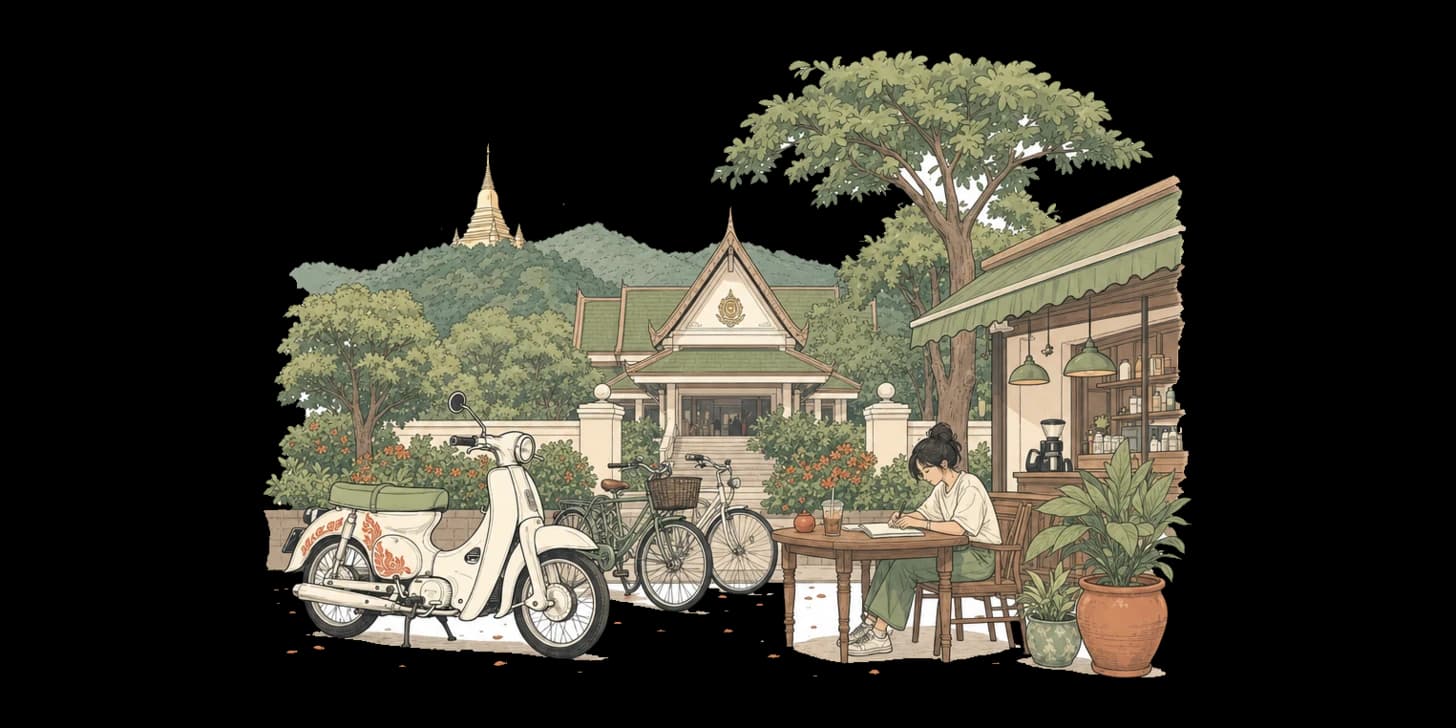
The main campus is a generous wedge of land — nearly 3 square kilometres, about 2 km west of the old city — and a good chunk of it is forest, lawns and water rather than lecture halls. To explore it properly, hop on the electric tram. The tour starts at the Information Centre near the Huay Kaew entrance, runs a recorded commentary in several languages, and loops gently past the prettiest spots, including the reservoir. It's shady, cheap and genuinely relaxing — and these days it's the official way for visitors to see the grounds, after a few too many tourists started sneaking into actual classes for photos.
Right beside the main gate, the Huay Kaew Arboretum is a free pocket of calm — open daily 9am to 5pm, with more than 400 native plant species and shady benches that make a perfect reading spot. From the campus edge it's also a short ride up to Doi Suthep itself, so a morning on campus folds neatly into an afternoon on the mountain.
Ang Kaew at golden hour
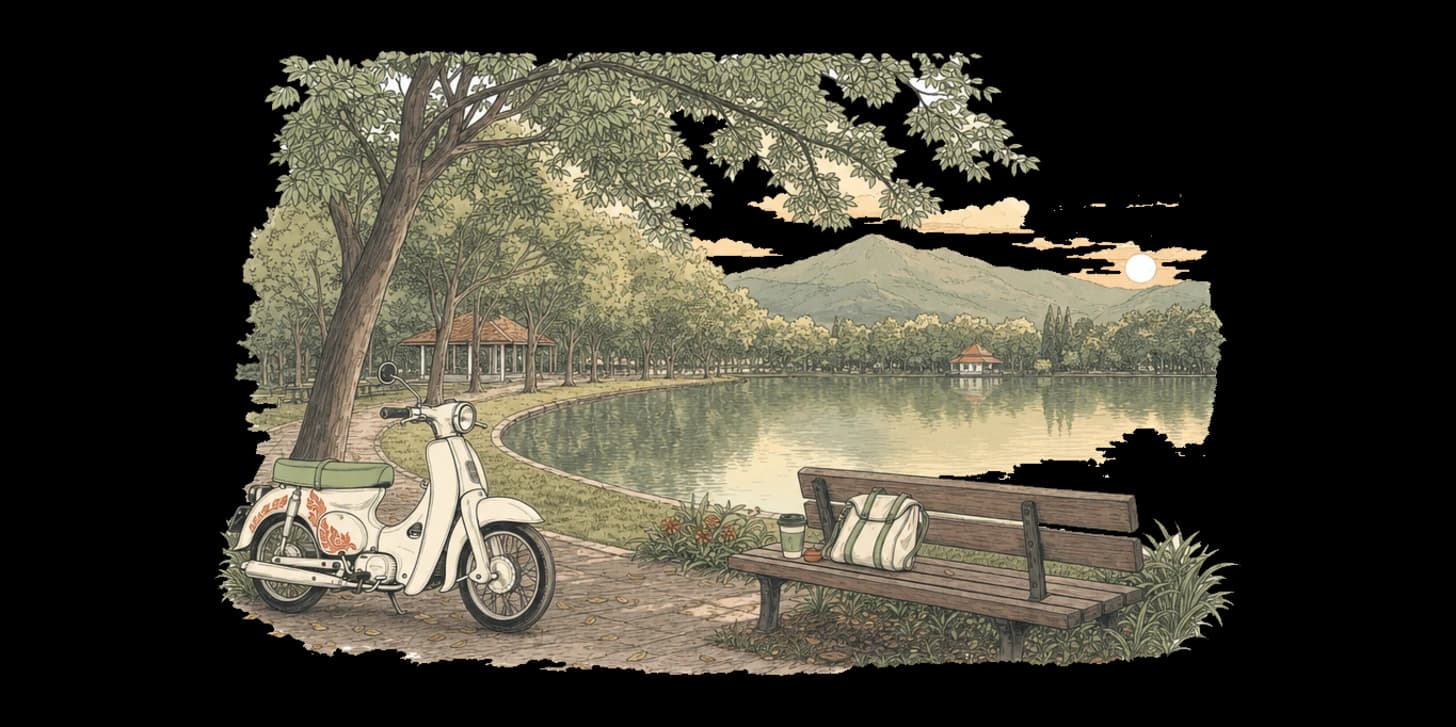
If you do one thing here, make it sunset at the Ang Kaew reservoir. Built decades ago to supply the university with water, it's become the campus's living room: students jog the loop, friends share mats on the grass, and the whole lake turns gold while Doi Suthep glows behind it. Bring a drink, find a patch of bank, and watch the mountain change colour. It's one of the most quietly beautiful free things to do in the entire city, and barely a fifteen-minute hop from our door.
Eating and living like a student
This is where the student area really earns its keep. CMU's canteens serve proper Thai plates for pocket change, and the streets around Suthep Road are wall-to-wall with cheap, excellent food aimed squarely at hungry undergraduates. The headline act is the night market locals call Kad Na Mor (you'll also see it as Malin Plaza), right across Huay Kaew Road from the main gate. From around 6pm it fills with young people grazing on hot pot, grilled skewers, desserts and snacks, with rails of cheap clothes in between. Add the area's bargain laundry shops and walk-in massage, and you can live very, very well here for very little.
Studying here yourself
You can also be more than a spectator. CMU runs Thai language courses and a range of short programmes, and the wider city has a busy exchange and study-abroad scene that keeps the cafés full of people from everywhere. Even if you never set foot on campus, picking up a little Thai transforms day-to-day life — markets, taxis, the lady at your favourite noodle stall all warm up the moment you try. We've gathered our favourite spots and tips for learning Thai in Chiang Mai if you'd like to give it a go while you're with us.
A youthful, good-value base for nomads
For digital nomads and curious travellers, the CMU edge is a bit of a sweet spot. It's walkable and green, the food is some of the cheapest good eating in the city, and the energy skews young, creative and friendly without ever feeling rowdy. You're minutes from Nimman's cafés and coworking when you want to work, minutes from the lake and the mountain when you want to switch off, and surrounded by a community that's permanently in the mood for a fresh start. That mix of good value, easy living and quiet inspiration is exactly the Ada House vibe — which is why we love being right on the doorstep of it all.
Come find your favourite bench by the lake — we'll point you to the best noodle stall on the way.
Frequently asked questions
When did Chiang Mai University open and why does it matter?
CMU opened its gates in 1964 as the first proper university in the north, and the first provincial university in the whole country. Six decades on it is one of Thailand's leading research universities, and its young population is a big part of why this side of town feels so creative and caffeinated.
Can I visit the campus if I'm not a student?
You absolutely can, and these days the official way to explore the grounds is the electric tram. It starts at the Information Centre near the Huay Kaew entrance, runs a recorded commentary in several languages, and loops gently past the prettiest spots including the reservoir. It's shady, cheap and genuinely relaxing.
What is the one thing I shouldn't miss?
Sunset at the Ang Kaew reservoir, without question. Built to supply the university with water, it has become the campus's living room, with students jogging the loop and the whole lake turning gold while Doi Suthep glows behind it. It's one of the loveliest free things to do in the city, barely fifteen minutes from our door.
Where can I eat cheaply around the university?
The student belt is wall-to-wall with bargain food. CMU's canteens serve proper Thai plates for pocket change, and the streets around Suthep Road are full of cheap, excellent eats. The headline is the night market locals call Kad Na Mor, also signed as Malin Plaza, across Huay Kaew Road from the main gate, which fills from around 6pm with hot pot, grilled skewers and snacks.
Can I study Thai at the university myself?
Yes, CMU runs Thai language courses and a range of short programmes, and the wider city has a busy study-abroad scene. Even a little Thai transforms day-to-day life at markets and noodle stalls, and we are happy to point you to our favourite spots for learning while you stay with us.