Health & wellness · June 29, 2026
Detox, fasting and wellness retreats in Chiang Mai
By The Ada House team
Somewhere between the temples and the café-lined sois, Chiang Mai has built a quiet reputation as a place people come to reset their bodies as well as their minds. Detox, fasting and wellness retreats are a real part of that scene now — and, like everything in this city, they range from the genuinely lovely to the slightly overhyped. If you are curious about a juice cleanse, a few days of fasting in the hills, or simply a gentler week of yoga and herbal steam, here is an honest look at what is on offer and how to approach it sensibly.
Why Chiang Mai suits a reset
There are good reasons this corner of northern Thailand draws the wellness crowd. The setting helps enormously: cool mountain air, forested hills and rice-field calm sit just twenty minutes from town, which is a far easier place to fast or slow down than a humid beach resort. It is also affordable by global standards, so a programme that would cost a small fortune in California or Bali is within reach here. And the infrastructure is mature — Chiang Mai has been a yoga and meditation hub for decades, so retreats, therapists and plant-based kitchens are everywhere. If you are planning a trip around one, the cooler, clearer months are the most comfortable for it; our guide to when to visit explains the seasons.

The main types you'll find
"Detox retreat" covers a surprisingly wide spread, so it helps to know the broad families before you book. Juice and raw-food cleanses are the gentlest entry point: a few days of cold-pressed juices, broths, smoothies and raw plant meals in place of solid food, usually paired with rest and light activity. Fasting programmes go further, from intermittent fasting to longer water or near-water fasts, and these are the ones to treat with the most care. Detox centres built around colon hydrotherapy and supplement protocols also exist here; they are popular, but the bolder claims about "flushing out toxins" are not well supported by evidence, so go in with clear eyes. At the calmer end sit holistic retreats that blend yoga, meditation and clean eating without any dramatic fasting at all. And woven through nearly all of it is Thai-traditional wellness — herbal steam saunas, Thai massage and the herbal-medicine heritage we cover in our piece on northern Thai medicine.
What a typical programme looks like
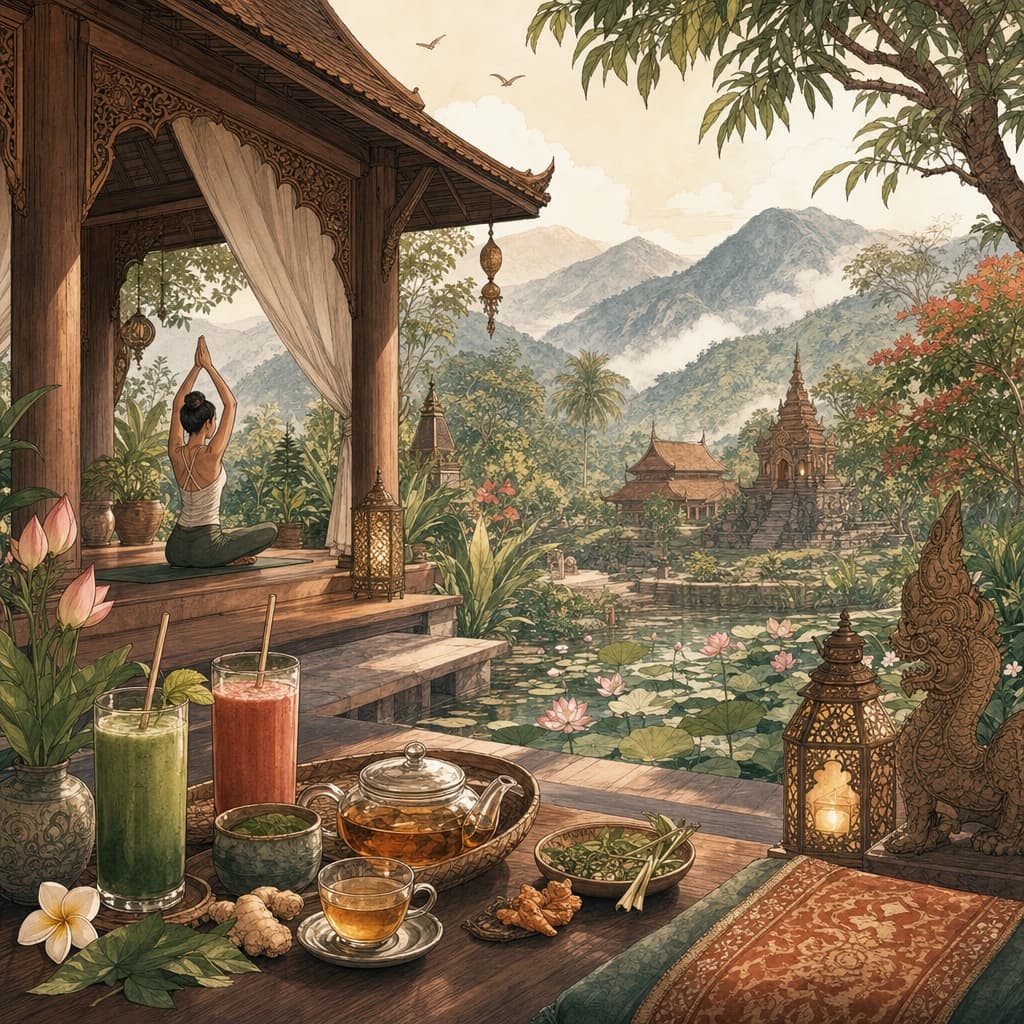
Most programmes run anywhere from a long weekend to a fortnight, with three to seven days the sweet spot for first-timers. Many sit in the hills around Mae Rim and Doi Saket, where converted resorts and small eco-retreats look out over valleys and terraced rice. A typical day has a gentle rhythm to it: an early start, morning yoga or a walk, juices or light meals spaced through the hours, perhaps a herbal sauna or spa treatment in the afternoon, then a quiet evening of meditation or an early night. The pace is deliberately unhurried, and the social side — eating, resting and detoxing alongside a small group — is a big part of the appeal for many people.
Choosing a retreat well
This is where a little healthy scepticism serves you. The best places are upfront about what they do and don't promise; the ones to be wary of lean on miracle language — rapid weight loss, curing illness, "years of toxins gone in a week". Look for qualified, experienced staff, especially anyone overseeing a fast, and ask who is actually on site if something feels vague. Read recent, independent reviews rather than only the glossy website, and check exactly what is included, what a day really involves, and how they handle guests who feel unwell. A reputable retreat will ask about your health before you arrive, not simply take your booking. As a rule of thumb: if a claim sounds too good to be true, it usually is.
Who it suits, and how to ease in
A gentle cleanse, or a yoga-and-clean-eating week, suits most healthy adults who fancy a reset, and it sits naturally alongside the slower, mindful side of a Chiang Mai stay. That said, none of this is medical advice. Fasting and aggressive detox protocols are genuinely not for everyone: if you are pregnant, managing a health condition, take regular medication, or have any history of disordered eating, please talk to a doctor first — Chiang Mai has excellent, affordable clinics and hospitals if you would like a check-up before you commit. Ease in rather than diving straight into the deepest programme; a short, gentle cleanse tells you a lot about how your body responds. And come off it sensibly, easing back to normal food and movement — the city's wonderful plant-forward kitchens make that last part a pleasure rather than a chore.
Frequently asked questions
What types of detox and wellness retreat will I find in Chiang Mai?
The scene covers a wide spread, so it helps to know the broad families first. The gentlest entry point is juice and raw-food cleanses, a few days of cold-pressed juices, broths, smoothies and raw plant meals in place of solid food. Beyond that sit fasting programmes, detox centres built around colon hydrotherapy and supplements, calmer holistic retreats blending yoga, meditation and clean eating, and Thai-traditional wellness such as herbal steam saunas and Thai massage.
How long do these programmes usually last?
Most run anywhere from a long weekend to a fortnight, with three to seven days being the sweet spot for first-timers. The pace is deliberately unhurried, with gentle days built around morning yoga or a walk, juices or light meals spaced through the hours, and quiet evenings. Many sit in the hills around Mae Rim and Doi Saket, in converted resorts and small eco-retreats looking out over the valleys.
Are detox and fasting retreats safe?
A gentle cleanse or a yoga-and-clean-eating week suits most healthy adults who fancy a reset, but none of this is medical advice. Fasting and the more aggressive detox protocols are the ones to treat with the most care, and the bolder claims about flushing out toxins are not well supported by evidence. If you are pregnant, managing a health condition, take regular medication, or have any history of disordered eating, please talk to a doctor first; Chiang Mai has excellent, affordable clinics and hospitals if you would like a check-up before you commit.
How do I choose a good retreat?
This is where a little healthy scepticism serves you well. The best places are upfront about what they do and do not promise, while the ones to be wary of lean on miracle language like rapid weight loss, curing illness or years of toxins gone in a week. Look for qualified, experienced staff, especially anyone overseeing a fast, read recent independent reviews rather than only the glossy website, and check exactly what is included. A reputable retreat will ask about your health before you arrive rather than simply take your booking.
Who should avoid these retreats, or ease in gently?
Fasting and aggressive detox protocols are genuinely not for everyone, and again, none of this is medical advice. If you are pregnant, managing a health condition, take regular medication, or have any history of disordered eating, please speak to a doctor before committing to anything. For most healthy adults, the wise approach is to ease in rather than diving straight into the deepest programme, since a short, gentle cleanse tells you a lot about how your body responds.
Does a detox actually work?
It is worth going in with clear eyes, because the bolder claims about flushing out toxins are not well supported by evidence. As a rule of thumb, if a claim sounds too good to be true it usually is, and promises of rapid weight loss or curing illness are a sign to be wary. That said, a gentle reset of rest, lighter eating and slower days suits many people, and coming off it sensibly, easing back to normal food and movement, is part of doing it well.