Things to do · July 5, 2026
BJJ and martial arts in Chiang Mai beyond Muay Thai
By The Ada House team
Ask anyone what martial art you should train in Chiang Mai and the answer comes back before you've finished the question: Muay Thai. Fair enough — it's the national art, and the camps here are superb. But quietly, over the past decade, the city has grown one of South East Asia's most liveable grappling scenes: proper BJJ academies with black belts running the room, MMA gyms in the foothills, and a drop-in culture so relaxed you can land on a Monday and be rolling by Tuesday evening. Several of our guests train, we've listened to years of post-open-mat debriefs over the kettle, and this is the gym-bag version of what we tell people.
The BJJ scene is quietly excellent
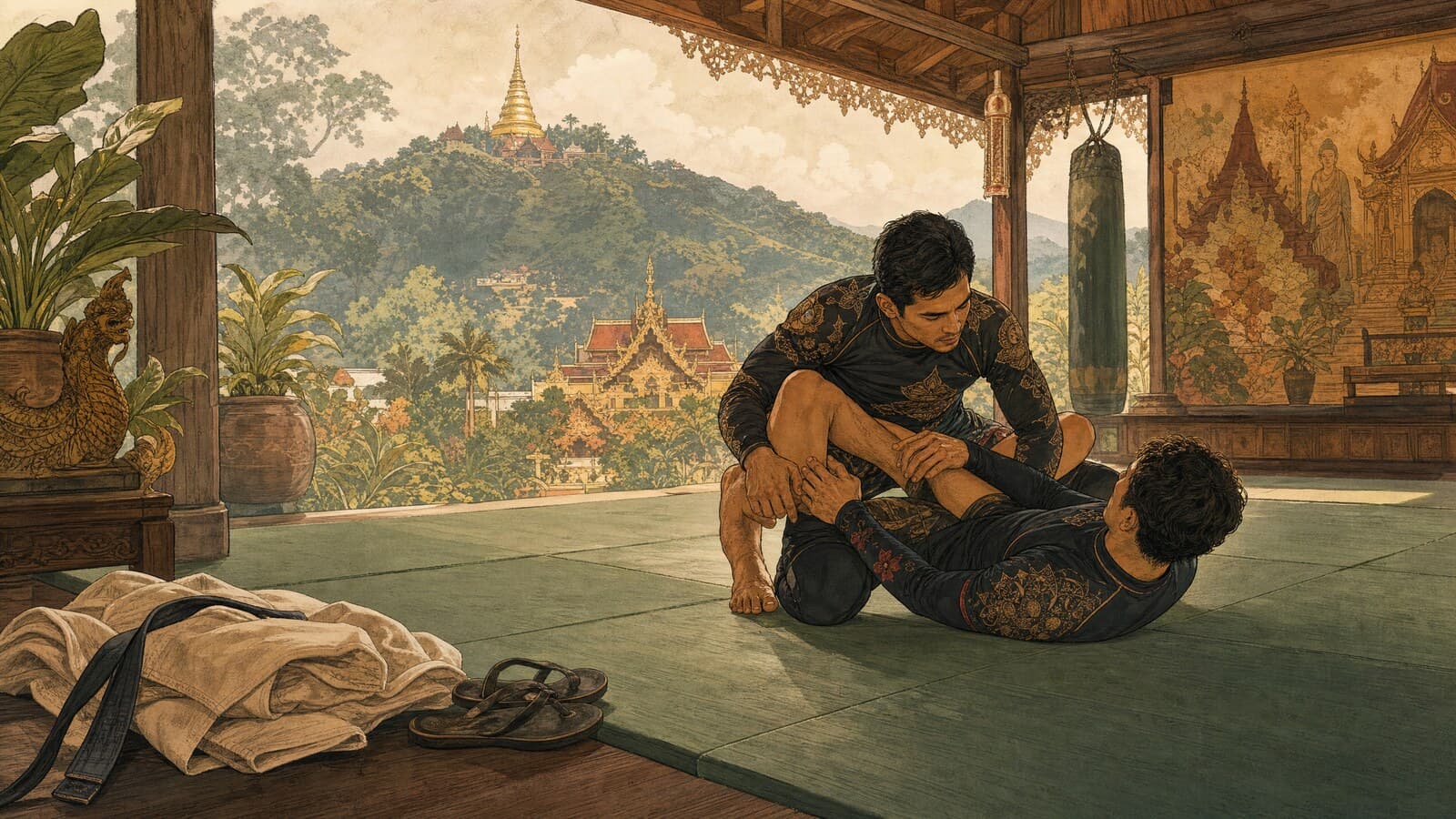
Chiang Mai supports a genuine handful of dedicated jiu-jitsu academies — not one lonely mat in the corner of a fitness centre, but proper schools with black-belt instruction and both gi and no-gi on the weekly timetable. Gato Studio BJJ, near the river on the north-east side of town, has built a reputation for a strong no-gi room; Pure Grappling pairs gi and submission grappling with yoga under one roof; and names like Kaizen and Lazy Leopard rotate through every nomad's shortlist. Between them you'll find morning and evening classes, open mats, and rooms that mix Thai locals, long-stay foreigners and week-one visitors without anyone blinking. That mix is part of why so many people on a remote-work stint in Chiang Mai end up staying longer than planned.
One honest caveat: gyms here move premises, tweak timetables and occasionally rebrand, and they update Instagram and Facebook far more reliably than their websites. Check the socials the week you arrive, and send a quick message before your first visit — every academy we know of answers.
MMA and cross-training camps
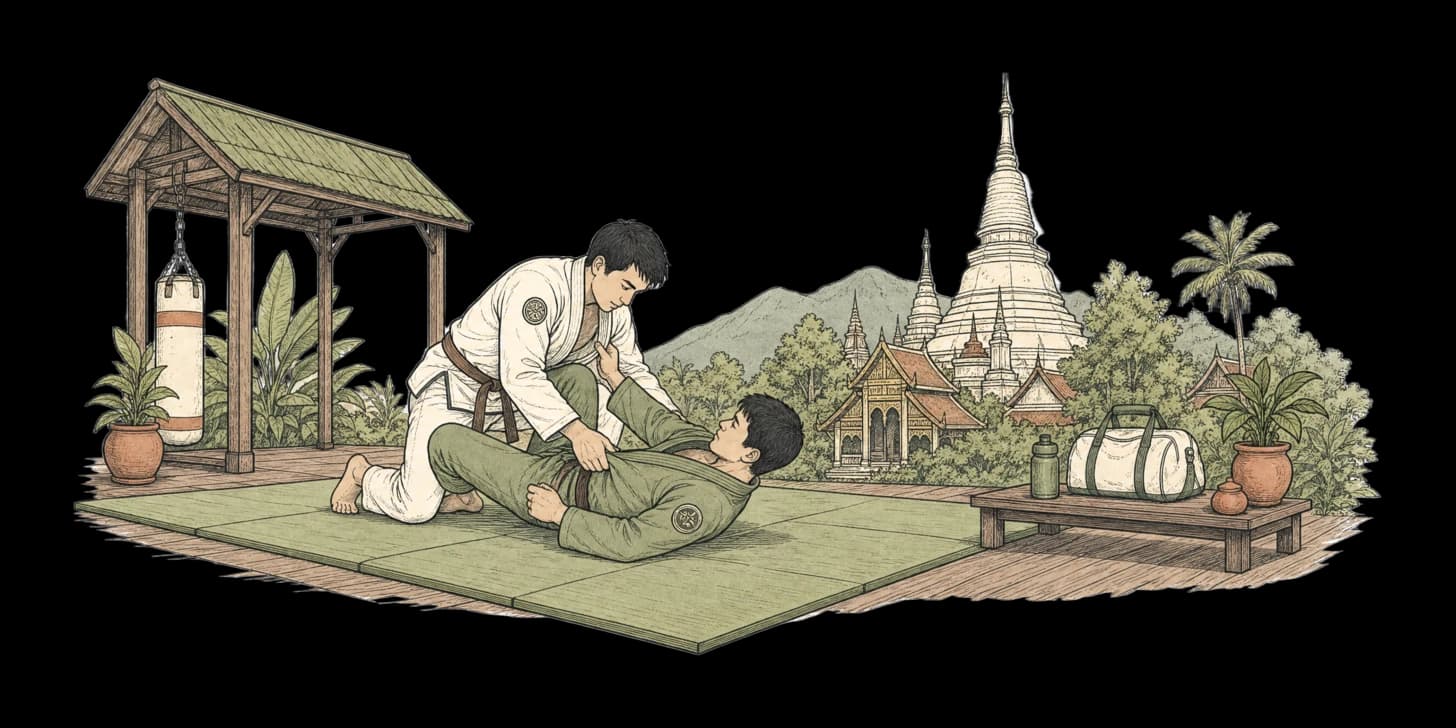
If you want striking and grappling under one roof, Chiang Mai has that too. Team Quest Thailand, in the foothills of Doi Suthep, has spent well over a decade running Muay Thai, MMA and BJJ side by side, camp-style — the sort of place where you can hit pads in the morning and wrestle in the afternoon. A few of the city's fight gyms have added grappling or MMA classes to their schedules as well, so if you're already deep into a Muay Thai camp, adding two grappling sessions a week rarely means crossing town.
Judo, aikido and the quieter arts
Beyond the headline acts, the picture is smaller but real. Judo survives mainly in modest, university-linked clubs, and there's long-standing aikido teaching in the city; schedules for both shift term by term, so the local Facebook groups are the practical front door. If judo is your main art, treat Chiang Mai as a maintain-rather-than-progress city — though BJJ rooms here genuinely love hosting judoka, and your gripping will make you instantly popular in gi class.
Drop-in culture, mat fees and passes
This is where Chiang Mai shines. Nobody expects a contract, a joining fee or a sales pitch. You walk in, pay a mat fee — typically 300–600 baht per class — and train. Staying longer? Monthly unlimited passes generally run roughly 2,000–4,500 baht, and several academies offer week passes for people passing through. Compared with what a single drop-in costs in London or Sydney, it's almost funny. Bring cash, confirm current prices when you message ahead, and don't be surprised when the coach waves you onto the mat like you've trained there for years.
What to pack and how to stay mat-clean
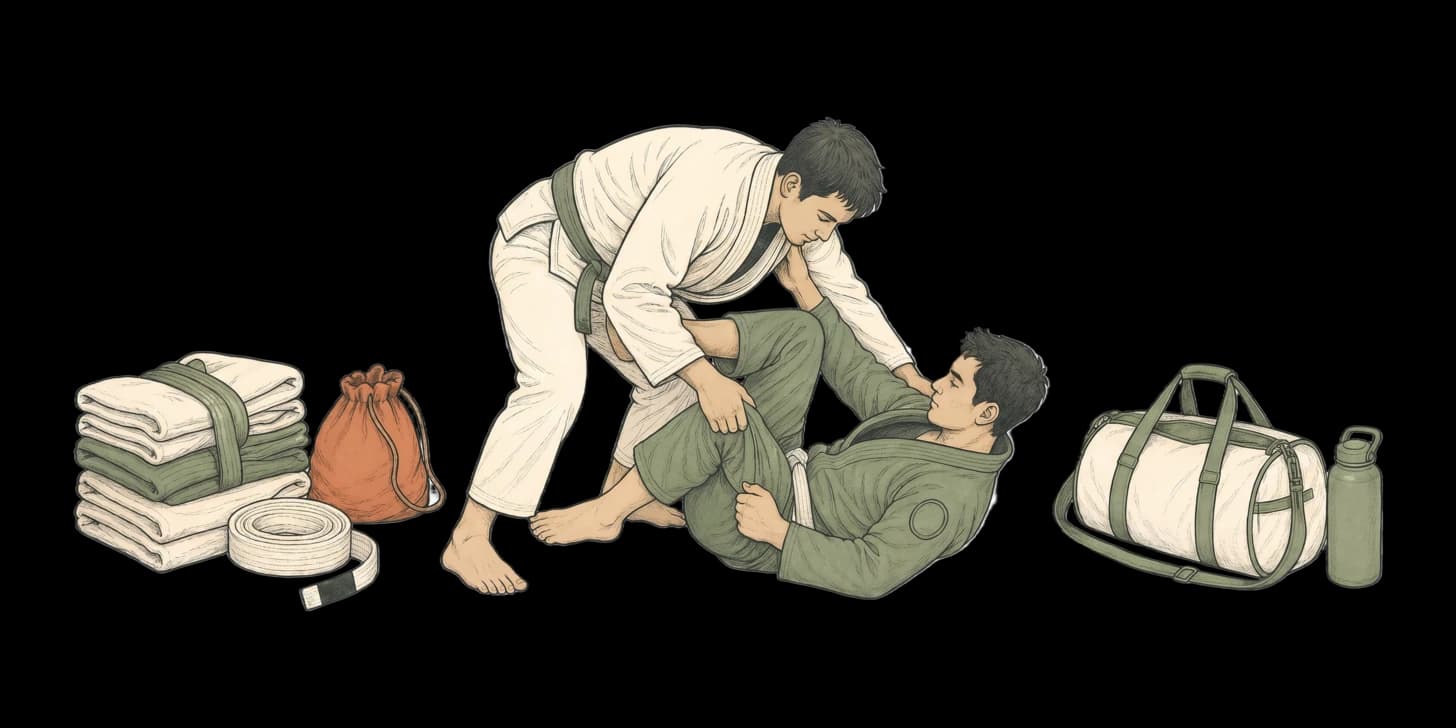
Two practical warnings. First, gi rental is rare — if kimono jiu-jitsu is your thing, bring your own, because buying one locally at short notice is hit and miss. No-gi travels far lighter anyway: a rash guard or two, grappling shorts without pockets or zips, spats if you like them, and flip-flops for every step you take off the mat.
Second, hygiene — and this is general information, not medical advice. Mats everywhere in the world can pass on skin complaints, and a tropical climate is kind to the things you don't want. The norms are the same ones good gyms teach globally, just worth following more strictly here: shower soon after class, wash kit the same day rather than letting it ferment in a bag, keep nails short, cover any cuts, and never walk barefoot between changing room and mat. If a patch of skin looks red, itchy or angry, sit out and have a pharmacist or doctor look at it before you roll again. Nobody ever resented the training partner who skipped a session out of caution.
Respect, community and the Muay Thai question
Thai mats run on quiet courtesy. Shoes come off at the door without exception, a small wai or nod to the coach costs nothing and lands well, and the ego stays in the changing room — you're a guest in the room, and the guest who taps early and smiles gets invited back. None of it is complicated; it's the same humility Muay Thai camps expect, translated to the floor.
And that community is the real prize. An open mat is the fastest social shortcut this city offers — you arrive knowing nobody and leave with dinner plans, which is half the battle of making friends in a new city. Grappling also pairs beautifully with Muay Thai: strike in the morning, roll in the evening, and let the mats spare your shins on recovery days. Just leave room in the week for rest — our notes on gyms and recovery in Chiang Mai cover the supporting cast. Wash your gi, message the gym, and we'll see you at open mat.
Frequently asked questions
Is there BJJ in Chiang Mai, or is it all Muay Thai?
Muay Thai gets the headlines, but Chiang Mai has a genuine handful of dedicated BJJ academies with black-belt instruction and both gi and no-gi on the weekly timetable, plus MMA camps that run striking and grappling side by side. Gyms update Instagram and Facebook more reliably than their websites, so check the socials and message ahead for current schedules.
How much does a BJJ drop-in class cost in Chiang Mai?
Mat fees typically run 300-600 baht per class, with no contract or joining fee expected. Monthly unlimited passes generally cost roughly 2,000-4,500 baht, and several academies offer week passes for visitors. Bring cash and confirm current prices when you message the gym.
Do Chiang Mai BJJ gyms rent gis?
Gi rental is rare, so bring your own if you want to train in the kimono - buying one locally at short notice is hit and miss. No-gi travels far lighter: a rash guard or two, grappling shorts without pockets or zips, optional spats and flip-flops for everywhere off the mat.
Can complete visitors just drop in to train?
Yes - the drop-in culture is one of the best things about Chiang Mai's grappling scene. You pay a mat fee, train, and nobody pitches you a membership. Classes mix Thai locals, long-stayers and week-one visitors, and a quick message on Facebook or Instagram before your first session is all the introduction you need.
How do I avoid skin problems training in a tropical climate?
As general information rather than medical advice: follow the same mat-hygiene norms good gyms teach everywhere, just more strictly. Shower soon after class, wash kit the same day, keep nails short, cover cuts, wear flip-flops off the mat, and if a patch of skin looks red or irritated, sit out and see a pharmacist or doctor before rolling again.
Does BJJ training work alongside a Muay Thai camp?
Very well - many people strike in the morning and roll in the evening, and grappling spares your shins on lighter days. Several MMA-style camps run Muay Thai, MMA and BJJ under one roof, and open mats double as the fastest social circle in the city for new arrivals.