Local culture · June 27, 2026
Same Same But Different: A Love Letter to Tinglish
By The Ada House team
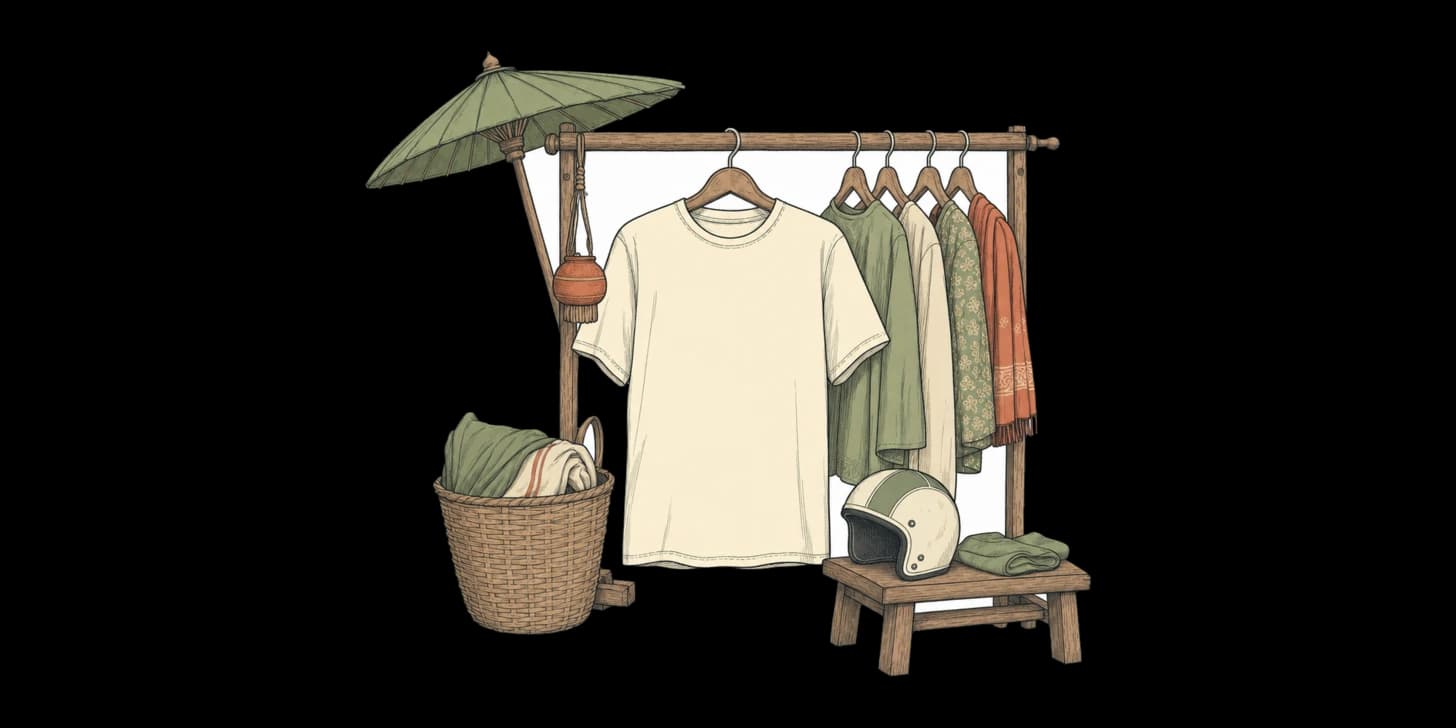
There is a T-shirt sold on every market stall in Chiang Mai that explains an entire philosophy in three words: same same, but different. Tourists buy it as a joke. We at the Ada House team have come to think it might be the wisest sentence in Thailand. It means similar but not quite, related but its own thing, and honestly, what isn't?
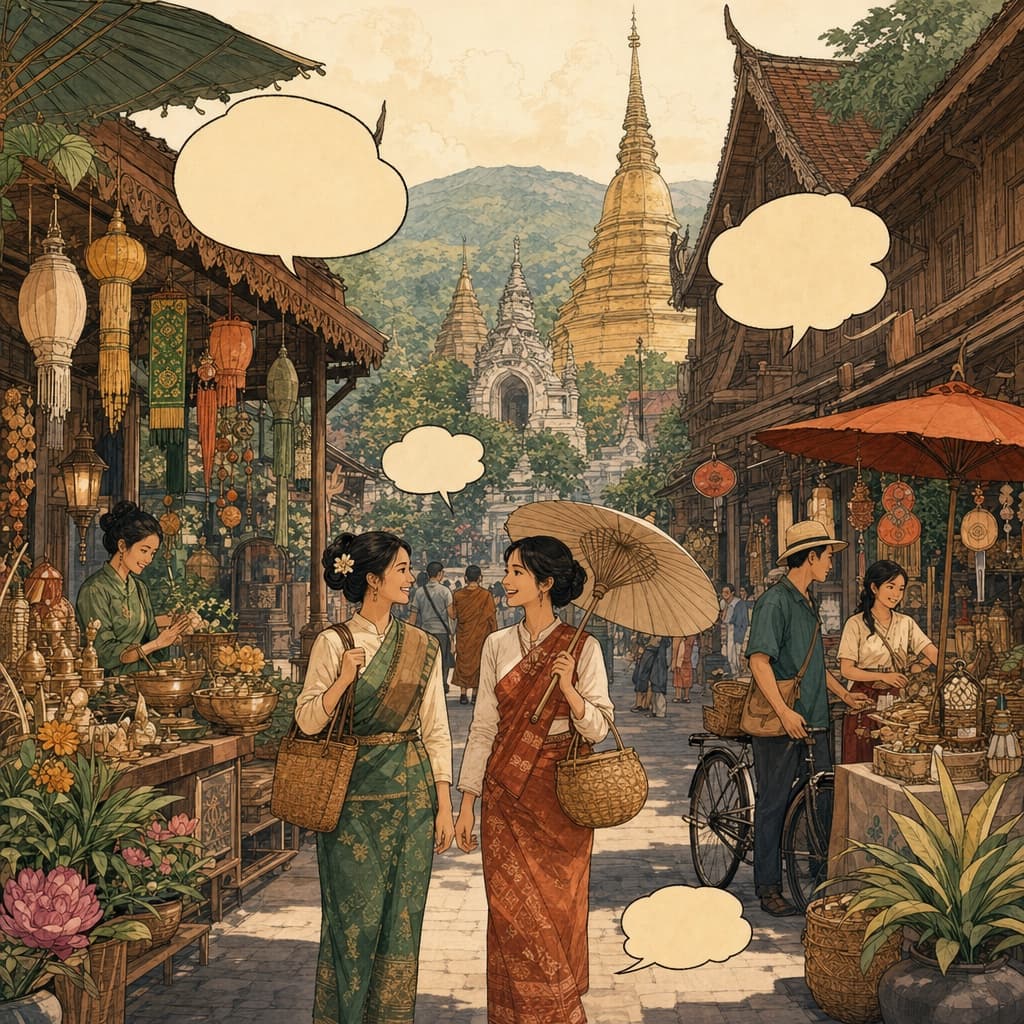
Tinglish — the warm, inventive English you meet on menus, shop signs and in a hundred friendly conversations a day — is one of our favourite things about living here. So let us defend it, celebrate it, and gently explain why it sounds the way it does. Because behind every charming phrase is a Thai brain doing something rather clever.
The greatest hits
You will hear them within your first hour. A smiling tuk-tuk driver leans out: hello, where you go? You ask a shopkeeper for cold brew and get a cheerful no have or mai mee (literally not have). You ask whether the kitchen can do your noodles without chilli, and the answer is a complete, confident sentence: can. Or, sometimes, the gentler cannot — which somehow stings less than the English no.
And when something is funny, your phone lights up with 555. Not a typo. In Thai, the number five is hâa, so five-five-five reads as ha-ha-ha. A truly excellent joke earns a 5555+. It is the most efficient laughter on earth.
Why "no have" makes perfect sense
Here is the lovely part: these aren't mistakes so much as Thai grammar wearing English clothes. Thai doesn't conjugate verbs, mark tenses or add an -s for plurals — meaning lives in context and in small extra words, not in the endings. So mai mee maps straight onto no have, word for tidy word. Two coffee, many friend, she go yesterday — all perfectly logical if your mother tongue never bolted those little grammatical bits on in the first place.
Up to you is another gem. Ask a Thai friend where to eat and you'll often get a warm up to you — not indifference, but generosity. Thai conversation prizes harmony and not imposing, so handing you the choice is a kindness. Spend an afternoon picking up a few words of Thai and these patterns stop sounding broken and start sounding like a different, elegant logic.
The sounds behind the spellings
Then there are the signs — delicious foods, fresh fruit shaks, no parking, plese — and the famously slippery final consonants. There's a reason. Thai mostly doesn't stack consonants at the end of a syllable, and several English endings simply don't exist there. So card softens to car, bus to but, Starbucks becomes a heroic effort. It isn't carelessness; it's a mouth doing its honest best with sounds it was never raised to make. Ask any visitor to nail the Thai ng- at the start of a word and watch the favour go gloriously the other way.
The little words that carry all the warmth
Listen closely and you'll catch Thai particles smuggled into English: na and la. These tiny syllables are the secret sauce of Thai politeness, softening a sentence so it never lands too hard. Very delicious na isn't odd grammar — it's a hug attached to a compliment. Up to you la gently closes the topic. There's no real English equivalent, which is exactly why they survive the crossing. Knowing a sprinkle of everyday Thai courtesies helps you hear the affection that's actually being offered.
Meeting them halfway
Here's what we'd most like you to take from this: Tinglish is an act of generosity. The shopkeeper, the driver, the auntie ladling soup — they are reaching across an entire language to make you comfortable, in your tongue, in their country. The least we can do is reach back. A wobbly sawatdee, an honest aroi mak (very tasty), a laughing 555 in the group chat — none of it has to be perfect. Effort is the whole point, and it's how a surprising number of our guests end up making real friends here.
So no, your Thai won't be flawless and their English won't be either. Same same, but different. And after a while in Chiang Mai you start to suspect that's not a failure of communication at all — it's the most human kind there is.
See you on the soi, na. 555.
Frequently asked questions
What does 'same same but different' actually mean?
It's the phrase on market T-shirts all over Chiang Mai, and it means similar but not quite, related but its own thing. Tourists buy it as a joke, but we've come to think it might be one of the wisest sentences in Thailand.
What does 555 mean in a message?
It's Thai laughter. In Thai the number five is haa, so five-five-five reads as ha-ha-ha. A truly excellent joke earns a 5555+; it's the most efficient laughter on earth.
Why do people say 'no have' instead of 'we don't have any'?
These aren't really mistakes, but Thai grammar wearing English clothes. Thai doesn't conjugate verbs, mark tenses or add an -s for plurals, so mai mee, literally not have, maps straight onto no have, word for tidy word. Phrases like two coffee or she go yesterday follow the same logic.
What does it mean when a Thai friend says 'up to you'?
It's a kindness, not indifference. Thai conversation prizes harmony and not imposing, so handing you the choice of where to eat is a generous gesture rather than a shrug.
Why do final consonants sometimes drop, so 'card' becomes 'car'?
Thai mostly doesn't stack consonants at the end of a syllable, and several English endings simply don't exist there. So card softens to car and bus to but; it isn't carelessness, just a mouth doing its honest best with sounds it was never raised to make.
What are the little words 'na' and 'la'?
They're Thai particles smuggled into English, the secret sauce of Thai politeness that softens a sentence so it never lands too hard. Very delicious na is a hug attached to a compliment, and up to you la gently closes the topic. There's no real English equivalent, which is why they survive the crossing.