Local culture · July 14, 2026
Morning alms in Chiang Mai: how to watch, and take part, with respect
By The Ada House team
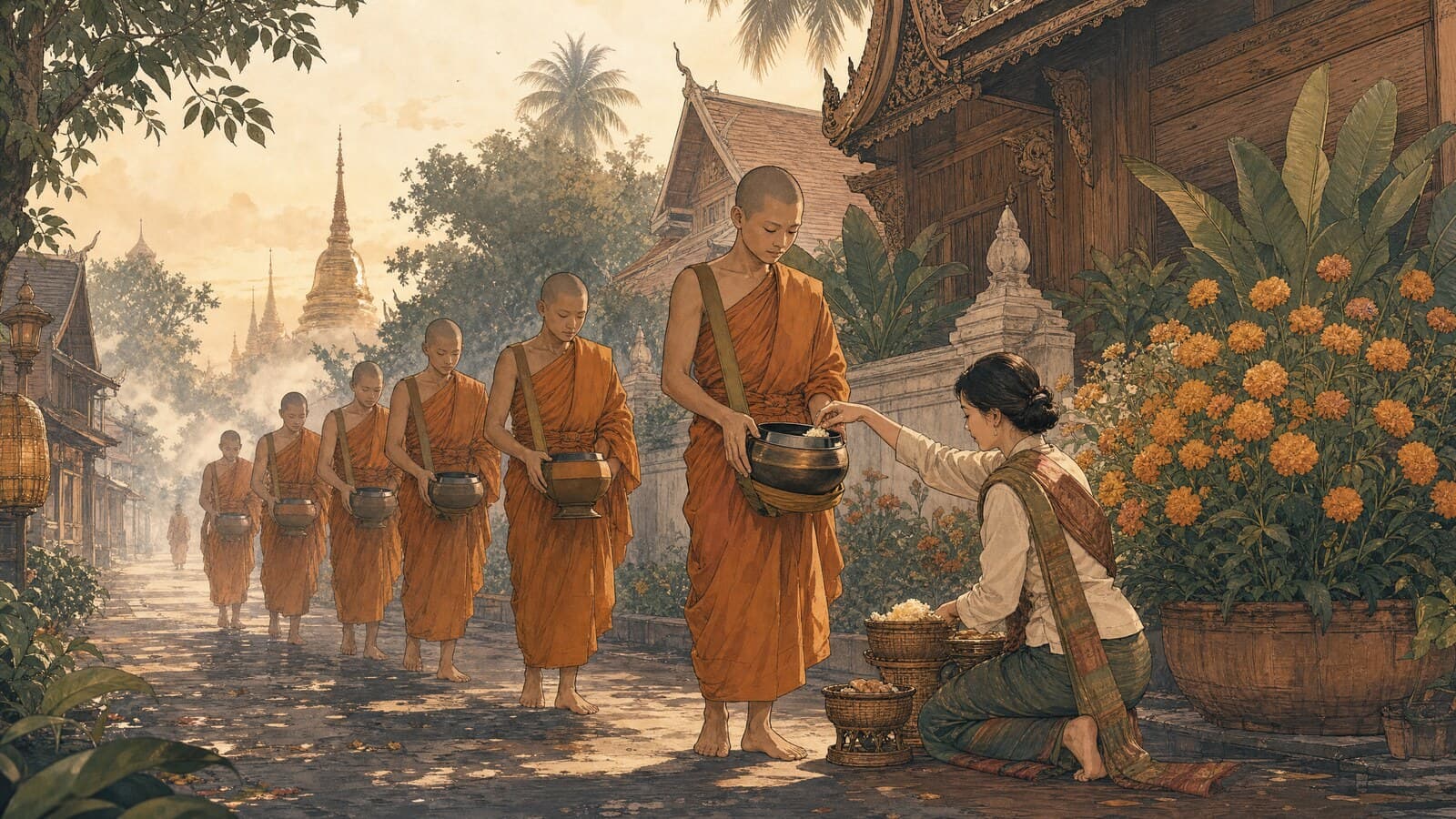
Some mornings in Chiang Mai, if you're up before the traffic, you'll see it: a line of monks in saffron moving slowly along an ordinary street, barefoot and eyes lowered, and a few people waiting at the kerb with small parcels of food. This is tak bat, the dawn alms round, and it happens all over the city every day. It isn't a performance or laid on for visitors — it's private devotion carried out in public, which makes it one of the most moving things to witness here and one of the easiest to get wrong. None of what follows is a fixed rulebook; customs vary, so watch first and follow the lead of the Thai people around you. The kindest way to think of it is simple: you are a guest at someone else's ritual.
What the dawn round actually means
Before first light, monks leave the temple with their alms bowls and walk a set route through the streets. They own almost nothing and don't cook, so this round is quite literally how they eat — usually their only full meal of the day, taken before noon. In return the giver earns merit (tham bun), a nudge to one's karma, and often a brief chanted blessing. What matters is that this is an exchange, not charity: the monk isn't a beggar and the layperson isn't a donor, each needs the other. If the logic of merit feels unfamiliar, our primer on Thai Buddhism is a good place to start.
When and where to see it in Chiang Mai
You don't need a location tip or a tour. The round happens shortly after dawn, roughly between six and seven, on ordinary streets wherever there's a temple — and Chiang Mai has hundreds. Step outside near almost any wat and you'll likely cross paths with it within a few blocks. The lanes around the old city's temples are a natural place to be at that hour, as is the soi outside almost any neighbourhood temple.
We'd gently steer you away from hunting for a "best spot." In some corners of Southeast Asia the morning alms have curdled into a photo opportunity — rows of visitors with long lenses, food thrust out for the shot. Chiang Mai's stays quiet and local precisely because nobody treats it that way, and it's worth keeping it so. If it's the walking-at-dawn feeling you want in a setting built for visitors, the forest climb to Wat Pha Lat on the Monk's Trail is the place for your camera; the alms round is the place to put it away.
If you'd like to take part
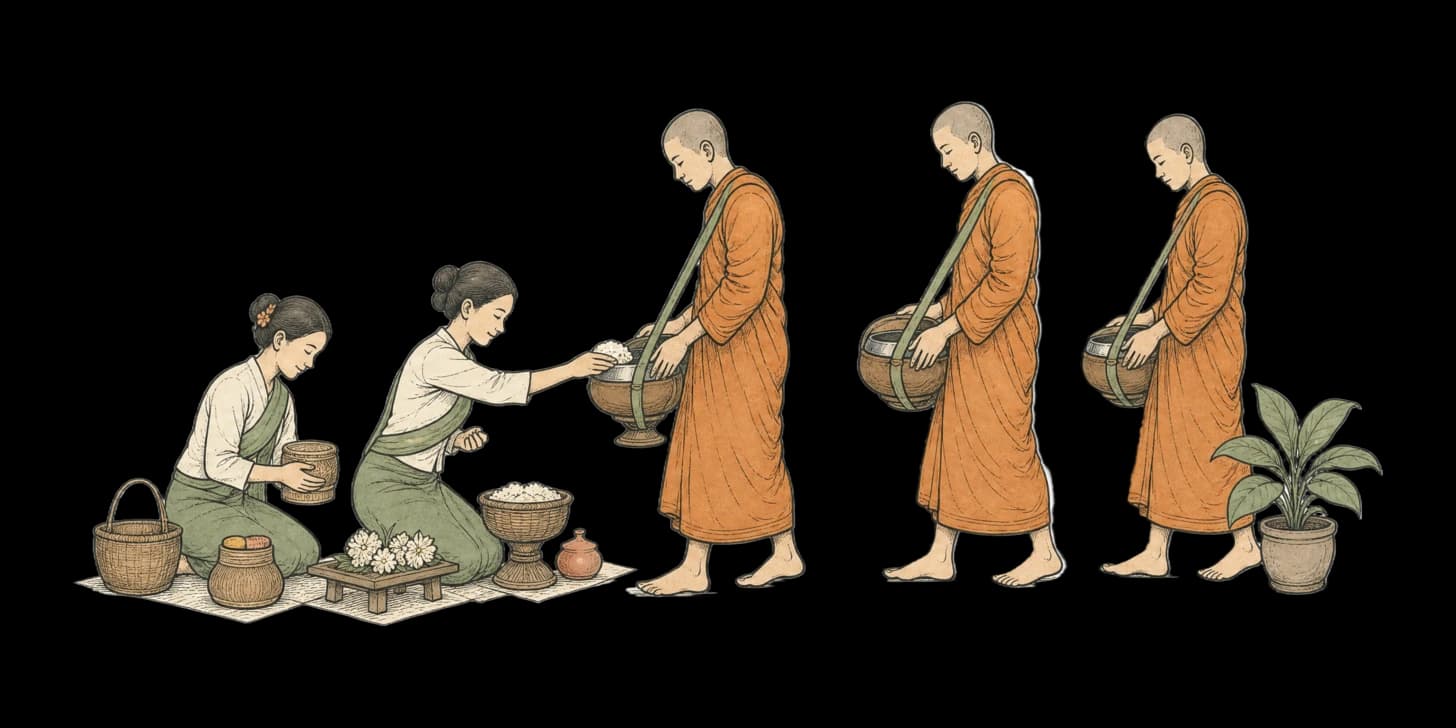
Joining in is welcome — a respectful visitor giving alms won't trouble anyone — but do it properly or not at all. First, the offering: give food, never money, since monks aren't supposed to handle cash and the point is to feed them. Buy it the evening before or at a dawn market — the stalls at Warorot Market are stirring well before the monks set out — and choose things a monk can eat that day: cooked rice, fresh fruit, sealed or packaged items. Many markets sell ready-made alms sets for exactly this.
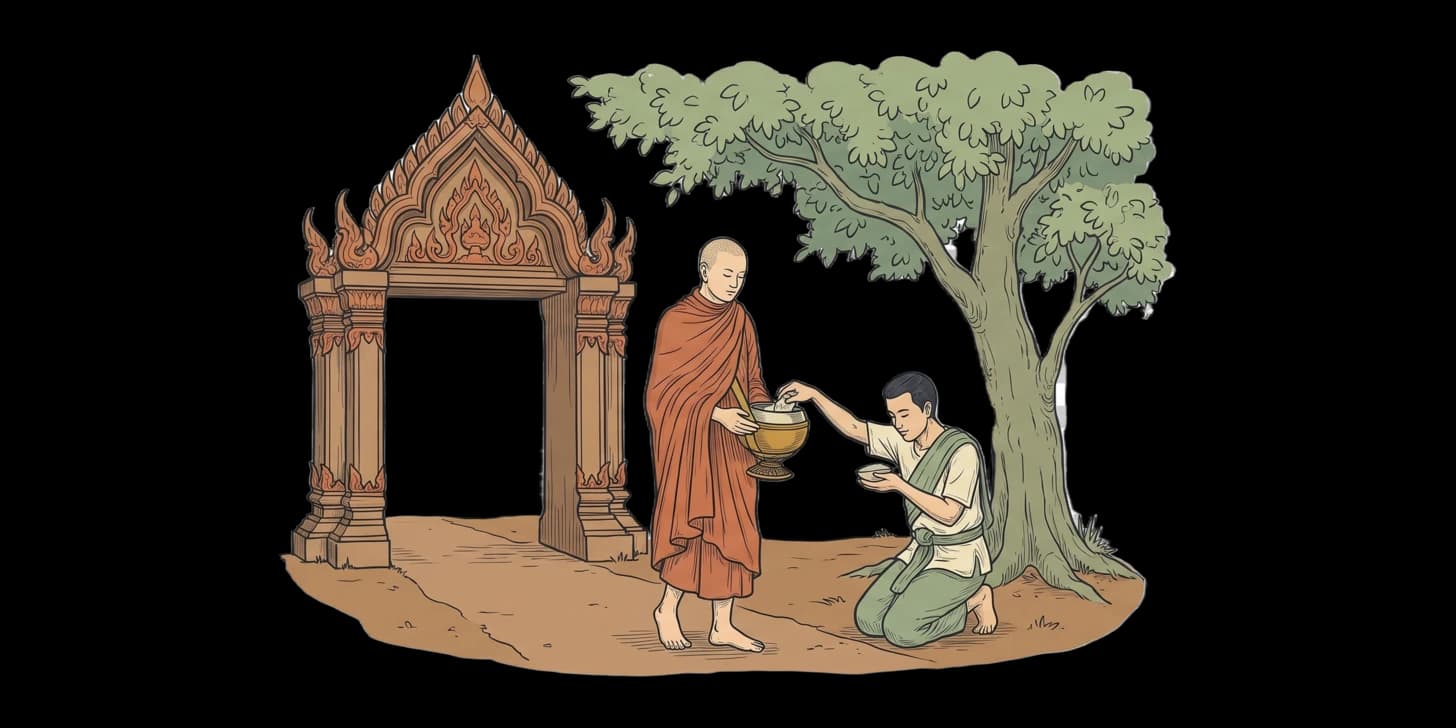
When the monks approach, the custom is to take off your shoes and lower yourself so your head isn't above theirs — kneeling is usual, though standing quietly to one side is fine. Place your offerings gently into the bowl, bring your palms together in a wai, and bow your head for the blessing. There's no thank-you afterwards, and none is expected. You may see the blessing followed by kruat nam, a slow pouring of water to share the merit with absent loved ones — worth understanding, though nothing a visitor needs to attempt.
One point matters especially: by monastic custom a monk won't take anything directly from a woman's hands. If you're a woman, this isn't a snub but a mark of the vows he keeps, and the graceful move is to place your offering into the bowl yourself, or onto the cloth the monk lays down for the purpose, rather than passing it hand to hand.
If you'd rather just watch
Most visitors, quite rightly, would rather observe than take part the first time — and watching is its own quiet pleasure, as long as you do it lightly. Keep your distance and give the monks and givers room, without an audience pressing in. Dress as you would for a temple, shoulders and knees covered. If you photograph at all, do it sparingly and from back: no flash, no lenses in faces, and never step into the path of the round for a shot. When someone kneels to offer and receive the blessing, that's the moment to lower your phone and let it happen. A good rule of thumb: if your presence is changing the scene, you're too close.
On Buddhist holy days
A few times a month, on Buddhist holy days (wan phra, set by the lunar calendar) and especially at the big festivals, the round can swell into a mass alms ceremony — long lines of monks receiving from crowds of laypeople, sometimes in temple grounds or along a closed street. These are more public, easier to join, and genuinely warm in spirit. They also tend to fall on days when the city shifts gear in other ways — some businesses close and alcohol sales are restricted on the main Buddhist holidays — so it helps to know where they land; our guide to Thailand's public holidays lays out the calendar and what to expect.
Why the quiet version is the one to see
If you take one thing from all this, let it be that the unremarkable version — a couple of monks, a handful of neighbours, no camera in sight — is the one worth waking for. Stripped of spectacle, tak bat is just a small daily kindness passing both ways in the half-light, and that's what makes it hold you.
And if it leaves you wanting to ask the questions the ritual raises — about merit, monastic life, what it all feels like from the inside — that's what Chiang Mai's meditation and Monk Chat sessions are for. There's no better follow-on than hearing it from a monk himself.
Warmly, the Ada House team
Frequently asked questions
What is tak bat, the morning alms round?
Tak bat is the dawn ritual in which barefoot monks walk a set route through the streets with their alms bowls and laypeople offer them food. It is how the monks eat, usually their only full meal of the day, taken before noon. In return the giver earns merit (tham bun) and a brief blessing. It is an exchange, not charity: each side needs the other and both are giving something.
What time and where can I see the alms round in Chiang Mai?
It happens shortly after dawn, roughly between six and seven in the morning, on ordinary streets near almost any temple, and Chiang Mai has hundreds. You don't need a special spot or a tour; wake early and walk near any neighbourhood wat and you'll likely cross paths with it. We'd steer you away from hunting for a photogenic location, which is exactly what keeps the local version quiet and unspoiled.
Can I take part, and what should I offer?
Yes, a respectful visitor is welcome to give alms. Offer food, never money, since monks aren't supposed to handle cash and the point is to feed them. Choose things a monk can eat that day, such as cooked rice, fresh fruit, or sealed and packaged items; many dawn markets sell ready-made alms sets for exactly this purpose.
How do I make an offering respectfully?
When the monks approach, the custom is to take off your shoes and lower yourself so your head isn't above theirs, usually by kneeling. Place your offering gently into the bowl, then bring your palms together in a wai and bow your head while the monk gives his blessing. There is no thank-you afterwards, and none is expected; you simply let the monks move on.
Is there a special custom for women giving alms?
By monastic custom a monk won't take anything directly from a woman's hands, which reflects the vows he keeps rather than any slight. If you're a woman, the graceful move is to place your offering into the bowl yourself, or onto the cloth the monk lays down to receive it, rather than passing it hand to hand.
How should I behave if I only want to watch?
Keep your distance and give the monks and givers room, dress modestly with shoulders and knees covered, and photograph sparingly if at all, with no flash and no lenses pushed into faces. Never step into the path of the round to frame a shot, and lower your phone entirely during the blessing. A good rule of thumb: if your presence is changing the scene, you're standing too close.