Local culture · July 4, 2026
Wat Suan Dok: the temple of the flower garden
By The Ada House team
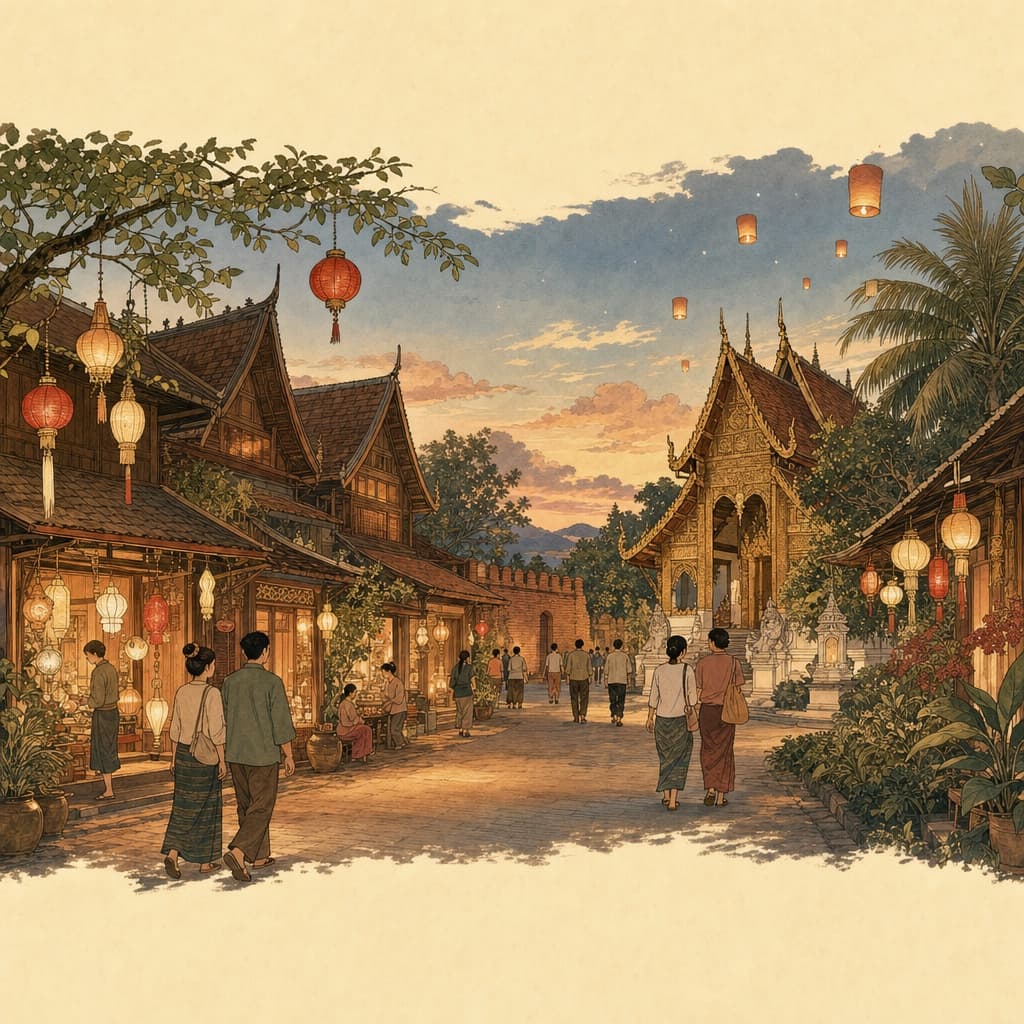
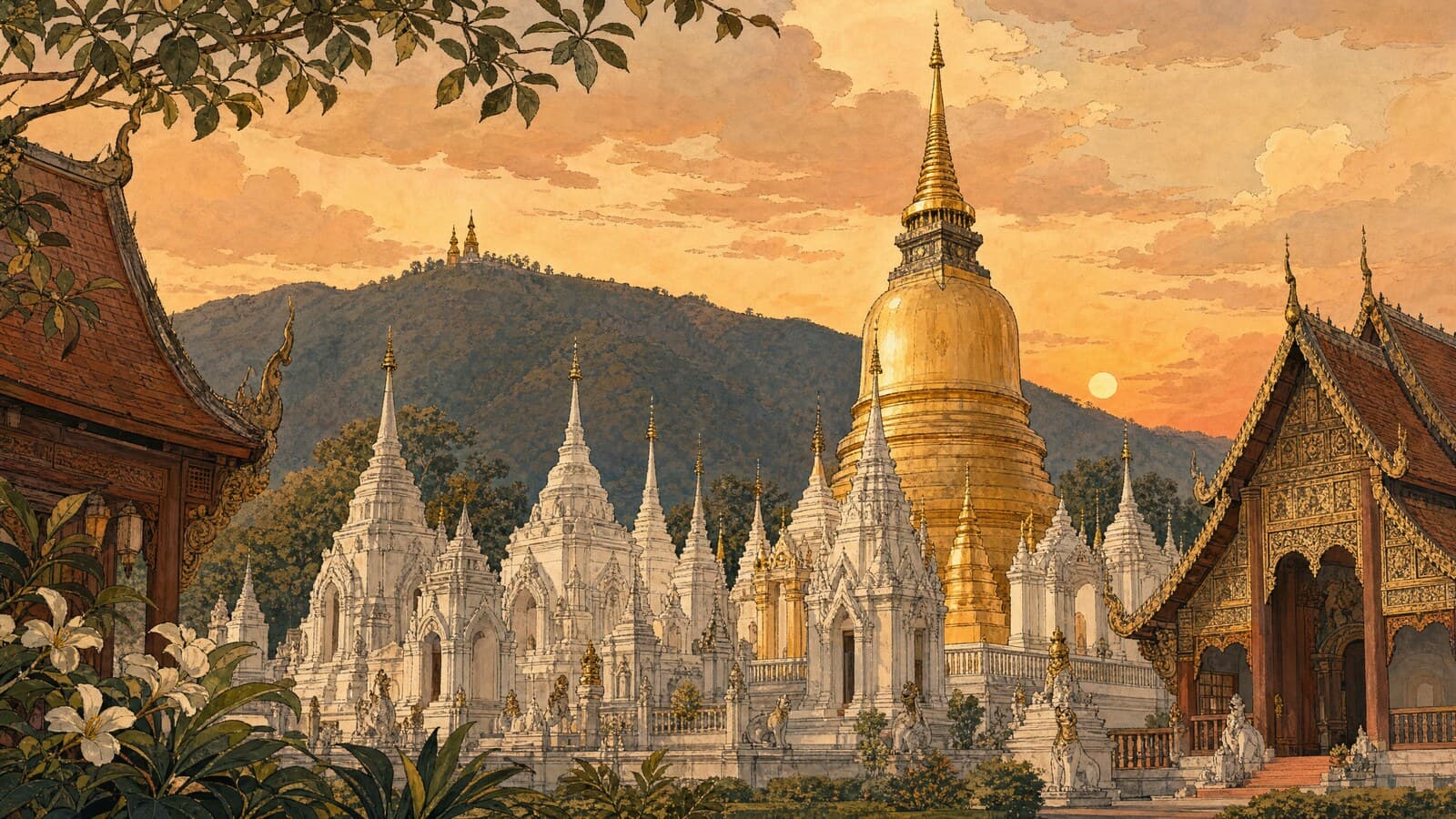
Most temple mornings in Chiang Mai mean marching the Old City grid, ticking off gilded viharns until they begin to blur. Wat Suan Dok asks for a different rhythm. It sits just west of the moat on Suthep Road, unusually open to the sky, its golden chedi anchoring a field of whitewashed spires that hold the ashes of Chiang Mai's royal family. Come in the late afternoon, when the whitewash catches the light, and you will understand why photographers never tire of the place.
A royal garden given to the Buddha
The name tells the story: Suan Dok means "flower garden". In the fourteenth century this ground lay outside the young city's walls and held a pleasure garden of the Lanna king Kue Na — tradition adds that it stood within Wiang Suan Dok, a walled settlement said to be older than Chiang Mai itself. Around 1370, Kue Na gave his garden over to religion, founding a temple for a monk he had gone to great lengths to attract: Sumana Thera, a revered teacher from Sukhothai who brought with him a stricter, Sri Lankan-influenced school of Theravada practice — and, so the chronicles say, something more precious still. The temple's formal name, Wat Buppharam, means much the same thing; everyone simply calls it the flower-garden temple.
The relic that split in two
The chronicles tell that Sumana Thera, guided by a vision, had unearthed a relic of the Buddha near Sukhothai and carried it north at Kue Na's invitation, waiting out two rainy seasons near Lamphun while his temple was prepared. When the moment came to enshrine it, the relic is said to have miraculously split in two. One piece was buried here at Wat Suan Dok. The other was strapped to a white elephant that was set loose to choose its own resting place: it climbed the mountain west of the city, trumpeted three times, and died — and on that spot Wat Phra That Doi Suthep was built. We have told the white elephant's story in full elsewhere; the point to hold onto is that Chiang Mai's two most storied shrines are twins, born of one relic. Historians treat the details as tradition rather than record, but the kinship between temple and mountain is written into how locals speak of both.
The golden chedi and the open hall
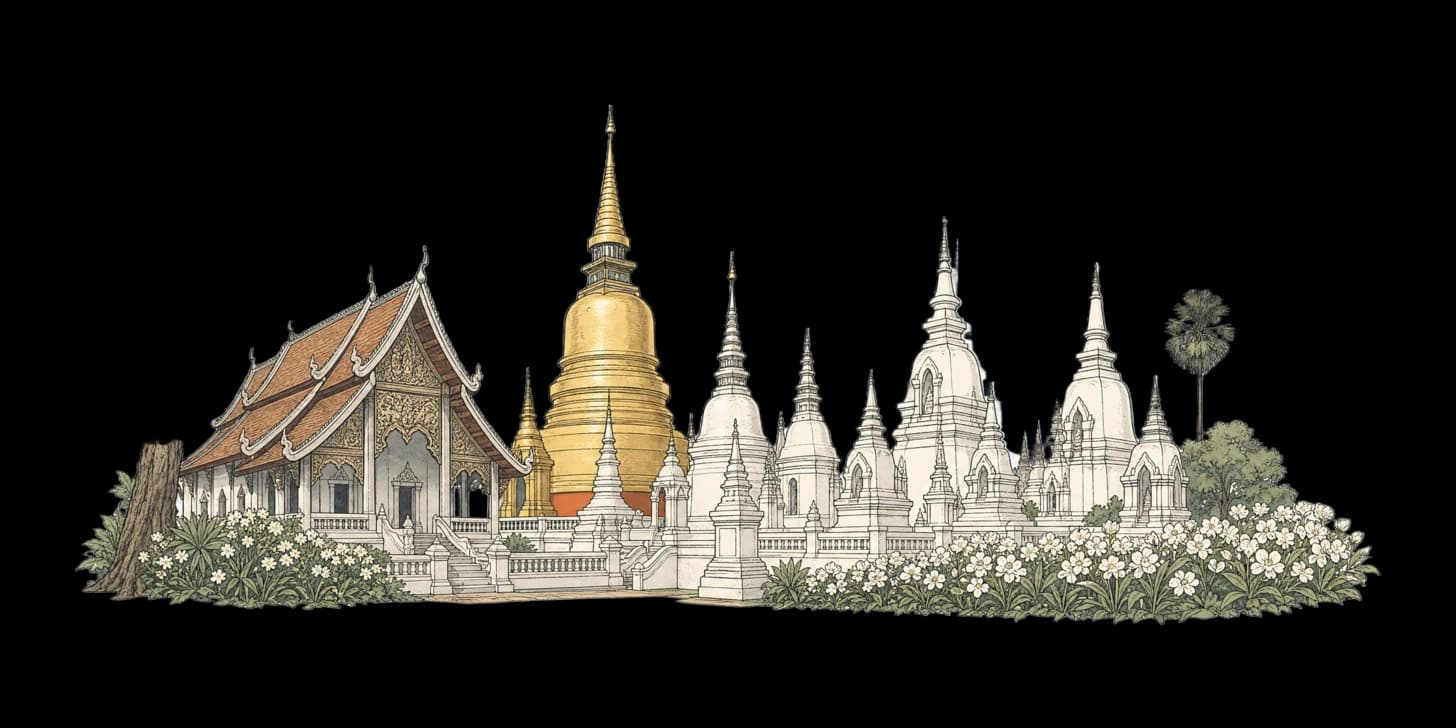
At the centre of everything stands the great chedi, a bell-shaped tower in the Sri Lankan style rising about 48 metres, believed to enshrine Suan Dok's half of the relic. Gilded and slightly austere, it is guarded by staircases whose balustrades sprout many-headed nagas from the jaws of makara sea-creatures — a flourish worth crouching down to study. Beside it spreads one of the largest open-sided halls in the North, a sala rebuilt in 1932 under Khruba Srivichai, the monk the region still venerates as its great builder. Breezes drift straight through it, past back-to-back seated and standing Buddha images. The ordination hall nearby keeps an older treasure: Phra Chao Kao Tue, a bronze Buddha some 4.7 metres tall, cast in the early sixteenth century.
A field of whitewashed cenotaphs
North-west of the chedi lies the sight most visitors carry home: ranks of whitewashed cenotaphs, spires and miniature stupas of every height, holding the cremation ashes of members of Chiang Mai's royal family. They owe their gathering to Princess Dara Rasmi, daughter of a Lanna king and a consort of King Chulalongkorn (Rama V), who in the early twentieth century had the family's ashes brought together from sites scattered around the city. The result is quietly moving — a royal graveyard without gloom, dazzling white at midday, honeyed at dusk. Walk the lanes between the monuments respectfully; this is a place of remembrance first and a photograph second, however irresistible the sunset makes it.
Monks, students and the art of conversation
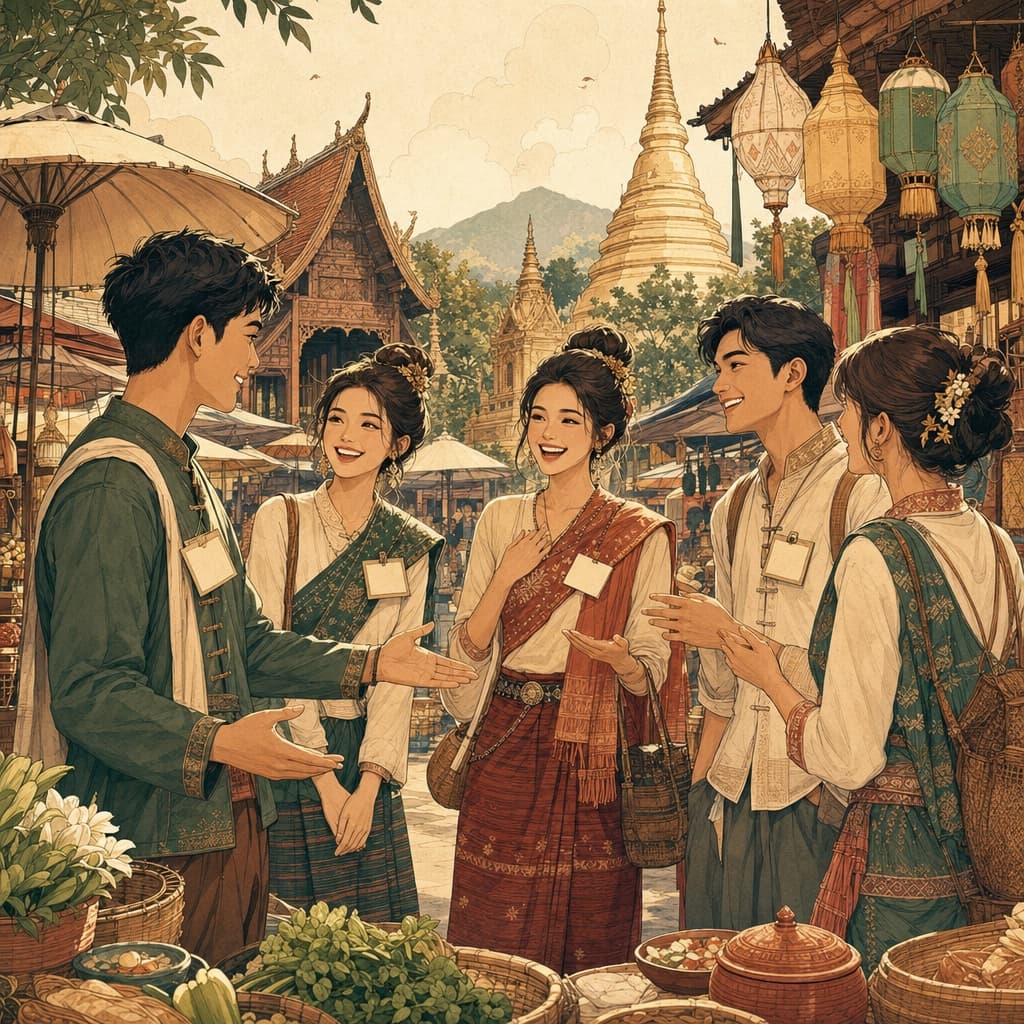
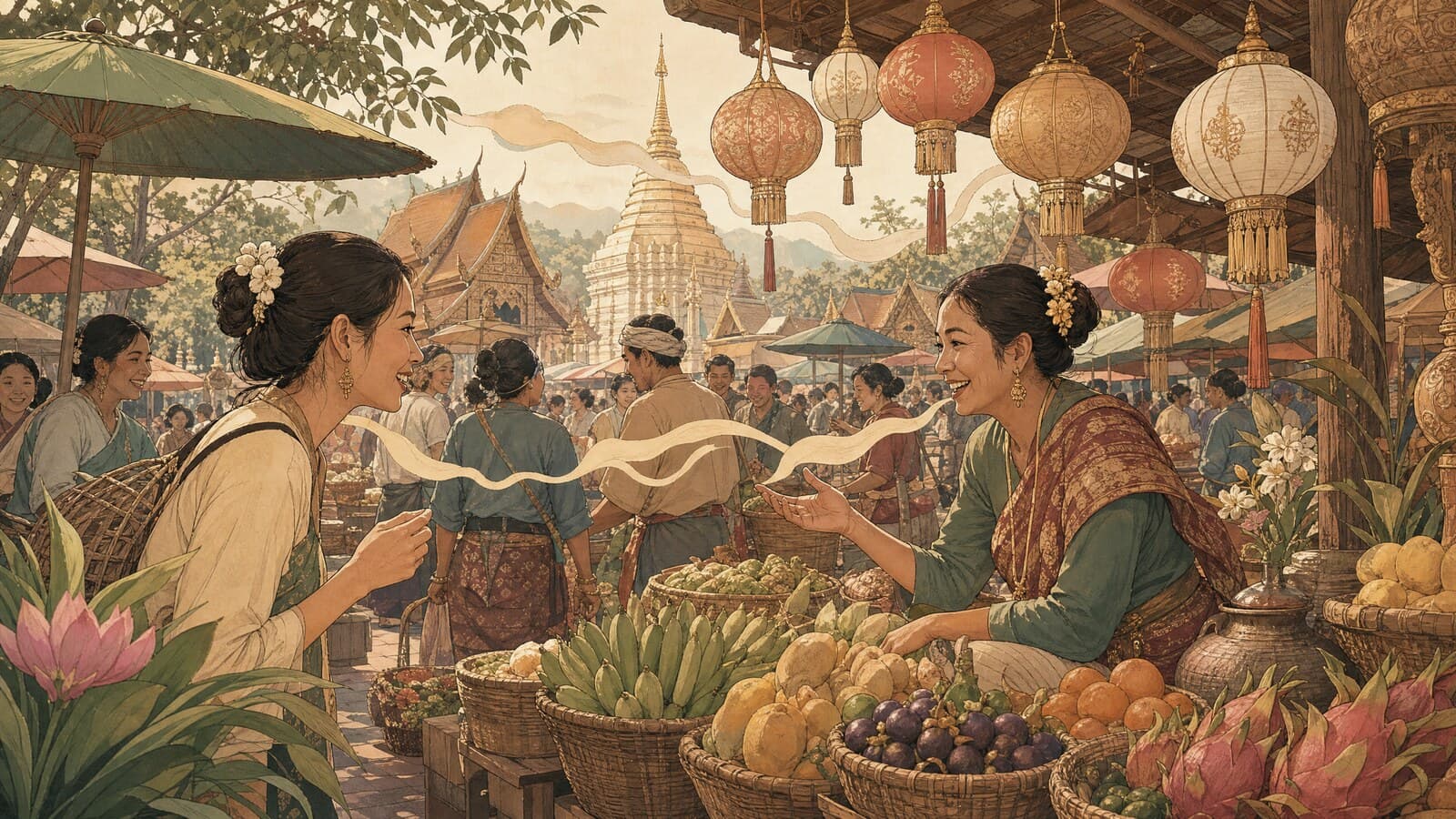
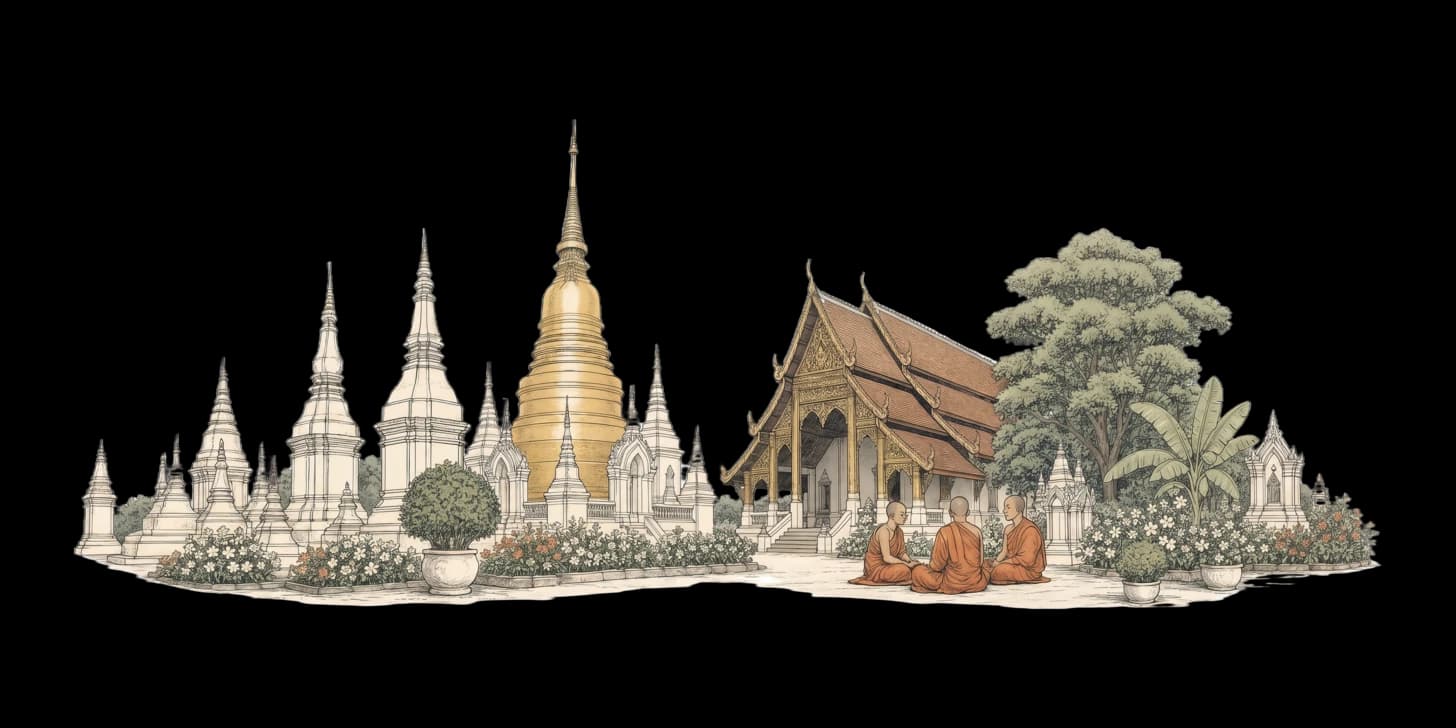
Wat Suan Dok is no museum. The Chiang Mai campus of Mahachulalongkornrajavidyalaya University — Thailand's Buddhist university, mercifully shortened to MCU — occupies part of the grounds, so the temple hums with young monks between classes. That is what makes its famous Monk Chat programme feel so natural: on scheduled afternoons, usually on weekdays, visitors sit down with monks who want to practise English and are happy to field questions about robes, routines, meditation or Thai life. It is one of the easiest genuine cultural exchanges in the city, and we have covered it — along with the temple's meditation retreats — in our guide to Monk Chat and meditation in Chiang Mai.
Visiting Wat Suan Dok
The temple sits on Suthep Road about a kilometre west of Suan Dok Gate — a shaded half-hour walk from the moat, or a few minutes by songthaew or ride-hailing app. Entry costs little or nothing; carry some change for the donation boxes. Dress as you would for any working temple: shoulders and knees covered, shoes off inside the halls, and keep voices low near the cenotaphs. For light, come early in the morning for cool, quiet lanes, or from late afternoon for the golden hour the cenotaphs were seemingly made for. It pairs beautifully with the temples inside the Old City moat earlier in the day — or as the valley-floor prologue to a weekend up on Doi Suthep, where the other half of the relic waits on the mountain.
Frequently asked questions
Why is Wat Suan Dok called the temple of the flower garden?
The site was once a royal pleasure garden of the Lanna king Kue Na, and 'suan dok' means 'flower garden' in Thai. Around 1370 the king gave the garden over to a new temple for the monk Sumana Thera. Its formal name, Wat Buppharam, carries the same floral meaning.
What is the legend of the relic that split in two?
Tradition holds that Sumana Thera brought a Buddha relic north from Sukhothai, and that it miraculously split in two when the time came to enshrine it. One half was buried at Wat Suan Dok; the other was carried by a white elephant that climbed the mountain west of the city, trumpeted three times and died — the spot where Wat Phra That Doi Suthep was built. Historians treat the details as tradition rather than record.
What are the white structures at Wat Suan Dok?
They are whitewashed cenotaphs holding the cremation ashes of members of Chiang Mai's royal family. Princess Dara Rasmi, a daughter of a Lanna king and consort of King Chulalongkorn (Rama V), had the ashes gathered here from around the city in the early twentieth century. They are especially photogenic at sunset, but remember it is a place of remembrance first.
What is Monk Chat at Wat Suan Dok?
The temple hosts the Chiang Mai campus of Mahachulalongkornrajavidyalaya (MCU) Buddhist University, and its Monk Chat programme invites visitors to sit down with monks — usually on weekday afternoons — who want to practise English and are happy to answer questions about monastic life, meditation and Thai culture.
When is the best time to visit Wat Suan Dok?
Early morning is cool and quiet, while late afternoon into sunset gives the whitewashed cenotaphs their famous golden glow. The temple is on Suthep Road, about a kilometre west of Suan Dok Gate — an easy walk or a short songthaew ride from the Old City moat.
Is there a dress code or entry fee at Wat Suan Dok?
Dress as for any working temple: shoulders and knees covered, shoes off inside the halls, and voices kept low near the cenotaphs. Entry costs little or nothing — bring some change for the donation boxes.