
Things to do · July 4, 2026
Swimming pools in Chiang Mai: where to actually swim
By The Ada House team
Chiang Mai is a mountain city, not a beach town — and yet, once the heat builds, nothing sounds better than sliding into cool water. The good news: you don't need a resort booking to swim here. Between hotel day passes, a genuine Olympic-sized public pool and a scattering of gym and condo pools, there's a swim for every budget and every mood. Here's how it all works, plus a few local rules that catch newcomers out.
Hotel pool day passes: the easy option
Most hotels and resorts in Chiang Mai will happily let non-guests use the pool for a fee, and this is how the majority of visitors get their swimming fix. The system is usually simple: walk in, pay at reception, and a towel is typically included. Some places charge a flat entry fee, others frame it as a minimum spend at the pool bar, and a few sell multi-entry packs that bring the per-visit price right down if you become a regular.
Costs vary widely. Simple hotels charge roughly 100–200 baht, mid-range places typically 200–400 baht (often with gym or sauna access thrown in), and the smartest resorts sit around 400–600 baht — sometimes partly redeemable against food and drinks. Prices and policies change often, so message or call ahead, especially at the upmarket places, and expect weekends to be busier than weekdays.
Lap swimming: yes, there's an Olympic pool
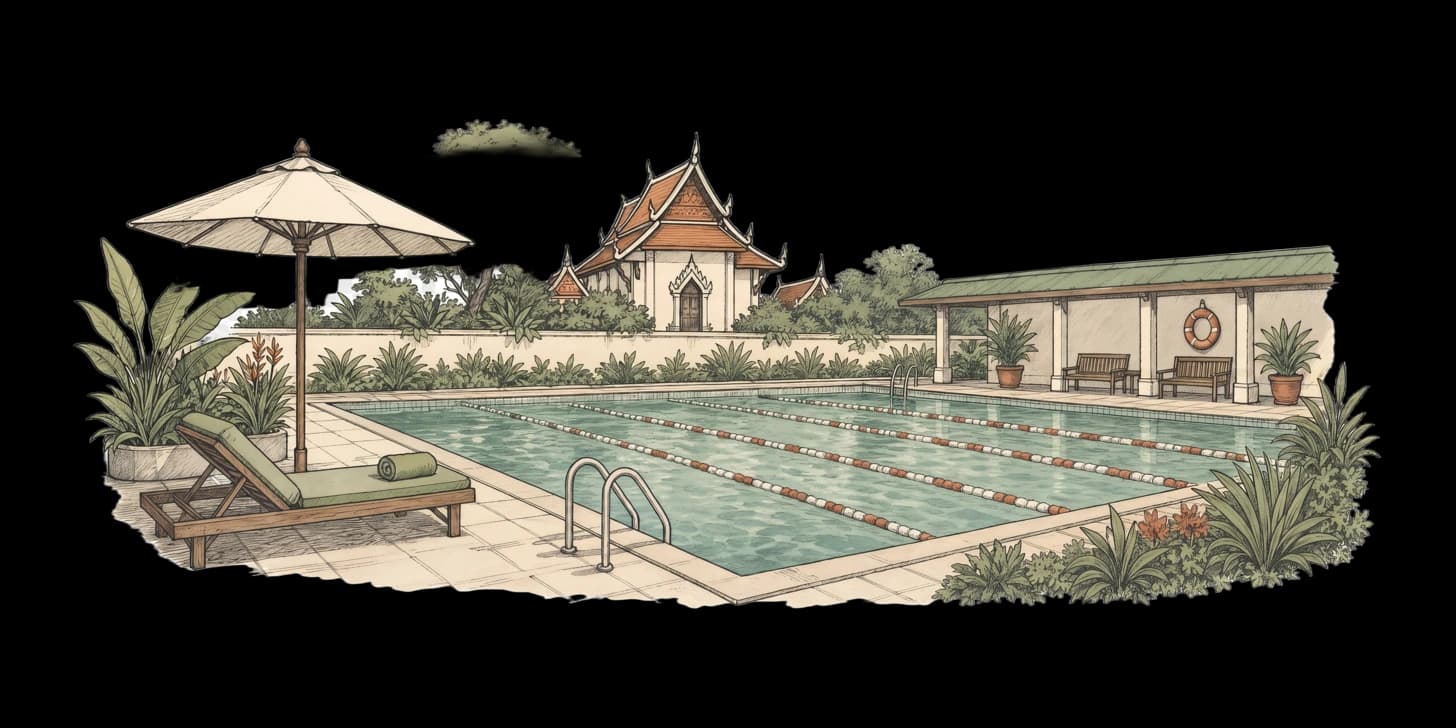
Serious swimmers are better served here than you might expect. The sports complex at the 700th Anniversary Stadium, out along the Canal Road towards Mae Rim, was built for the 1995 Southeast Asian Games and includes a full 50-metre pool with diving platforms. Entry is famously cheap — typically well under 100 baht — and lanes are usually quietest in the morning. It's a proper athletes' facility rather than a lounging spot, so come to swim, not to sunbathe.
If the stadium is too far, several hotels and universities around town have 25-metre pools that work perfectly well for a lap session. Look for somewhere with marked lanes and go early: by mid-afternoon in the warmer months, even a "training" pool fills up with people who are mostly there to float.
Gym and condo pools
If you're staying a month or more, a gym membership can be the cheapest route to regular swimming — several fitness clubs in Chiang Mai include pool access alongside the weights room, and we've compared the main options in our guide to gyms and fitness in Chiang Mai. Condo pools are the other long-stayer classic: if you're renting a condo, a pool is very often part of the package, and a handful of residential buildings quietly sell day or annual passes to outsiders for very little. Standards vary — some condo pools are pristine 25-metre lap pools, others are ornamental puddles — so have a look before you commit to a building on the strength of its pool photos.
Pools kids actually love
For families, the free-form resort pools beat lap pools every time: several of the larger hotels have splash zones, water slides and proper shallow ends, and day passes for children are usually cheaper than for adults. A pool morning slots neatly into the kind of low-effort day we recommend in our guide to Chiang Mai with kids. And when a hotel pool isn't enough, the area around the city has full-blown aquatic playgrounds — wave pools, inflatables and lagoon swimming — which we've covered separately in our round-up of water parks around Chiang Mai.
Pool etiquette in Thailand
Thai pools come with a few rules that surprise first-timers. At public and university-style lap pools, a swim cap is usually compulsory — no cap, no swim — though most places sell or lend them poolside for a small fee. You'll also be expected to shower before entering the water; it's taken seriously, not treated as a suggestion. Proper swimwear is the norm (board shorts are fine, cut-off jeans are not), topless sunbathing is a firm no everywhere, and the general vibe is calm — save the cannonballs for the water park. Hotel pools are more relaxed about caps, but the shower-first habit is good manners at any of them.
Swimming through the seasons
Pool cravings here follow the calendar. The hot season, roughly March to May, is when Chiang Mai regularly pushes past 35 °C and a daily swim stops being a luxury — our guide to when to visit Chiang Mai explains the full cycle. Two hot-season tips: swim early or late, because an unshaded pool can feel like a warm bath by mid-afternoon, and take the sun seriously. UV levels at this latitude are fierce even under haze, so use a high-SPF sunscreen, reapply after swimming, and put rash vests on children.
In the rainy season, the pattern flips: mornings are often lovely, then a dramatic storm rolls through in the late afternoon. Pools clear the water at the first rumble of thunder — sensible, given the lightning — but the storms usually pass within an hour, and the freshly cooled evening afterwards is one of the nicest times to swim all year. Whatever the season, the water's waiting; you just need to know which gate to walk through.
Frequently asked questions
Can non-guests use hotel pools in Chiang Mai?
Yes — most hotels and resorts sell pool day passes to non-guests. You usually just walk in and pay at reception, with a towel included. Some charge a flat fee, others a minimum spend at the pool bar, and a few sell multi-entry packs. It's worth messaging ahead, as prices and policies change often.
How much does a pool day pass cost in Chiang Mai?
Roughly 100–200 baht at simple hotels, 200–400 baht at mid-range places (often including gym or sauna access), and around 400–600 baht at the smartest resorts, sometimes partly redeemable against food and drinks. Always check current prices directly with the hotel.
Where can I swim proper laps in Chiang Mai?
The sports complex at the 700th Anniversary Stadium, along the Canal Road towards Mae Rim, has a full 50-metre Olympic pool built for the 1995 Southeast Asian Games, with entry typically well under 100 baht. Several hotels and universities around town also have 25-metre pools — go early for quiet lanes.
Do I need a swim cap at pools in Thailand?
At public and university-style lap pools a swim cap is usually compulsory, though most places sell or lend them poolside for a small fee. You're also expected to shower before entering the water. Hotel pools are more relaxed about caps.
Which pools in Chiang Mai are good for kids?
The free-form resort pools are the family favourites — several larger hotels have splash zones, water slides and proper shallow ends, with cheaper day passes for children. For a bigger day out, the area around the city also has water parks with wave pools and lagoon swimming.
What's the best time of year and day to swim in Chiang Mai?
The hot season, roughly March to May, is when a daily swim matters most — swim early or late, since an unshaded pool can feel like a warm bath by mid-afternoon, and use high-SPF sunscreen. In the rainy season, pools clear the water when thunder arrives, but storms usually pass within an hour and the cooled evenings are lovely for swimming.