Food & coffee · July 4, 2026
Thai street breakfast in Chiang Mai: what locals actually eat
By The Ada House team
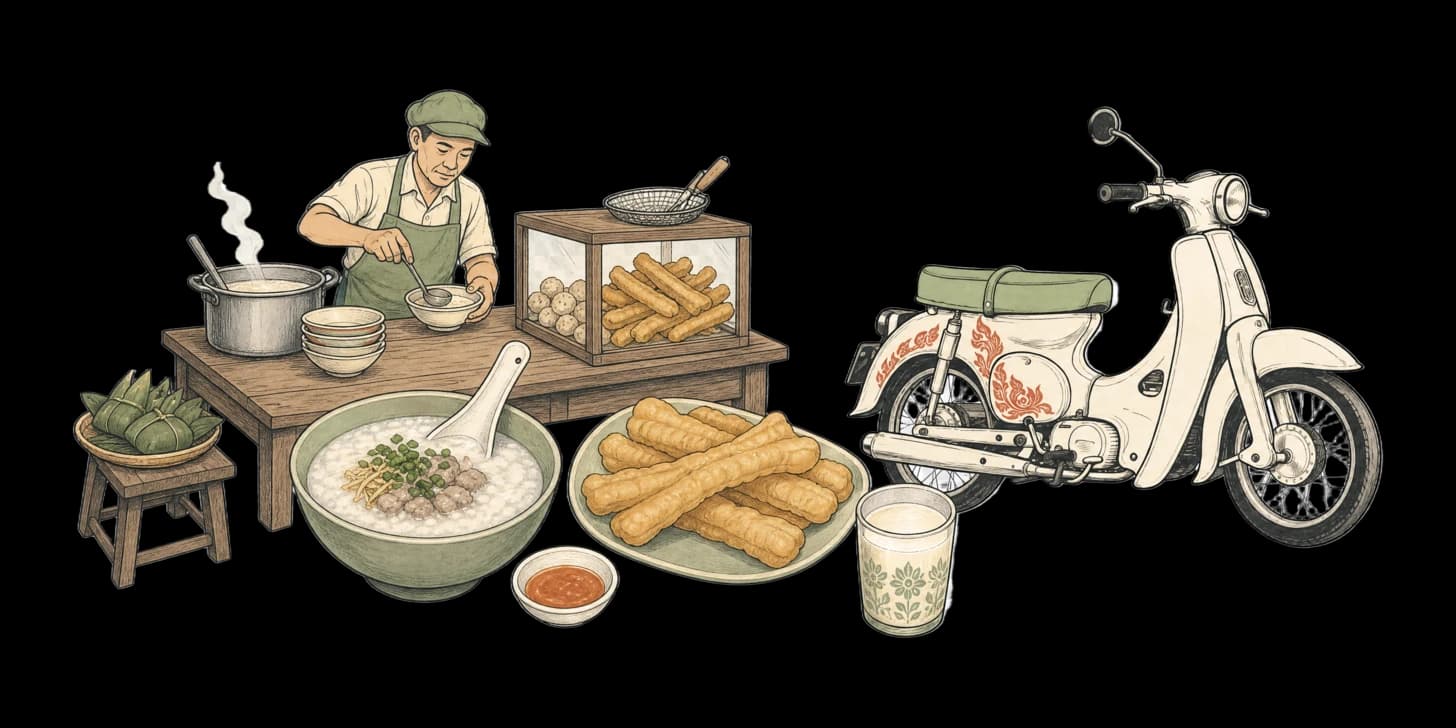
By the time most visitors sit down to a hotel buffet, Chiang Mai has already eaten. From around 6am, the city's fresh markets and street corners fill with office workers, schoolchildren and grandmothers queuing at steaming stalls for bowls of rice porridge, paper bags of fried dough and hot soy milk. It is one of the cheapest, warmest and most genuinely local things you can do here — and all it asks of you is an early start and a willingness to point.
Jok, the bowl half the city grew up on
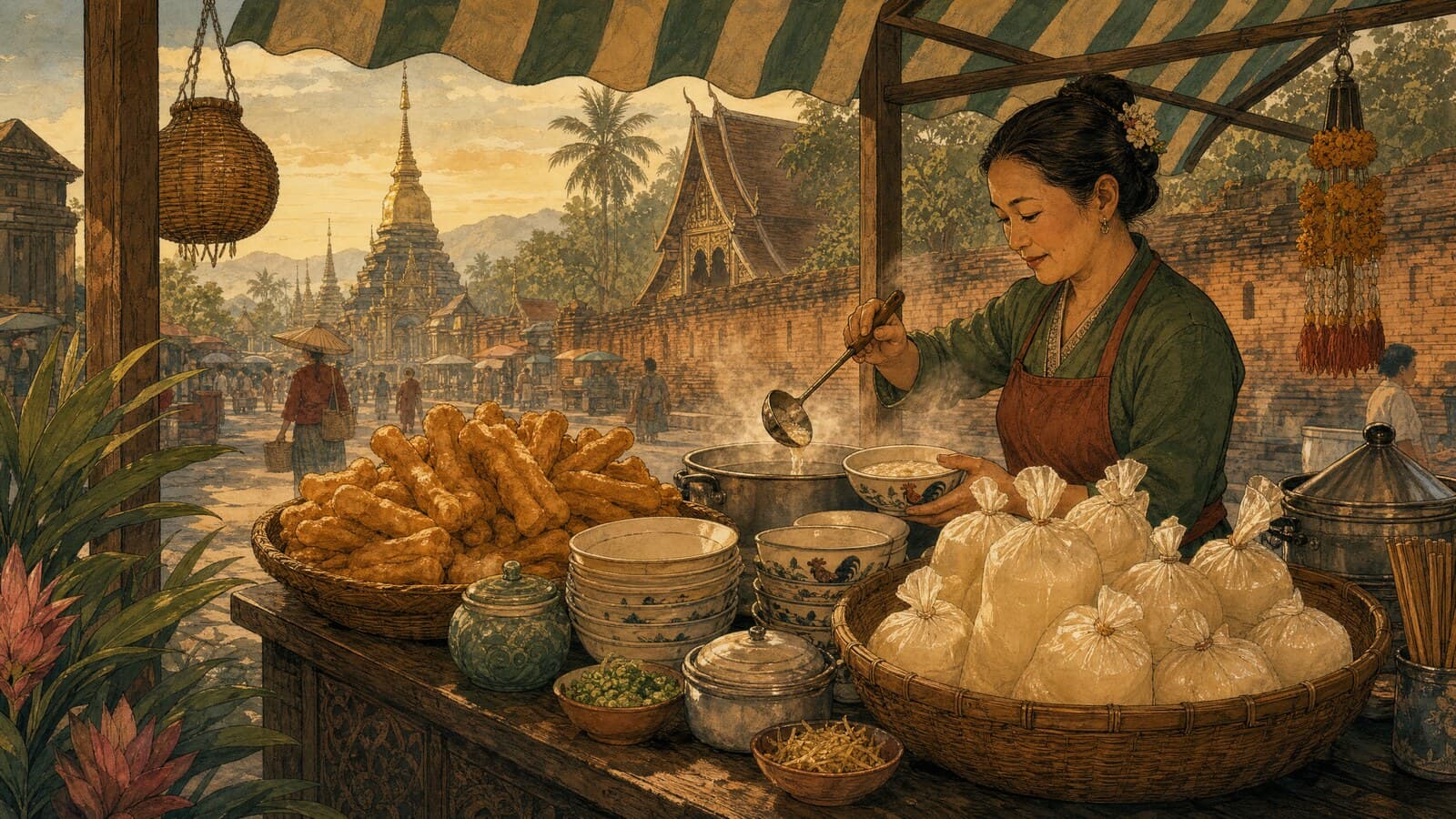
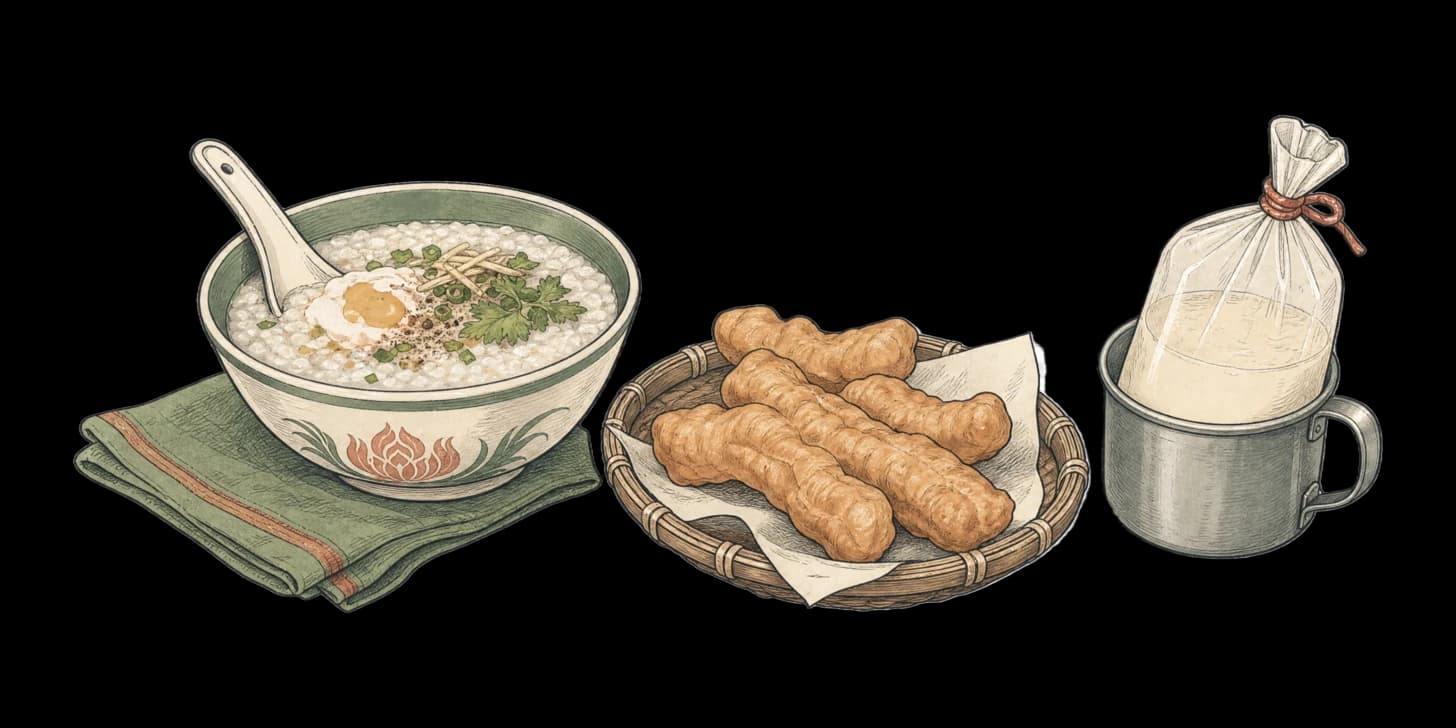
If Thai street breakfast has a headline act, it is jok: jasmine rice simmered until the grains break down into something silky, close cousin to Chinese congee. The classic order comes with minced-pork balls, an egg cracked straight into the bowl so the heat cooks it soft, and a scatter of julienned ginger, spring onion and white pepper. It is what Thai mothers make when someone is under the weather, and what a good part of Chiang Mai eats before work.
Its sibling is khao tom, rice soup. The difference matters to locals: in khao tom the grains stay whole in a clear broth, usually with pork or prawns, so it eats lighter and cleaner than jok's velvety porridge. Both usually cost somewhere around 40–60 baht a bowl, and both are dressed at the table from the little caddy of condiments — taste first, season after.
Patongko and a bag of hot soy milk
The smell that pulls you across a morning market is usually patongko: little X-shaped dough sticks, descended from the Chinese youtiao, fried in a wide wok from before dawn until they're crisp outside and airy inside. Locals buy them by the bagful and dip them in sweetened condensed milk or sangkhaya, a pale-green pandan and coconut custard that tastes faintly of vanilla. Others simply drop them into their jok.
The natural partner is nam tao hu — hot soy milk ladled from a steel cauldron, lightly sweetened, with optional spoonfuls of grass jelly, basil seeds or barley stirred in. A bag of patongko and a cup of soy milk together will rarely cost you more than 20–30 baht, which makes it the best-value breakfast in the city. If the drinks side of Thai mornings intrigues you, our guide to Thai drinks goes much further down that road.
Rice and braised pork before 8am
Nothing marks you as a local quite like eating a proper rice plate at 7am. Khao man gai — poached chicken over rice cooked in the poaching stock, with a punchy ginger-and-soybean sauce and a small bowl of broth — is morning food all over Thailand, typically 30–50 baht a plate. So is khao kha moo: pork leg braised until it collapses, served over rice with a boiled egg, pickled mustard greens and raw garlic on the side, usually 50–60 baht. Neither dish is northern in origin — for the Lanna repertoire proper, see our guide to northern Thai food — but both are everyday Chiang Mai breakfasts, and the best stalls sell out well before lunch.
Follow the markets, not the guidebooks
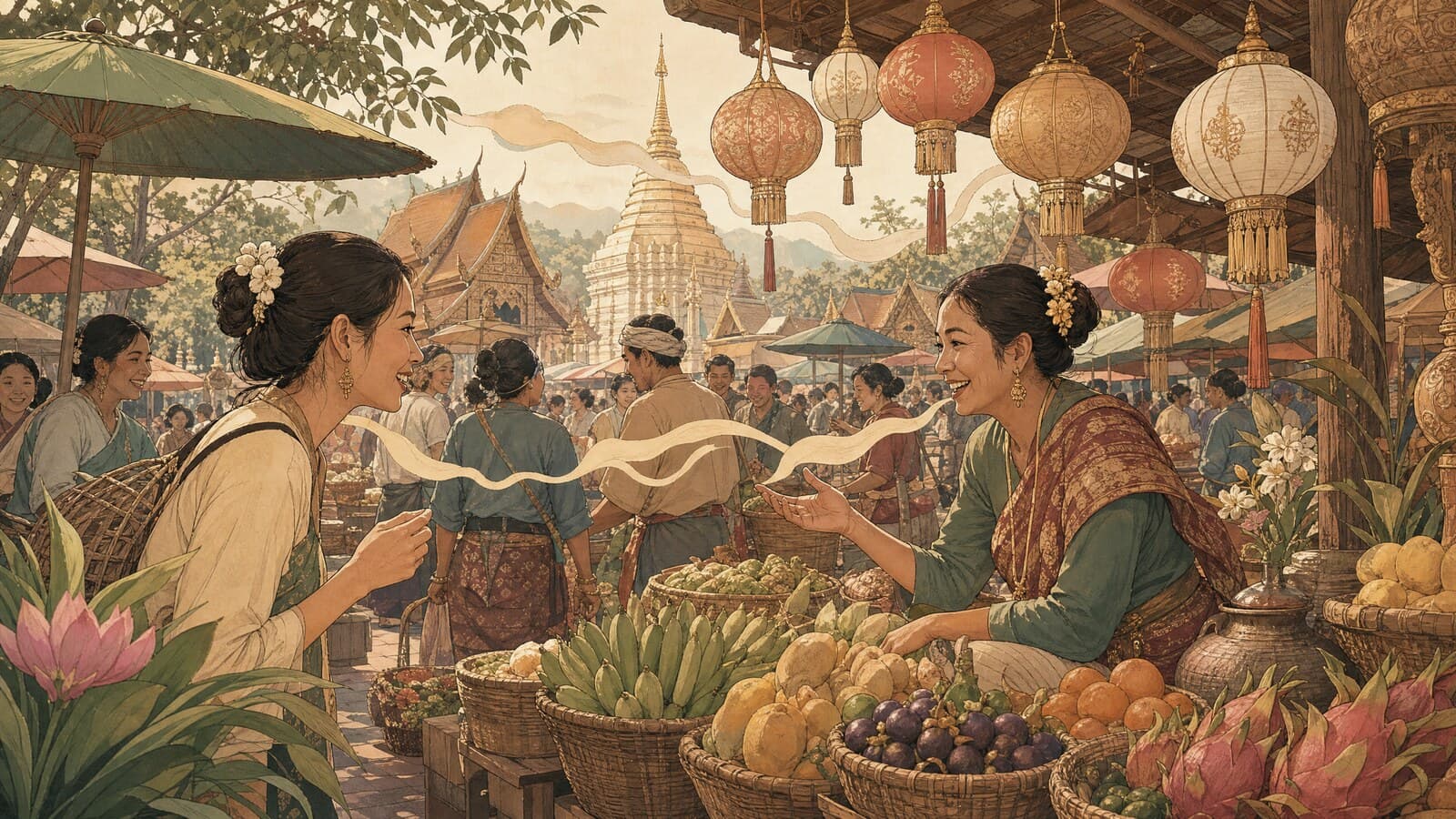
You don't need an address for any of this. Every fresh market in the city runs a morning session, busiest from roughly 6am to 9am: Chiang Mai Gate market on the old town's southern moat is a favourite, and the lanes around Warorot Market to the north-east are another reliable hunting ground. Beyond the named markets, carts appear on the same old-town corners every morning, serving the same neighbours they've served for years.
Go at dawn and you'll see the other half of the ritual: monks on their alms rounds, walking barefoot through the market while locals kneel to offer food. Stand aside, keep your voice down, and you've witnessed something no buffet can offer. By 10am the woks are being scrubbed and the best of it is gone — this is a meal that rewards the early riser.
How to order with ten words and a smile
No Thai required. Point at what someone else is having, smile, and hold up fingers for how many. Three words cover most of the menu: "moo" is pork, "gai" is chicken, "khai" is egg. Vendors at morning stalls deal with pointing customers all day and will meet you more than halfway.
Seating is communal and unceremonious. If a table has a free stool, gesture at it, sit down and nobody will blink — sharing with strangers is simply how morning stalls work. Eat, pay when you finish (small notes are kindest), and leave the seat for the next person. That's the whole etiquette.
Why this beats the hotel buffet
Count it up: a bowl of jok, a bag of patongko and a hot soy milk come to a full breakfast for well under 100 baht — often nearer 80. Everything is cooked in front of you and sold out by mid-morning, so nothing has sat under a heat lamp. And you get something no buffet provides: twenty minutes inside the city's actual morning, elbow to elbow with the people who live it.
We'll be honest — some mornings you simply want good bread and proper eggs, and Chiang Mai does that beautifully too; our brunch and comfort food guide has you covered. But try the market version at least once. Ask us over coffee at Ada House and we'll point you to the nearest morning market — then set an alarm, bring a 100-baht note, and go and eat like a local.
Frequently asked questions
What do locals in Chiang Mai actually eat for breakfast?
The morning staples are jok (silky rice porridge with pork balls, a soft egg and ginger), khao tom (rice soup with whole grains in clear broth), patongko fried dough sticks dipped in condensed milk or pandan custard, hot soy milk (nam tao hu), and rice plates like khao man gai (chicken rice) and khao kha moo (braised pork leg on rice).
What is the difference between jok and khao tom?
In jok the jasmine rice is simmered until the grains break down into a silky porridge, close to Chinese congee. In khao tom the grains stay whole in a clear broth, usually with pork or prawns, so it eats lighter. Both typically cost around 40-60 baht a bowl.
How much does a Thai street breakfast cost in Chiang Mai?
A full breakfast comes to well under 100 baht. A bowl of jok or khao tom is roughly 40-60 baht, khao man gai about 30-50 baht, khao kha moo around 50-60 baht, and a bag of patongko with a cup of hot soy milk rarely more than 20-30 baht.
What time should I go for street breakfast in Chiang Mai?
Morning markets are busiest from roughly 6am to 9am, and the best stalls sell out well before lunch. By 10am the woks are being scrubbed, so this is a meal that rewards the early riser. Go at dawn and you may also see monks passing through on their alms rounds.
Can I order at a Thai breakfast stall without speaking Thai?
Yes. Point at what someone else is having, smile, and hold up fingers for how many. Three words cover most of the menu: 'moo' is pork, 'gai' is chicken and 'khai' is egg. Vendors deal with pointing customers all day and will meet you more than halfway.
Is it normal to share a table at a street food stall?
Completely normal. Seating at morning stalls is communal: if a table has a free stool, gesture at it and sit down. Eat, pay when you finish (small notes are appreciated), and leave the seat for the next person.