Local culture · June 27, 2026
The legend behind Songkran: the riddle, the severed head and the Nang Songkran
By The Ada House team
Every April, the streets of Chiang Mai turn into a kingdom of water. Buckets, hoses, laughing strangers, grandmothers dabbing scented water on your shoulders — it is the most joyful chaos we know. But at Ada House we love the story underneath the splashing, the old myth of why a whole nation pours water on one another to mark the turning of the year. Settle in. This one has a god, a clever boy, a wager and a severed head that must never touch the ground.
A god who loved a riddle
The tale begins in the heavens with Kabilaphrom, a great four-faced deity many know as a form of Brahma. He was proud of his wisdom, and pride, as all good myths remind us, is a dangerous thing to carry.
On earth there lived a boy named Thammabal, gifted beyond his years. He understood the language of birds, and his counsel was so wise that people honoured him above the gods themselves. Word of this reached Kabilaphrom, and the god came down to test him with a wager.
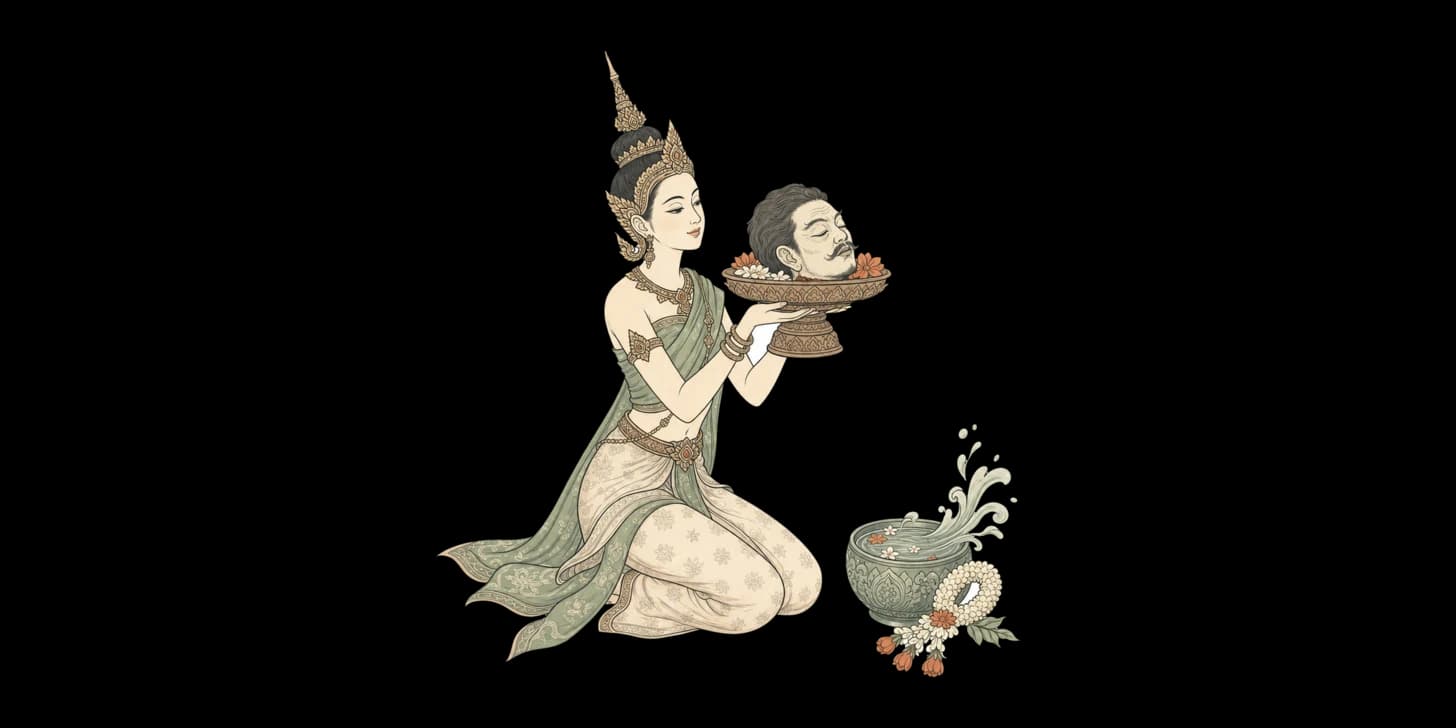
The wager and the seven days
The riddle was this: where does a person's sri — their grace, their glory, their auspicious radiance — reside in the morning, at noon and in the evening? Answer within seven days, said the god, and I shall offer you my own head. Fail, and yours is forfeit.
Six days passed and Thammabal had nothing. Despairing, he lay beneath a sugar-palm tree — and there, in the branches above, two eagles spoke of their next meal: the boy's body, should he lose. Then they spoke the answer aloud. We always smile at this part, because the riddle dissolves into the gentlest of truths.
The answer hidden in the body
In the morning, the sri rests upon the face — which is why we wash our faces when we wake. At noon it moves to the chest, which is why people anoint themselves with perfume. And in the evening it settles on the feet, which is why we wash them before sleep. The grace of a life travels through the body across a single day, and tending to that grace is the quiet ritual of being human.
Thammabal returned and spoke it true. Kabilaphrom had lost.
The head that could not touch the world
Here the story turns from gentle to grave. A god of such power could not simply set his head upon the earth. Were it to touch the ground, the whole world would burst into flame. Were it flung skyward, drought would scorch the land. Were it cast into the sea, every ocean would boil dry. His head was too potent for the world to hold.
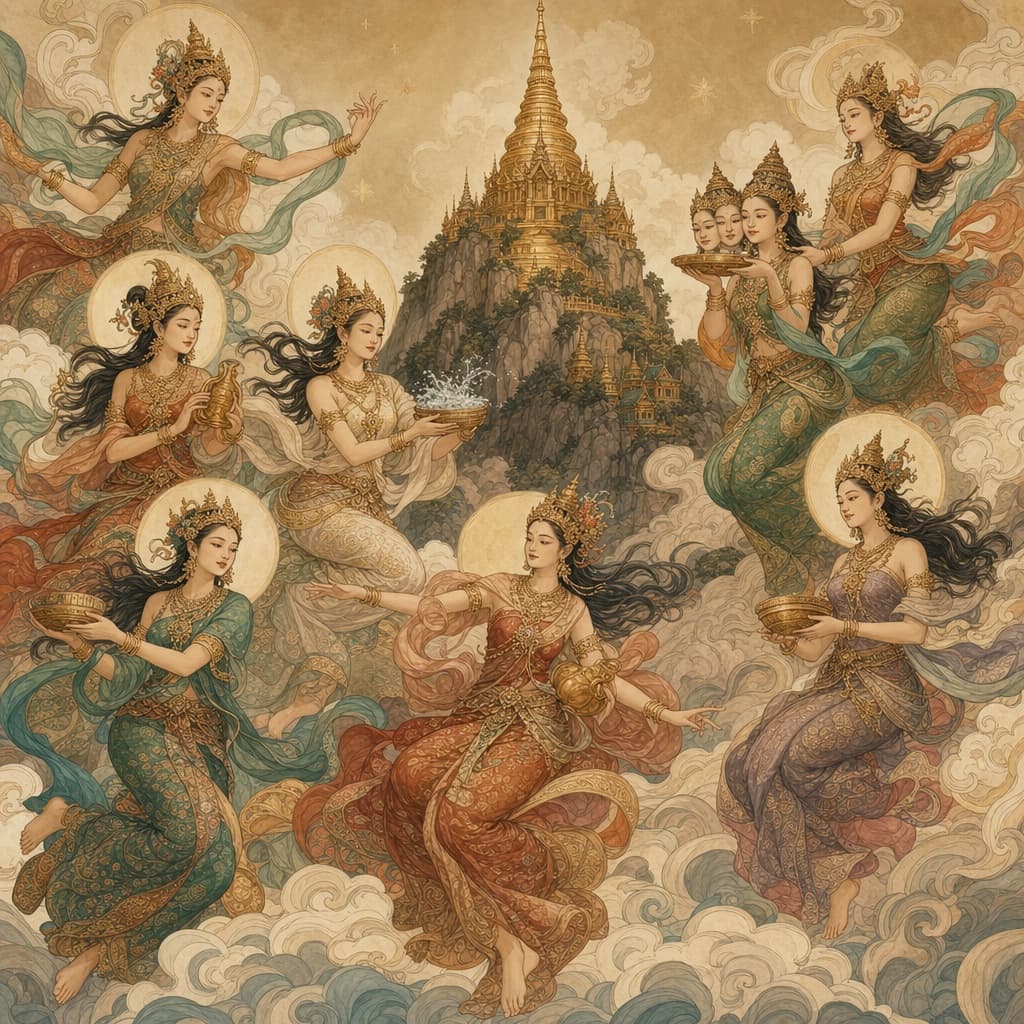
So before he kept his bargain, Kabilaphrom called his seven daughters — the Nang Songkran, the goddesses of Songkran. He severed his own head, placed it upon a tray, and entrusted it to them. They bore it in a slow celestial procession around Mount Meru, the axis of the cosmos, then laid it to rest in a cave. And there the duty began that has never ended.
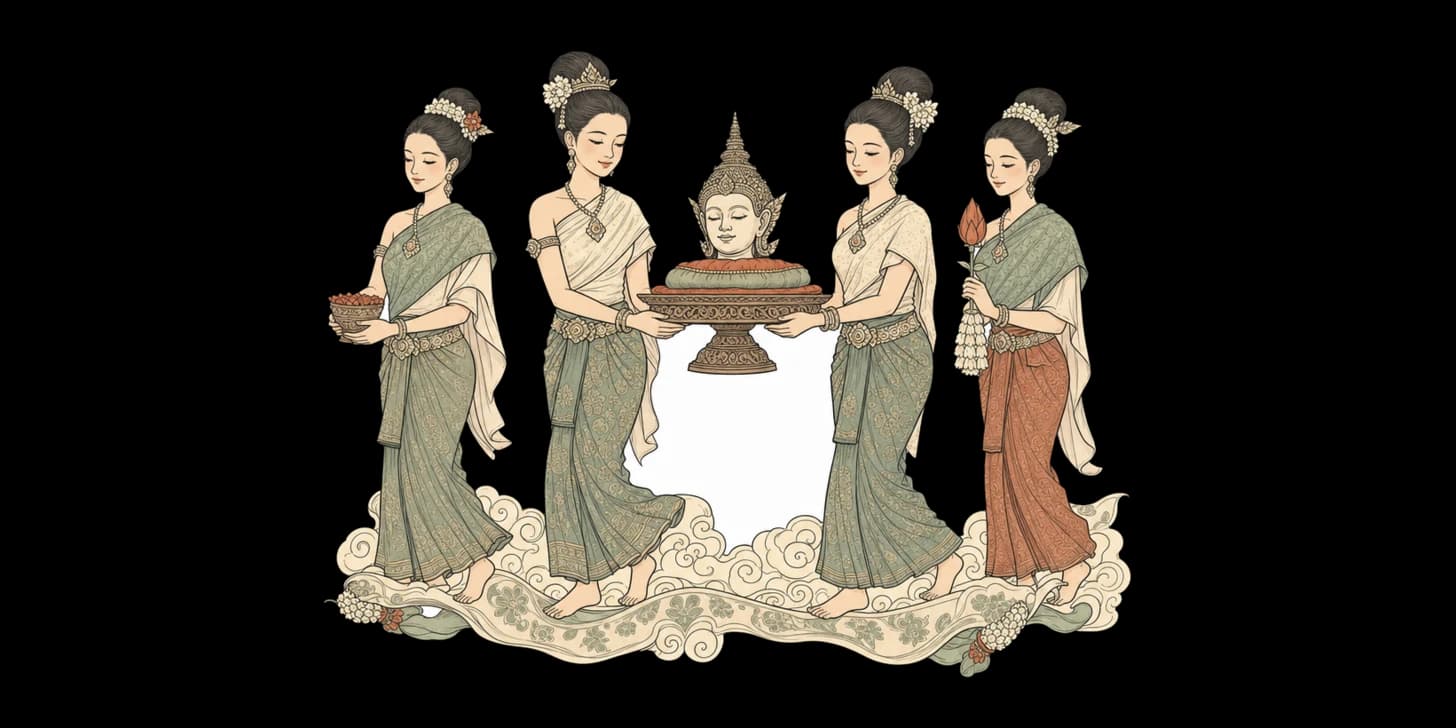
Seven sisters and the turning year
Once each year, as the old year dies and the new one is born, the daughters take their turn. One sister lifts the head, circles the sacred mountain and rinses it clean before returning it to its place. This is why Songkran marks the New Year, and why water — washing, rinsing, anointing — sits at the very heart of it. The festival is a great cleansing: of the head of a god, and of the year itself.
Which sister carries the head depends on the day the New Year falls, and each goddess arrives differently. Thungsa rides the mighty Garuda, Khorakha a tiger, Raksot a wild boar, Mantha a donkey, Kirini an elephant, Kimitha a buffalo, Mahothon a peacock. From these details the old almanacs still read the year's omen, whether the rains will be kind and the harvest generous — and to this day Thai newspapers announce which Nang Songkran presides, a living thread to a myth thousands of years old. You can feel that rhythm of belief running through so much of life here, the same current we explore in our piece on understanding Thai Buddhism.
From ancient myth to modern joy
So the next time water arcs across a Chiang Mai street, remember that every splash is an echo: the rinsing of a god's head, the washing-away of the old year, the sri being tended morning, noon and night across the body of a whole culture. The myth is why the festival feels less like a party and more like a renewal wearing a party's clothes.
If the legend has charmed you, the festival is even better lived than read — we have written a full guide to Songkran in Chiang Mai, and our Chiang Mai festivals calendar will help you time your visit.
From all of us at Ada House — may the goddess of this year ride kindly, and may your face stay drenched and grinning.
Frequently asked questions
What is the legend behind Songkran?
It tells of Kabilaphrom, a great four-faced deity, who wagered his own head on a riddle with a gifted boy named Thammabal, and lost. Because his head was too powerful to touch the earth, his seven daughters, the Nang Songkran, must carry and rinse it each year, which is why water sits at the very heart of the festival.
Who are the Nang Songkran?
They are the seven daughters of Kabilaphrom, the goddesses of Songkran. Each year one sister lifts the god's head, circles Mount Meru in a slow celestial procession, and rinses it clean before returning it to its place.
What was the riddle in the story?
The god asked where a person's sri, their grace and auspicious radiance, resides in the morning, at noon and in the evening. The answer is that in the morning it rests on the face, at noon it moves to the chest, and in the evening it settles on the feet, which is why people wash their faces, anoint themselves with perfume, and wash their feet.
Why is water so central to Songkran?
Because the festival is a great cleansing, of the head of a god and of the year itself. As the old year dies and the new one is born, a daughter rinses the head clean, so washing, rinsing and anointing sit at the heart of the celebration.
Does the legend still shape things today?
Yes. Which sister carries the head depends on the day the New Year falls, and each goddess arrives on a different mount, from the Garuda to a tiger, a wild boar or an elephant. From these details the old almanacs read the year's omen, and to this day Thai newspapers announce which Nang Songkran presides.