Move here · June 22, 2026
Money & banking in Chiang Mai: cash, cards & ATMs
By The Ada House team
Sorting out money is one of the first things you'll do here, and Chiang Mai makes it easy once you know the quirks. The currency is the Thai baht (THB, ฿), cash is still everyday king, and digital payments are racing ahead — though not always in ways visitors can use. Here's how to handle it without quietly overpaying.
Cash is still king
Carry cash every day. Street food, markets, songthaews and small shops are largely cash-only, while mid-range and upscale cafés, restaurants, hotels and chains happily take Visa/Mastercard. Notes come in 20, 50, 100, 500 and 1,000 baht; coins in 1, 2, 5 and 10. The trend toward cards and QR is real in the city, but you can't yet count on going cash-free in local spots.
ATMs & the 220 THB sting
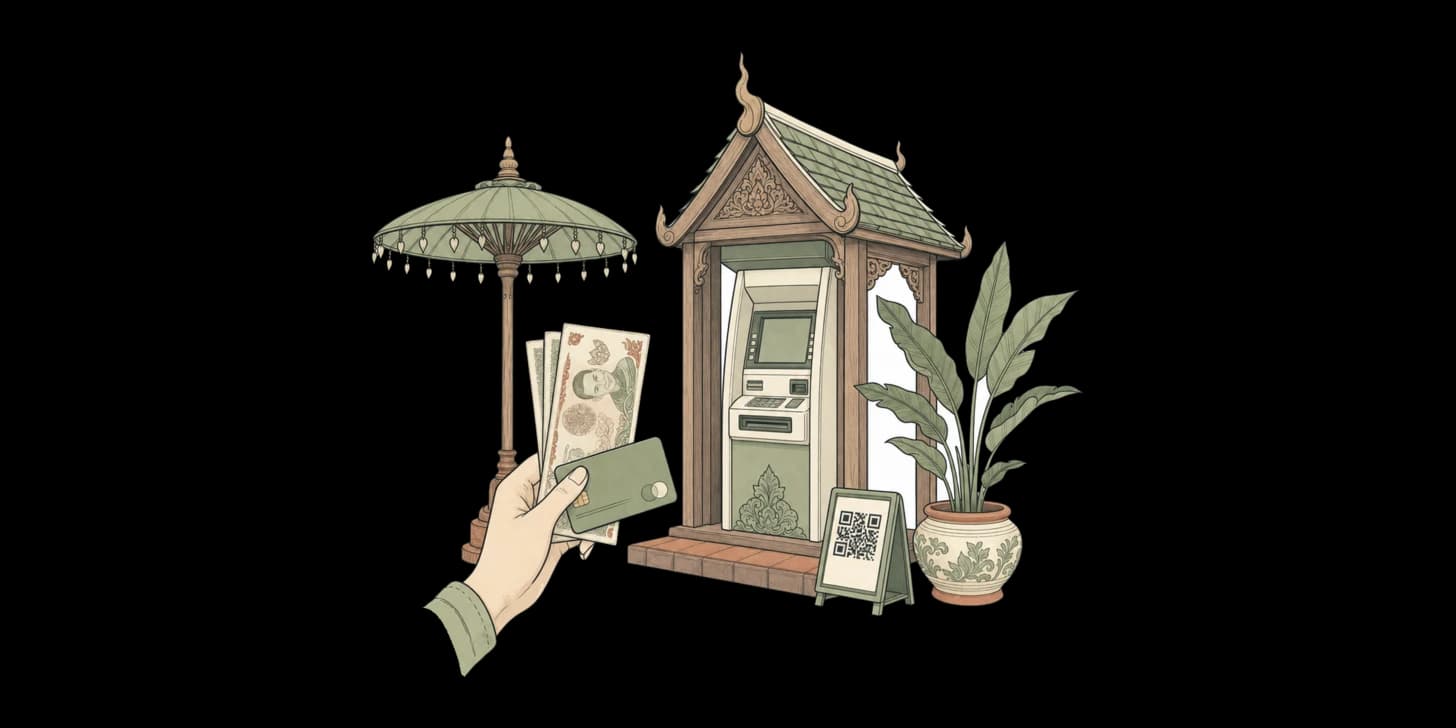
Thai ATMs are everywhere and accept foreign cards — but nearly all charge a fixed fee of around 220 THB per withdrawal for foreign cards, on top of whatever your home bank adds. Three ways to soften it:
- Withdraw larger amounts, less often — you pay the flat fee fewer times.
- Use a fee-friendly card — some travel/premium accounts reimburse foreign ATM fees.
- Always choose to be charged in THB, never your home currency. Picking your home currency triggers dynamic currency conversion (DCC) — a deliberately bad exchange rate. Decline it every time.
QR payments & PromptPay
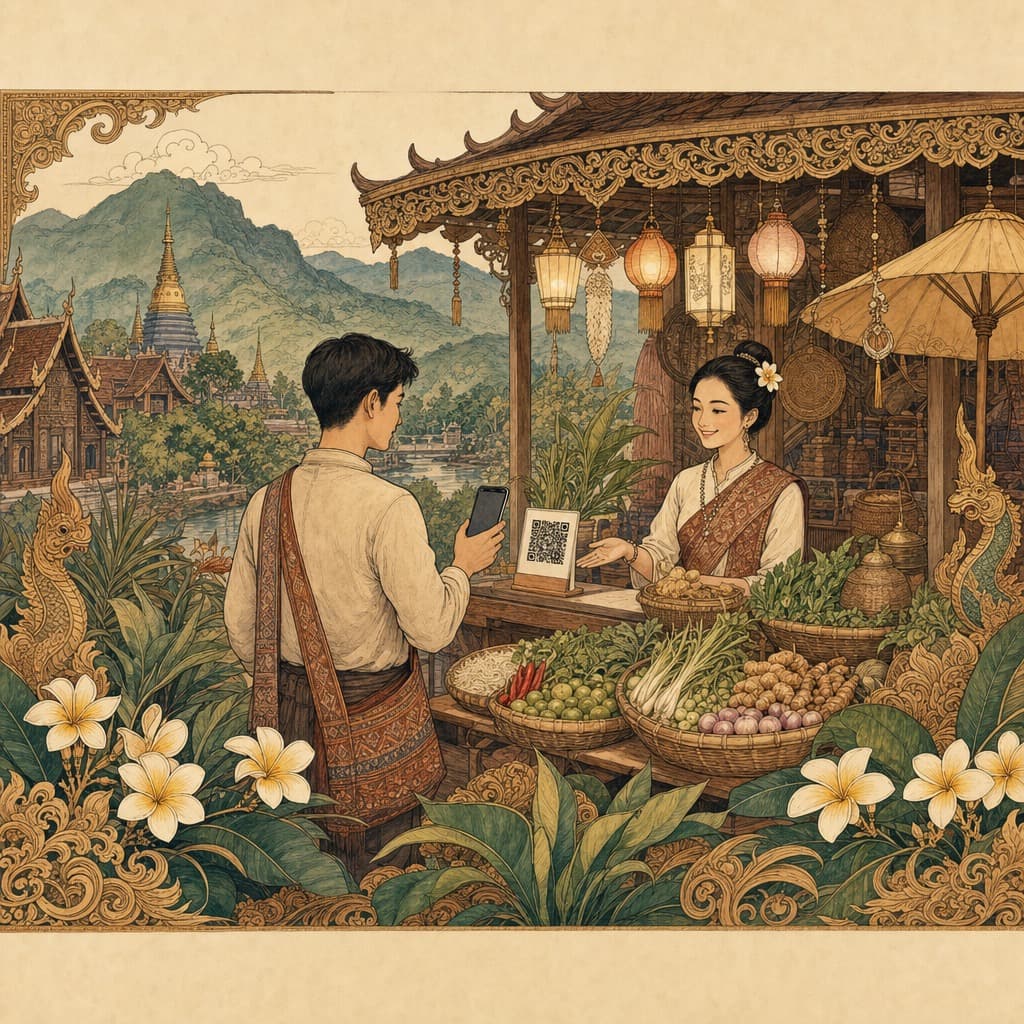
Thailand has a brilliant QR system called PromptPay — locals pay for almost anything by scanning a code. The catch: it's tied to a Thai bank account, so most short-term visitors can't use it directly. You'll watch everyone tap and scan while you reach for cash or card. That's fine — it's just worth knowing before you assume your phone will pay for that night-market dinner.
Money changers vs ATMs
For exchanging larger sums, dedicated money-changer booths (the "SuperRich"-style chains in malls and tourist areas) usually beat airport counters, bank branches and ATM withdrawals once you count the fees. Bring clean, undamaged notes in major currencies (USD, EUR, GBP) — torn notes get refused or a worse rate. Swap a little at the airport on arrival, then do bigger exchanges in town.
Cards, apps & a backup
Multi-currency apps like Wise and Revolut are nomad staples: near mid-market exchange rates, low-fee local spending and cheap international transfers — handy for receiving remote-work income or sending money home. Two habits save real headaches:
- Tell your bank you're travelling so transactions aren't blocked.
- Carry a backup card from a different bank/network, in case one is rejected, lost or frozen.
Opening a Thai bank account
You probably don't need one for a short stay — international cards plus cash cover daily life. For longer stays, it's possible but variable: banks typically want a long-stay visa (education, work, retirement, marriage), a work permit or proof of local address, and rules differ branch to branch. Some people open one via an agent or a condo introduction. If the DTV or a long stay is your plan, see our digital nomad guide.
Tipping (light and optional)
Tipping here is relaxed. Street food and local eateries expect nothing — rounding up is a friendly gesture. Cafés and mid-range places appreciate small change; smarter restaurants, spas and private drivers see around 10% when service is good (some add a service charge instead). No pressure, ever.
A last honest note: ATM fees, FX rates and bank rules change often and vary by branch, so treat the numbers here as a guide and check current rates with your bank or app. Pair this with our cost-of-living guide to plan a realistic monthly budget — and if you're weighing up a big recurring expense, our look at whether buying and owning a scooter is worth it runs the numbers. Ask us at the house too if you're unsure where the nearest good money changer is.
Frequently asked questions
Do I need to carry cash in Chiang Mai?
Yes, cash is still everyday king, so carry some daily. Street food, markets, songthaews and small shops are largely cash-only, while mid-range and upscale cafes, restaurants, hotels and chains happily take Visa and Mastercard. The trend toward cards and QR is real in the city, but you cannot yet count on going cash-free in local spots.
What is the 220 THB ATM fee and how do I reduce it?
Nearly all Thai ATMs charge a fixed fee of around 220 THB per withdrawal for foreign cards, on top of whatever your home bank adds. You can soften it by withdrawing larger amounts less often, using a fee-friendly travel card that reimburses foreign ATM fees, and always choosing to be charged in THB rather than your home currency to avoid a deliberately bad dynamic currency conversion rate. Fees and rules change often, so check current rates with your bank.
Can I use QR payments like the locals?
Thailand has a brilliant QR system called PromptPay that locals use to pay for almost anything, but the catch is that it is tied to a Thai bank account, so most short-term visitors cannot use it directly. You will watch everyone tap and scan while you reach for cash or card, which is fine, just worth knowing before you assume your phone will pay for that night-market dinner.
Are money changers better than ATMs for exchanging cash?
For exchanging larger sums, dedicated money-changer booths like the SuperRich-style chains in malls usually beat airport counters, bank branches and ATM withdrawals once you count the fees. Bring clean, undamaged notes in major currencies like USD, EUR or GBP, since torn notes get refused or a worse rate. Swap a little at the airport on arrival, then do bigger exchanges in town.
Can I open a Thai bank account?
You probably do not need one for a short stay, as international cards plus cash cover daily life. For longer stays it is possible but variable, with banks typically wanting a long-stay visa, a work permit or proof of local address, and rules differ branch to branch. This is general information rather than advice, so check current requirements with the bank directly, as some people open one via an agent or a condo introduction.
How does tipping work here?
Tipping is relaxed and entirely optional. Street food and local eateries expect nothing, so rounding up is just a friendly gesture, cafes and mid-range places appreciate small change, and smarter restaurants, spas and private drivers see around 10% when service is good, though some add a service charge instead. There is no pressure, ever.