Food & coffee · June 25, 2026
Mookata in Chiang Mai: where locals go and how to join them
By The Ada House team
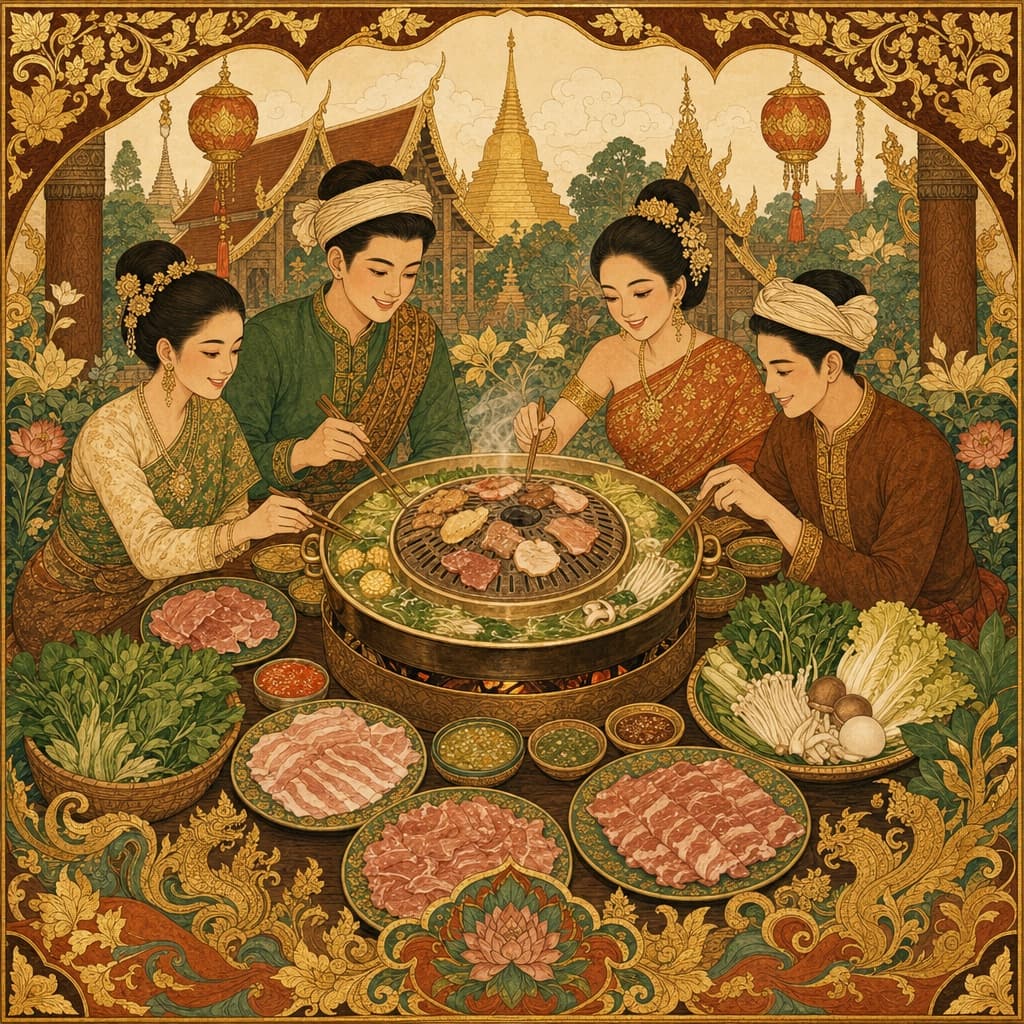
Picture a little dome of metal glowing over a charcoal bucket, ringed by a moat of simmering broth, and a table of friends reaching across it with chopsticks. That's mookata — Thai BBQ and hotpot in one gloriously messy contraption. It's loud, smoky, cheap, and one of the most fun ways you'll eat in Chiang Mai.
What mookata actually is
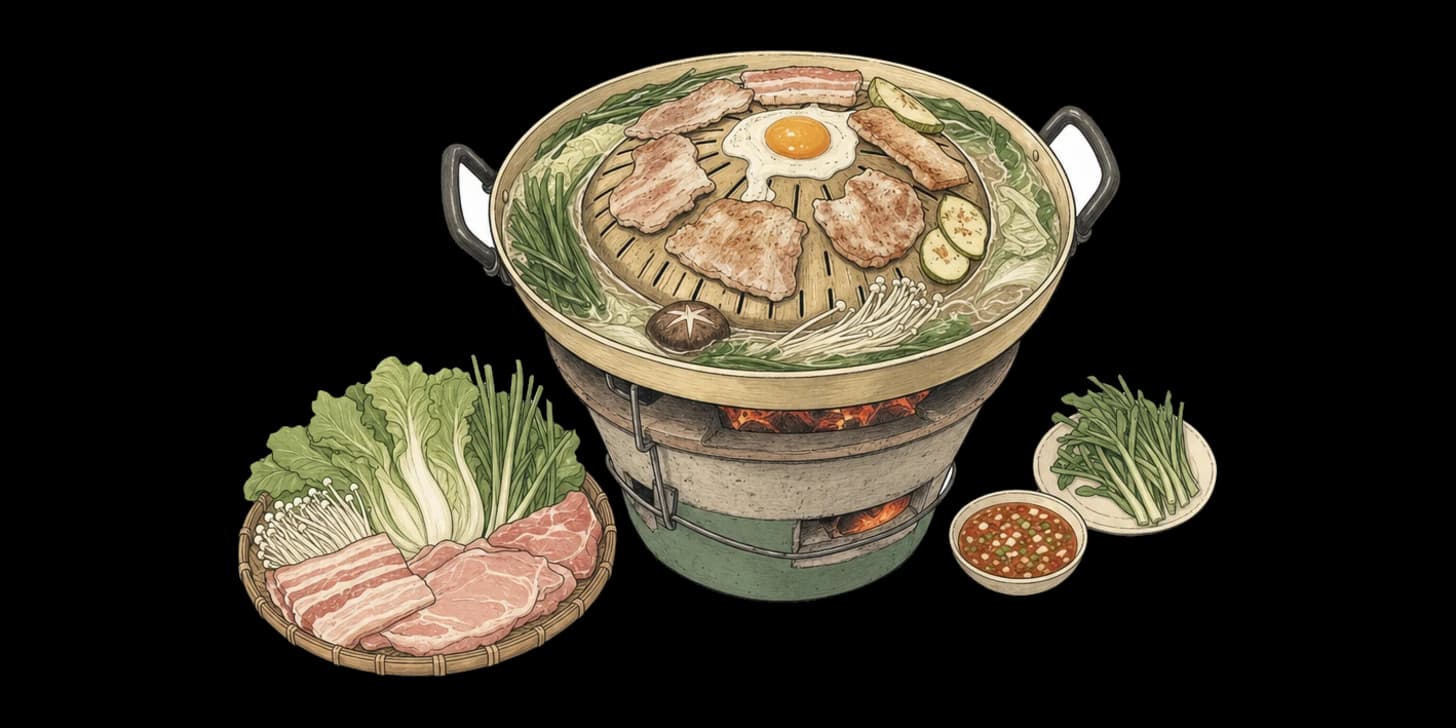
The name says it all: moo means pork, kata means pan. The pan itself is the genius bit. A dome-shaped grill sits in the centre where you cook sliced meat, while a moat of broth circles the base, bubbling away like a tiny hotpot. As the meat sizzles, the juices run down the slopes and into the broth, which starts out as a plain stock and slowly turns into something deep and savoury by the end of the meal.
The first thing you do is grab the lump of pork fat that arrives with your tray and slide it onto the top of the dome. As it melts it greases the metal, stops your pork sticking, and seasons everything that follows. Don't skip it — locals will tell you it's the soul of the whole thing.
How to actually do it
There's a rhythm to mookata, and you'll find it within minutes. Melt the fat, then lay your thin-sliced pork, chicken or beef across the hot dome to grill. Tip your vegetables, noodles, tofu, fish balls and seafood into the moat to poach in the broth. When the broth is rolling, crack an egg straight into it — a classic move that makes the soup richer.
The sauce is where it sings. Most joints set out a fierce nam jim seafood sauce: chilli, lime, garlic and coriander, sharp and bright against the smoky meat. Dab, don't drown. One more thing worth saying plainly: pork and chicken need to be cooked through, so give them time on the dome until there's no pink left. It's worth the wait.
The buffet rules nobody tells you
Most mookata in Chiang Mai is all-you-can-eat buffet, and astonishingly cheap — usually somewhere in the 150–300 THB range per head, which is part of why it's such a fixture of an affordable cost of living in Chiang Mai. You grab raw ingredients from a fridge or a passing trolley and cook them yourself.
The one rule that catches newcomers out: don't waste food. Take small, go back often. Many places charge a penalty for leftovers — typically per 100 grams of uneaten food piled on your plate — so a few trips beats one greedy haul. Beyond that, the etiquette is simple and friendly: share the dome fairly, keep the moat topped up so it doesn't dry out, and don't hog the whole grill.
If you're vegetarian, mookata is more flexible than it looks. Load the moat with cabbage, morning glory, mushrooms, tofu, glass noodles and corn, skip the pork fat for a slick of oil, and you've got a perfectly good plant-based pot. Our guide to going vegetarian in Chiang Mai has more on where that's easiest.
Where to go, and who to bring
You've got two flavours of mookata in town. The roadside joints — plastic stools, a charcoal bucket per table, a handwritten menu — are the soul of it, often tucked near the night markets and busiest after dark. Then there are the big air-conditioned buffet chains, where the spread runs to seafood, ice cream and free-flow drinks for a few baht more. Both are brilliant; the only wrong choice is going alone.
And that's really the point. Mookata is a group sport — there's grilling to manage, broth to tend, an egg to argue over — which makes it one of the easiest, cheapest ways to turn acquaintances into friends. It's no accident it comes up so often when we talk about making friends in Chiang Mai. For more on the wider table it belongs to, our look at Northern Thai food is a good next read.
So round up a few people, find a charcoal bucket, and get the fat melting. Mind the smoke in your clothes, take it slow, and let the broth do its thing. See you around the dome.
— The Ada House team
Frequently asked questions
What exactly is mookata?
Mookata is Thai BBQ and hotpot in one contraption — the name comes from moo (pork) and kata (pan). A dome-shaped grill sits in the centre where you cook sliced meat, while a moat of broth circles the base, bubbling like a tiny hotpot. As the meat sizzles, the juices run down into the broth, which slowly turns deep and savoury by the end of the meal.
How do I actually cook a mookata?
Start by sliding the lump of pork fat onto the top of the dome to grease it — locals say it's the soul of the whole thing. Lay thin-sliced pork, chicken or beef across the hot dome to grill, and tip your vegetables, noodles, tofu, fish balls and seafood into the moat to poach. When the broth is rolling, crack an egg straight into it to make the soup richer.
How much does mookata cost?
Most mookata in Chiang Mai is all-you-can-eat buffet and astonishingly cheap, usually somewhere in the 150 to 300 THB range per head. The air-conditioned buffet chains may run a few baht more for a spread that includes seafood, ice cream and free-flow drinks. It's a big part of why it's such an affordable fixture of life here.
Is there a catch with the buffet?
Yes — the one rule that catches newcomers out is don't waste food. Many places charge a penalty for leftovers, typically per 100 grams of uneaten food piled on your plate, so take small and go back often. Beyond that, just share the dome fairly and keep the moat topped up so it doesn't dry out.
Can I do mookata as a vegetarian?
Yes, it's more flexible than it looks. Load the moat with cabbage, morning glory, mushrooms, tofu, glass noodles and corn, skip the pork fat for a slick of oil, and you've got a perfectly good plant-based pot. Our vegetarian guide has more on where that's easiest.
Is mookata safe to eat — what about undercooked meat?
Since you cook it yourself, just give it time. Pork and chicken need to be cooked through, so leave them on the dome until there's no pink left — it's worth the wait. The nam jim seafood sauce of chilli, lime, garlic and coriander is best dabbed on rather than drowned.