Practical tips · July 5, 2026
Beyond the temples: places of worship for every faith in Chiang Mai
By The Ada House team
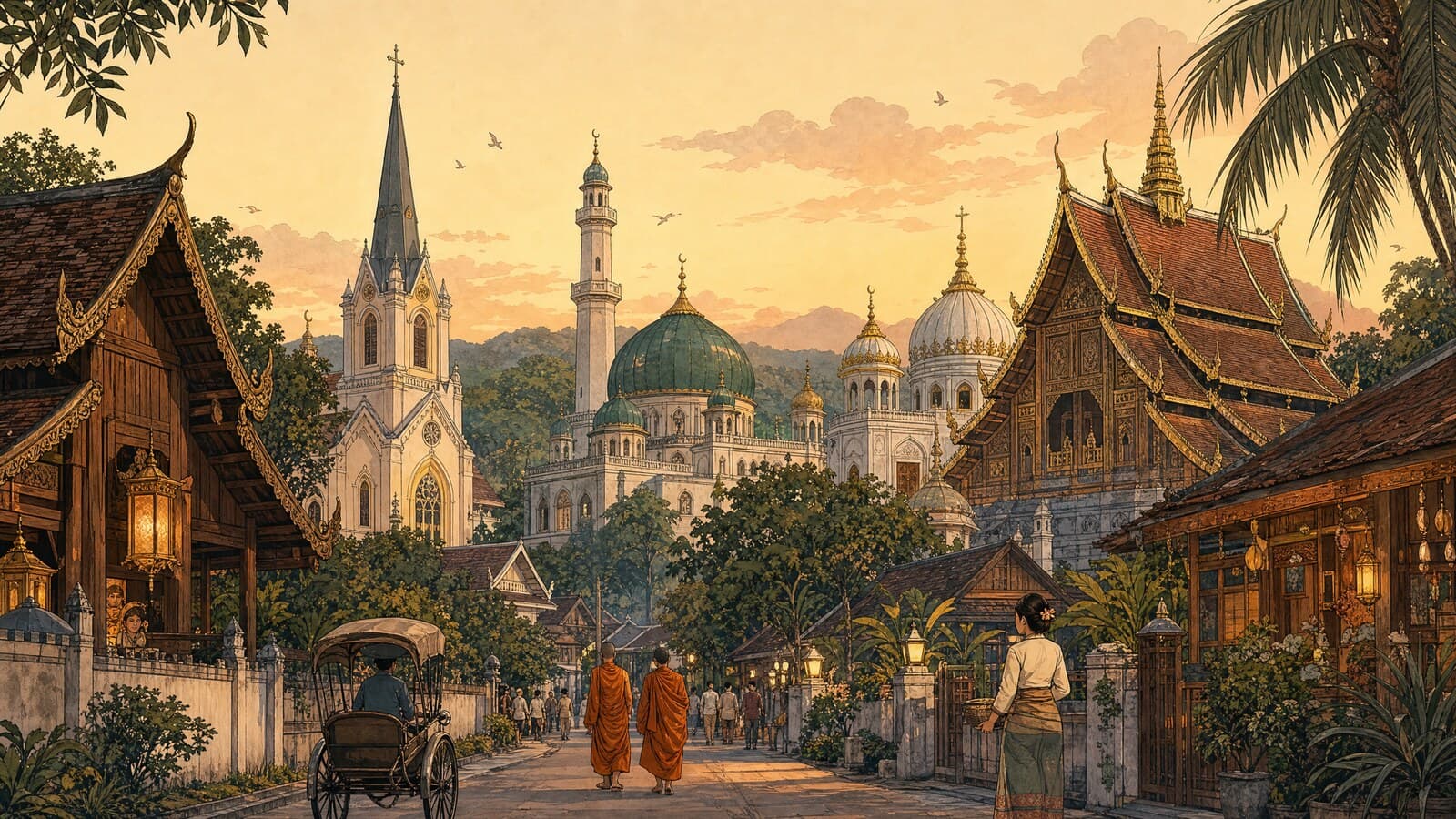
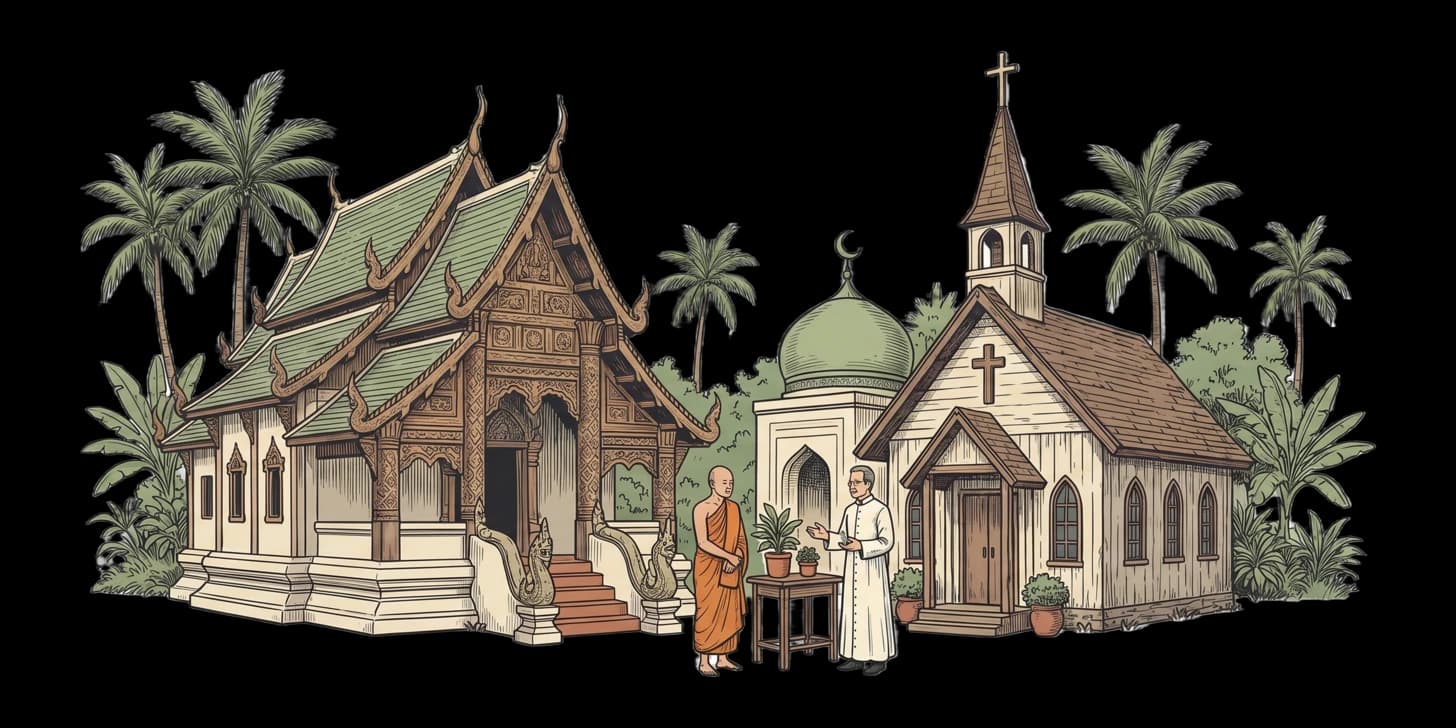
Spend a week in Chiang Mai and you will lose count of the Buddhist temples — their gilded roofs and morning chants are the heartbeat of the city. But listen a little longer and you may catch other sounds too: church bells on a Sunday, the call to prayer drifting over Chang Klan, Hebrew song on a Friday night. For more than 150 years, Chiang Mai has quietly been home to Christians, Muslims, Jews, Sikhs and Hindus, and the city holds all of them with remarkable ease. If you are wondering where your own community gathers, consider this your map.
A city of many faiths
Chiang Mai is overwhelmingly Buddhist, and that identity runs deep — it has been a royal and religious centre since the days of the Lanna kingdom. Yet other traditions arrived far earlier than most visitors imagine. American Presbyterian missionaries reached the city in 1867; Yunnanese Muslim traders were leading mule caravans down from China in the same era; Sikh families began settling here in the early 1900s. None of these communities ever left. They built churches, mosques and temples, raised generations of Thai-born children and became part of the city's fabric — which is why, today, a newcomer of almost any faith can find a congregation that feels like home.
Christian landmarks with deep roots
Chiang Mai is the seat of a Roman Catholic diocese, and its mother church, Sacred Heart Cathedral, stands on Charoen Prathet Road near the Night Bazaar. Masses are held in Thai through the week, and there is an English-language Mass on Sundays — check the cathedral's current schedule, as times do change. Across the Ping River sits the First Church of Chiang Mai, founded in 1868 by the American Presbyterian missionary Dr Daniel McGilvary and widely regarded as the oldest Protestant congregation in northern Thailand. Its riverside compound is a lovely, peaceful piece of the city's history, and the congregation still worships there every week.
International and English-speaking congregations
Beyond the landmarks, Chiang Mai supports an unusually rich ecosystem of international churches for a city of its size — a legacy of its long missionary history and large expat community. There are English-language and bilingual community churches, evangelical fellowships, a Seventh-day Adventist church and several branches of the Church of Jesus Christ of Latter-day Saints. There is even an Orthodox parish: the Church of St Vladimir, the only Orthodox church in northern Thailand, holds services drawing worshippers of Russian, Thai and many other backgrounds. Most congregations keep active Facebook pages, which remain the most reliable way to confirm this week's service times.
The mosques of the Chang Klan quarter
Walk down Charoen Prathet Road near the Night Bazaar and you will hear the call to prayer from Ban Haw Mosque (Masjid Hidayatul Islam), the heart of Chiang Mai's oldest Muslim community. It was founded by the Chin Haw — Yunnanese Chinese Muslim traders whose mule caravans linked southern China with the Lanna kingdom in the nineteenth century — and their descendants still anchor the surrounding quarter, where halal kitchens serve some of the best khao soi in the city (we have written a full guide to halal food in Chiang Mai). The city as a whole counts more than a dozen mosques, so daily and Friday jumu'ah prayers are never far away, whichever neighbourhood you are staying in.
Shabbat dinners at Chabad House
For Jewish travellers, Chabad House Chiang Mai on Chang Klan Road is one of South East Asia's best-known waypoints. Its Friday-night Shabbat dinners are famous on the traveller trail, regularly drawing more than a hundred guests in high season — a long candlelit table of strangers who leave as friends. There are services, kosher meals through the week and holiday celebrations from Passover to Chanukah; contact the Chabad house directly for current arrangements.
Sikh and Hindu Chiang Mai
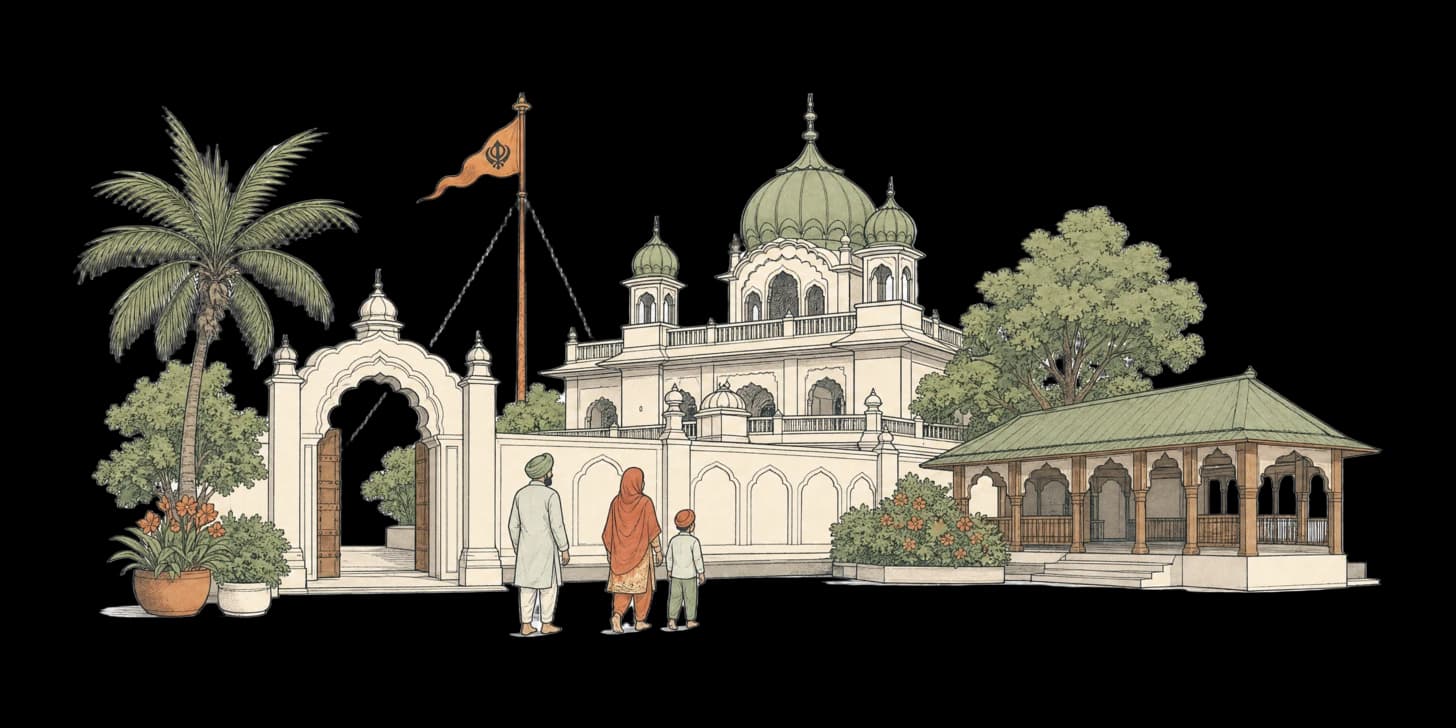
A few minutes from Warorot Market — the trading neighbourhood that doubles as Chiang Mai's little India — stands the Gurdwara Siri Guru Singh Sabha, serving a Sikh community whose roots in the city go back to 1907. Like gurdwaras everywhere, it upholds the tradition of langar, the free community kitchen open to visitors of any faith — one of the most moving expressions of hospitality you will find anywhere. Chiang Mai's Hindu community is smaller but present too, gathering at the modest Dev Mandir temple near the Old City moat; and Hindu-Brahmin ritual has woven through Thai royal and ceremonial tradition for centuries, so the gods honoured there are old neighbours here rather than strangers.
Visiting respectfully, whoever you are
The etiquette is wonderfully universal. Dress modestly — shoulders and knees covered — remove your shoes where asked, and cover your head in the gurdwara (a scarf over your hair is fine). Check current service and prayer times through each community's own page or socials before you go, as schedules shift with seasons and holidays. And do not be shy: in our experience, every one of these communities welcomes newcomers warmly, and a service or a shared meal is one of the fastest ways of making friends in Chiang Mai. That is perhaps the loveliest thing about this city: the temple gongs, the church bells and the call to prayer all sound across the same rooftops, and have done for generations. Whoever you pray to — or whether you pray at all — Chiang Mai has long since made room for you. And if you have only just arrived, our guide to settling in will help with everything else.
Frequently asked questions
Is there an English-language church service in Chiang Mai?
Yes. Sacred Heart Cathedral, the seat of Chiang Mai's Roman Catholic diocese, holds an English-language Mass on Sundays, and the city has many English-speaking and bilingual congregations, from community churches to evangelical fellowships. Check each church's own page or socials for current times, as schedules change.
Where do Muslims pray in Chiang Mai?
Chiang Mai has more than a dozen mosques. The best known is Ban Haw Mosque (Masjid Hidayatul Islam) in the Chang Klan quarter near the Night Bazaar — the heart of the city's historic Yunnanese Chinese Muslim community — with daily and Friday jumu'ah prayers, and halal kitchens all around it.
Is there a synagogue or Jewish community in Chiang Mai?
Yes. Chabad House Chiang Mai, on Chang Klan Road, holds services, serves kosher meals through the week and hosts famous Friday-night Shabbat dinners that regularly draw more than a hundred travellers in high season. Contact the Chabad house directly for current arrangements.
Does Chiang Mai have a Sikh gurdwara or a Hindu temple?
Both. The Gurdwara Siri Guru Singh Sabha, a few minutes from Warorot Market, has served the Sikh community since 1907 and keeps the langar tradition of a free community kitchen open to visitors of any faith. The small Dev Mandir Hindu temple near the Old City moat serves the city's Hindu community.
What should I wear when visiting places of worship in Chiang Mai?
The etiquette is broadly universal: dress modestly with shoulders and knees covered, remove your shoes where asked, and cover your head in the gurdwara — a scarf over your hair is fine. Newcomers are generally welcomed warmly at every place of worship in the city.
How long have non-Buddhist communities existed in Chiang Mai?
Longer than most visitors expect — over 150 years. American Presbyterian missionaries founded the First Church of Chiang Mai in 1868, Yunnanese Muslim traders settled the Chang Klan quarter in the nineteenth century, and the Sikh gurdwara dates back to 1907.