Food & coffee · June 27, 2026
Eating well in Chiang Mai on a budget
By The Ada House team
One of the quiet joys of living in Chiang Mai is this: you can eat brilliantly for almost nothing. Not "cheap and disappointing" — genuinely good, freshly cooked, often the best version of a dish you'll ever have, for less than the price of a coffee back home. The whole Ada House team eats out most days, because once you learn the lay of the land, it's barely worth firing up the stove.
Just how cheap is it?
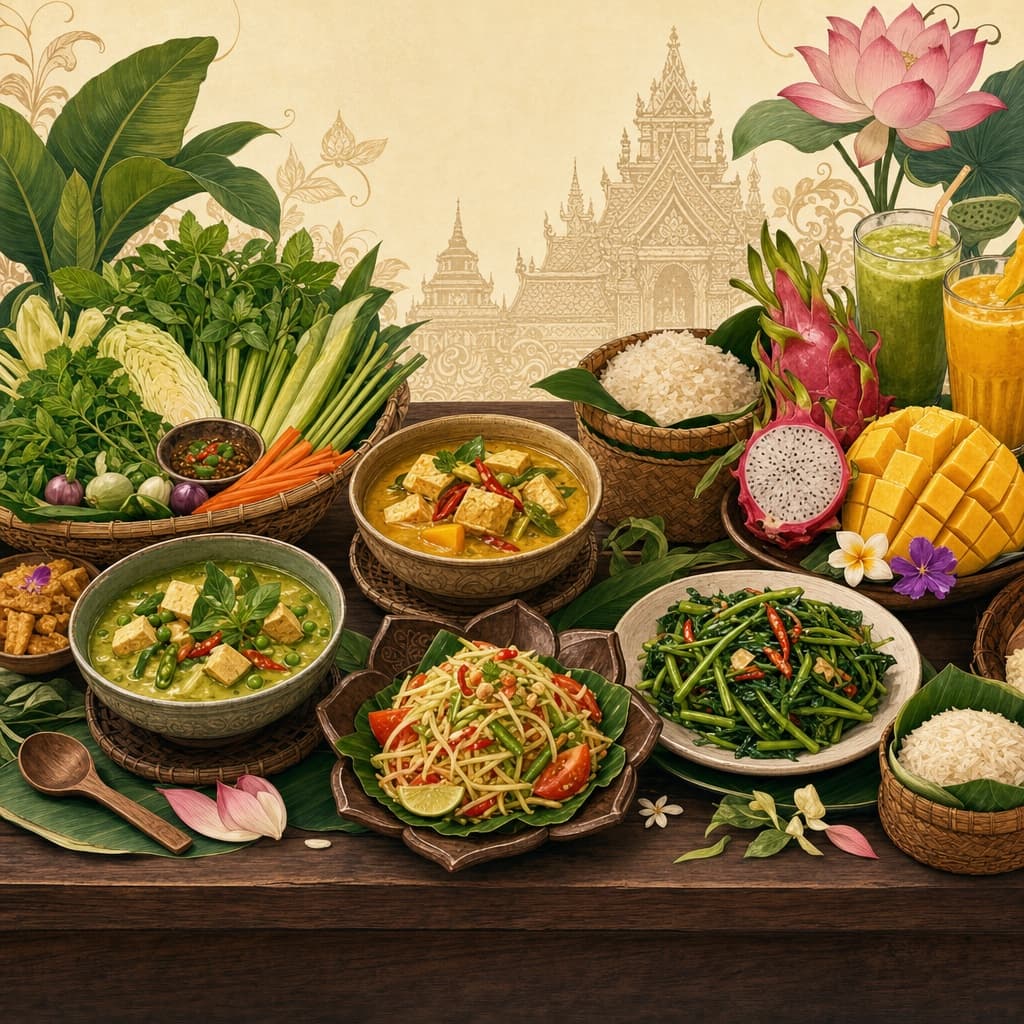
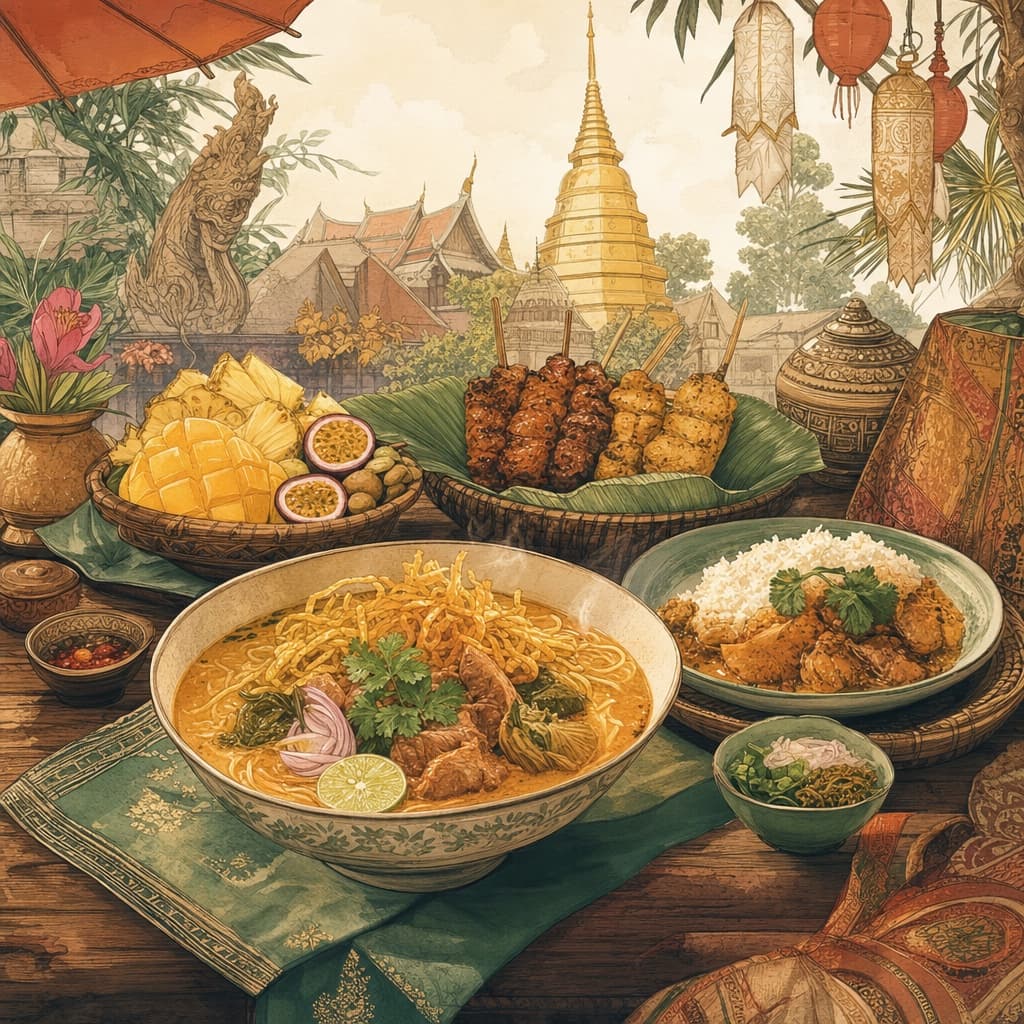
Let's be concrete. At a proper local stall, a great plate of food runs about 40–60 THB — think pad krapow over rice with a fried egg, a bowl of noodle soup, or a paper-wrapped portion of grilled chicken with sticky rice. Step up to a sit-down shophouse and you're looking at 60–100 THB for something more substantial. A genuine feast — several dishes shared between two, with drinks — still comes in under 150 THB a head in most of the city.
Prices have crept up a little in recent years, and tourist-heavy corners around Tha Phae Gate and the busier end of Nimman charge noticeably more. But move two streets back and you're straight into local-price territory. It's a big part of why Chiang Mai stays so affordable overall, as we cover in our cost-of-living guide.
Where the value lives
The trick is knowing where to point yourself:
- Fresh markets. Every neighbourhood has one, and most have a hot-food corner — curries, grilled fish, som tam pounded to order. Cheapest of all, and the produce is glorious.
- Street stalls. The backbone of eating here. A single cart often does one dish supremely well.
- Food courts and department-store floors. The top or basement level of a mall almost always hides a clean, air-conditioned food court where dishes run 50–70 THB. You usually buy a stored-value card at a counter first.
- University canteens. Around campus you'll find some of the lowest prices in town — student dishes for 35–50 THB, open to anyone who wanders in.
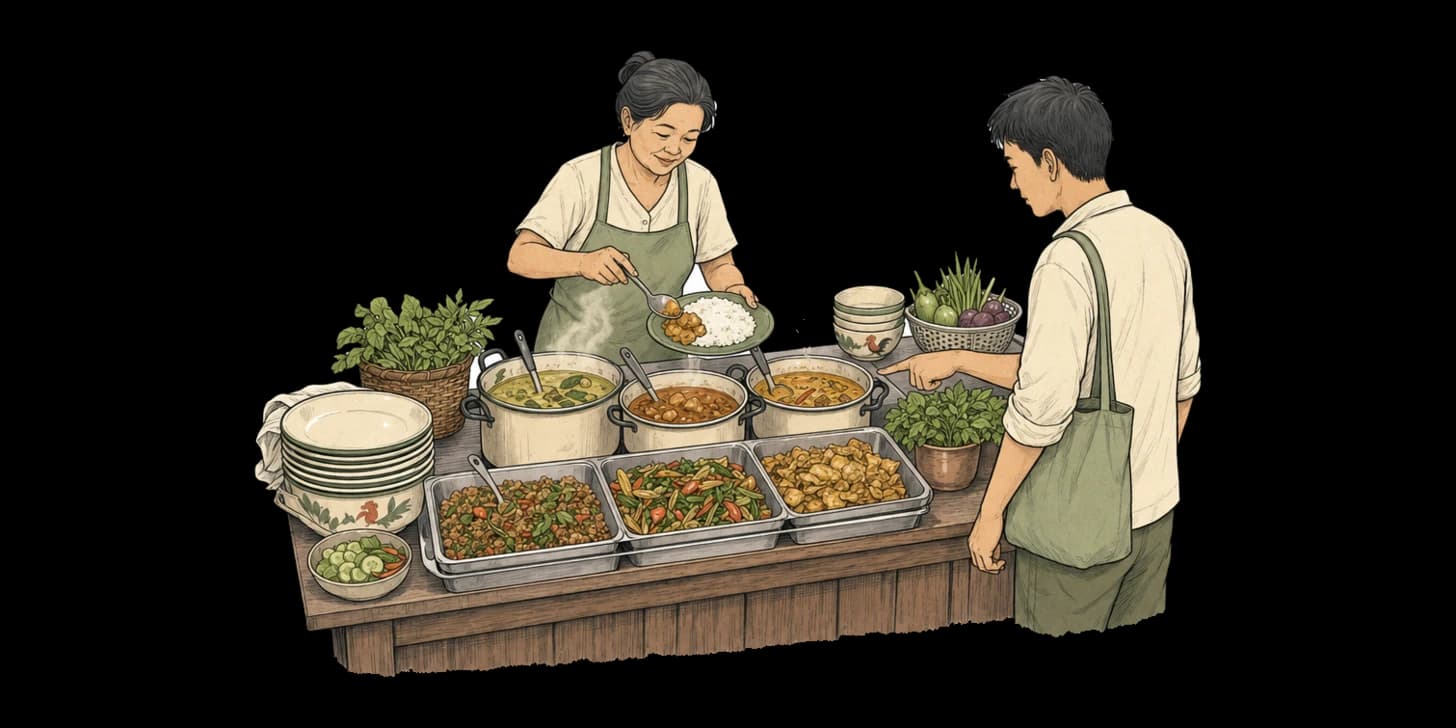
- Point-and-eat shophouses. No menu, no English needed: trays of ready-made dishes on display, you point at what looks good.
Evenings open up another whole layer — the city's night markets are as much about grazing your way through stalls as they are about shopping.
The rice-and-curry trick
If we had to teach you one habit, it's this: learn to love khao gaeng — rice and curry. These are the shops with a glass cabinet full of homemade dishes out front. You get a plate of rice and point at one, two or three curries ladled over the top, and it costs roughly 40–70 THB depending on how greedy you are.
It's the best value going, it changes daily, and it's the fastest way into the depth of Northern Thai food — the herbal, fermented, gently funky flavours that define the region. Go around 11am to 1pm when the trays are freshest and the turnover is highest.
How to spot a good stall
The rule is beautifully simple: follow the crowds. A stall busy with locals — especially office workers and families — means high turnover, which means fresh ingredients and a dish that's been perfected over years. An empty stall with food sitting around is the one to skip.
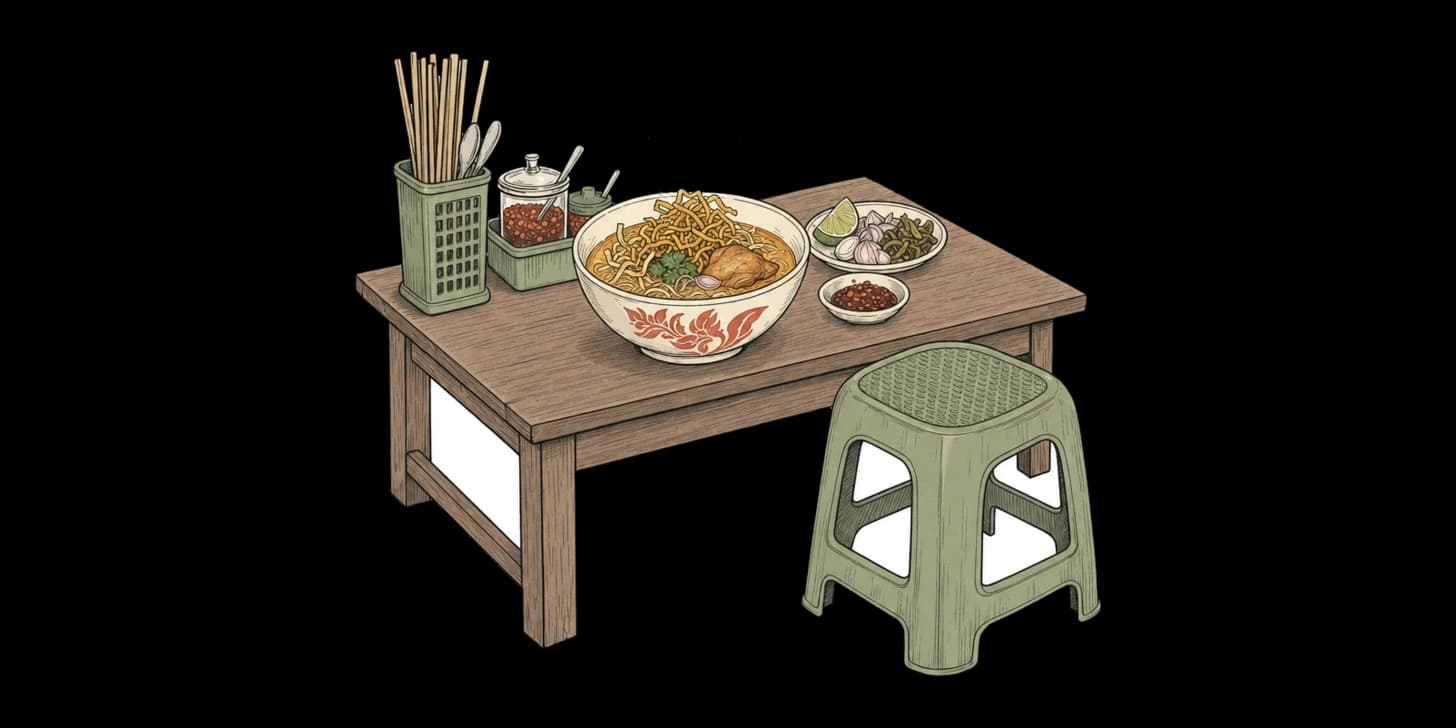
Other tells: a cart doing one thing only (single-dish specialists are usually the best), a queue at lunchtime, and grandmothers eating there. Don't be put off by plastic stools and a bare-bones setup — that's often exactly where the magic is.
Cooking versus eating out
Here's the counter-intuitive part newcomers take a while to accept: in Chiang Mai, eating out is frequently cheaper than cooking. A single home-cooked meal can cost more in ingredients than a 50-THB plate down the road, and you lose the time too. Most of us self-cater only for breakfast, coffee, fruit and snacks — and even that's a pleasure when the produce comes from somewhere like Jing Jai Market. For everything else, the street wins.
A word on tipping
Tipping isn't expected at street stalls, markets or canteens — the price is the price. At a sit-down restaurant it's a kind gesture to round up or leave the loose coins from your change, and a little more if there's table service, but there's no obligation and nobody will chase you. Keep small notes and coins on you; many stalls can't break a 1,000-THB note.
Come hungry, eat fearlessly, and let your favourites find you — we'll see you out there.
Frequently asked questions
Just how cheap is it to eat well in Chiang Mai?
At a proper local stall, a great plate of food runs about 40 to 60 THB — think pad krapow over rice with a fried egg, or grilled chicken with sticky rice. Step up to a sit-down shophouse and you're looking at 60 to 100 THB for something more substantial. A genuine feast of several shared dishes with drinks still comes in under 150 THB a head in most of the city.
Where does the best value live?
Fresh markets are cheapest of all, with hot-food corners doing curries, grilled fish and som tam pounded to order. Street stalls are the backbone, each cart doing one dish supremely well. Mall food courts (50 to 70 THB), university canteens (35 to 50 THB) and point-and-eat shophouses round out the value map.
What's the rice-and-curry trick?
Learn to love khao gaeng — rice and curry. These shops have a glass cabinet full of homemade dishes out front; you get a plate of rice and point at one, two or three curries ladled over the top, for roughly 40 to 70 THB depending on how greedy you are. Go around 11am to 1pm when the trays are freshest and turnover is highest.
How do I spot a good cheap stall?
The rule is beautifully simple: follow the crowds. A stall busy with locals — especially office workers and families — means high turnover, fresh ingredients and a dish perfected over years. Look for single-dish specialists and don't be put off by plastic stools and a bare-bones setup; that's often exactly where the magic is.
Is tipping expected?
Tipping isn't expected at street stalls, markets or canteens — the price is the price. At a sit-down restaurant it's a kind gesture to round up or leave the loose coins from your change, and a little more if there's table service, but there's no obligation. Keep small notes and coins on you, as many stalls can't break a 1,000-THB note.
Is it cheaper to cook at home or eat out?
Counter-intuitively, eating out is frequently cheaper than cooking here. A single home-cooked meal can cost more in ingredients than a 50-THB plate down the road, and you lose the time too. Most people self-cater only for breakfast, coffee, fruit and snacks, and let the street handle the rest.