Food & coffee · June 27, 2026
Adventurous Eating in Chiang Mai: Insects, Offal and Local Oddities
By The Ada House team
The bolder side of the Lanna table
Chiang Mai is famous for its gentle introductions — a bowl of khao soi here, a plate of mango sticky rice there. But linger a little longer and the table opens up. Beneath the crowd-pleasers sits a whole second menu: crunchy, fermented, raw and gloriously pungent. This is where Northern Thai food gets genuinely adventurous, and where we think the real fun begins. None of it is a dare. It is simply Lanna cooking being honest about its roots — nothing fancy, nothing wasted.
Insects: the original Chiang Mai snack
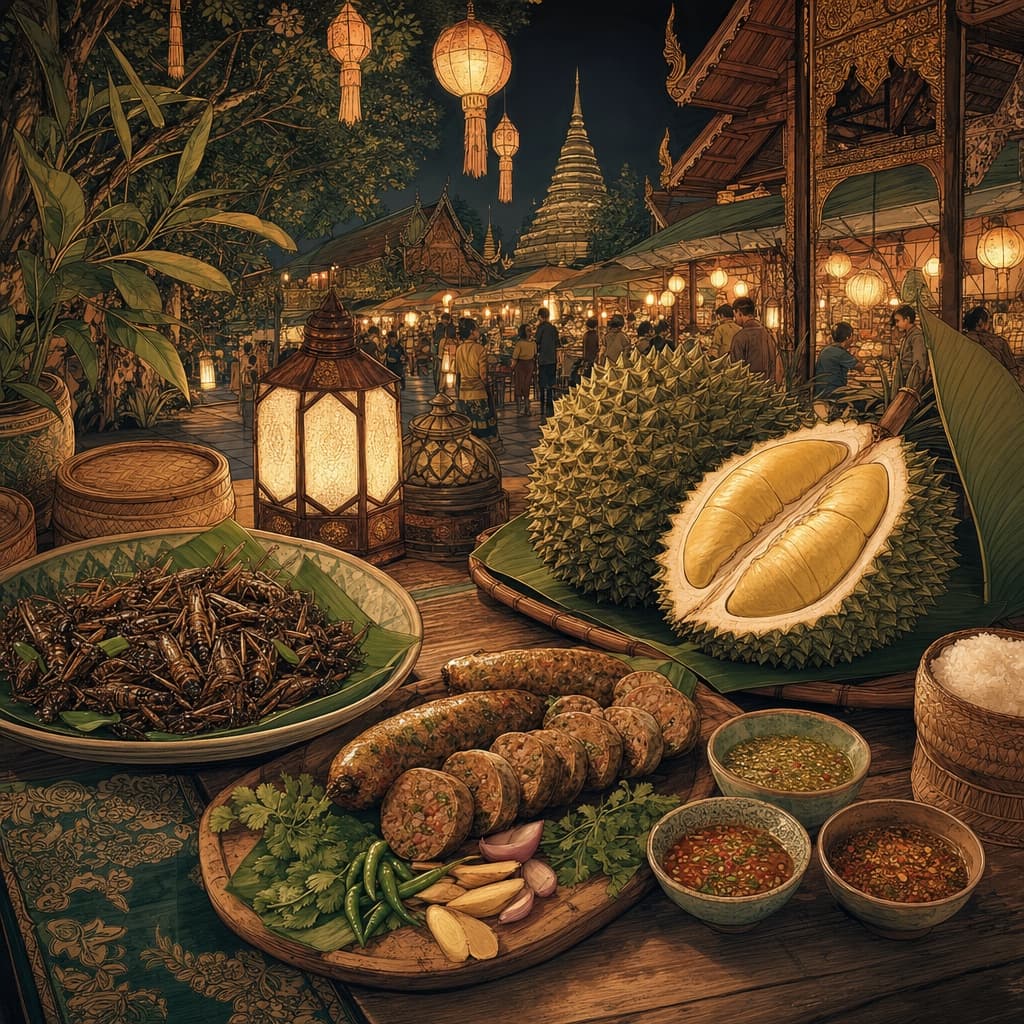
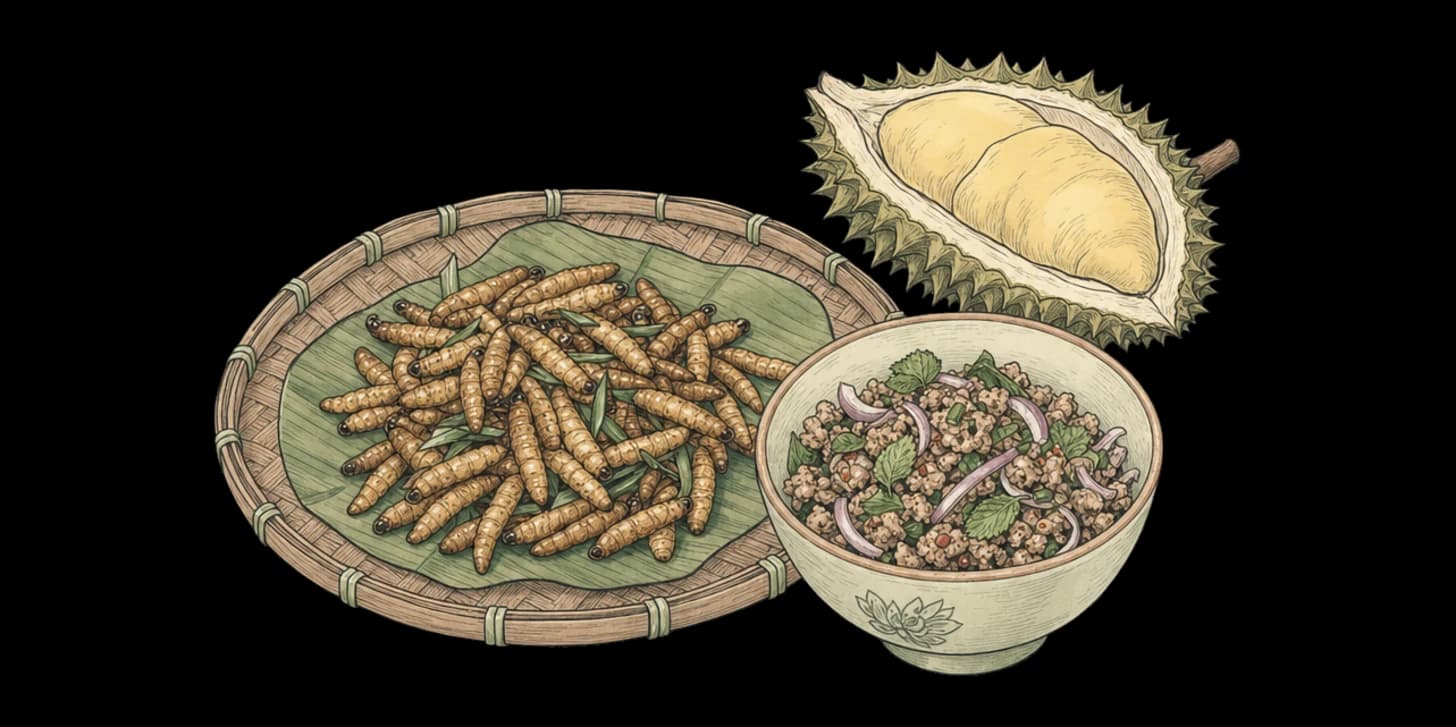
The trays of fried crickets (jing reed) glistening under market lights are not a tourist gimmick — Northern Thais have snacked on insects for generations, and they are properly delicious: nutty, salty, a little like a prawn cracker with legs. Start there, then graduate to silkworm pupae (dak dae), which are creamy and rich, or bamboo worms (rot duan, the 'express train'), crisp and faintly sweet. Grasshoppers (takataen) are the showstoppers, big and shatteringly crunchy. You'll find buckets of them at the insect vendors in Warorot Market, usually fried with kaffir lime leaf and a dusting of seasoning. Buy a small bag and eat them warm.
Nothing goes to waste
Lanna cooking comes from farming country, where an animal fed a family for weeks and every part earned its place. That ethos gives you aep — minced offal, herbs and chilli wrapped in banana leaf and grilled until smoky — and rich, dark soups built on tom luead (blood). The most storied dish is larb dip, or 'raw larb': finely chopped pork seasoned with a dizzying blend of Northern spices and, traditionally, a little blood and bile for that signature bitter edge. It is bold, ceremonial food, often served at festivals. If raw feels a step too far, ask for larb khua — the same flavours, cooked right through.
Raw, fermented and proudly pungent
Pungency is a Northern love language. The quiet hero of the region is thua nao, a fermented soybean paste pressed into thin discs and dried — earthy, savoury, the local answer to miso, and it deepens everything it touches. Then there are the nam prik, the chilli dips that anchor every meal: smoky nam prik num from roasted green chillies, and nam prik ong, a warming tomato-and-minced-pork relish that is the easiest possible on-ramp. Scoop them up with sticky rice and steamed vegetables and you'll understand the whole cuisine in three bites. Braver palates can chase the funk further into fermented fish and crab pastes.
Durian and the fruits that fight back
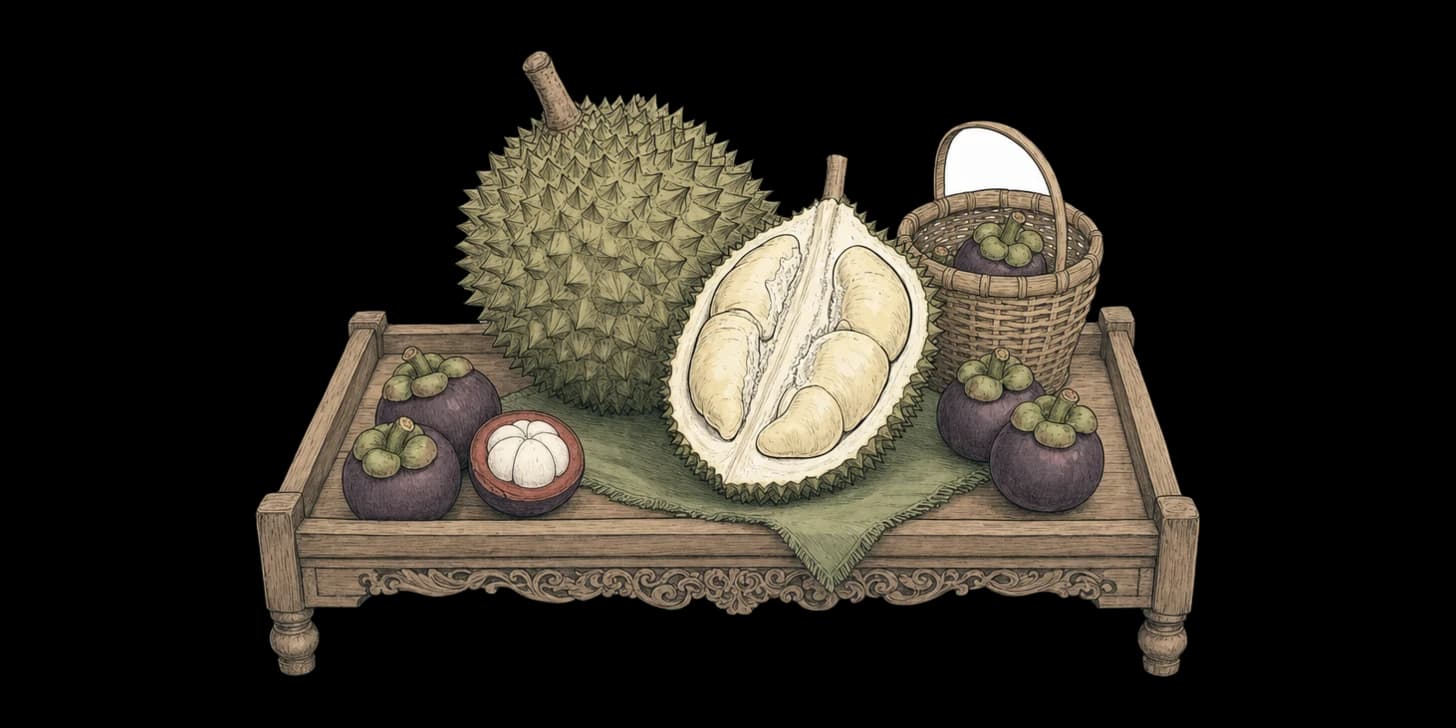
No tour of bold flavours is complete without durian, the spiky 'king of fruit' so aromatic it is banned from many hotel lobbies. Push past the smell and the custard inside is extraordinary — rich, boozy, almost cheesecake-like. If durian wins you over, keep going: santol with its sour-sweet pith, tangy langsat, and the fragrant flesh of fresh jackfruit. Buy a single one, share it round, and let the vendor show you how it's opened.
How to start small (and safely)
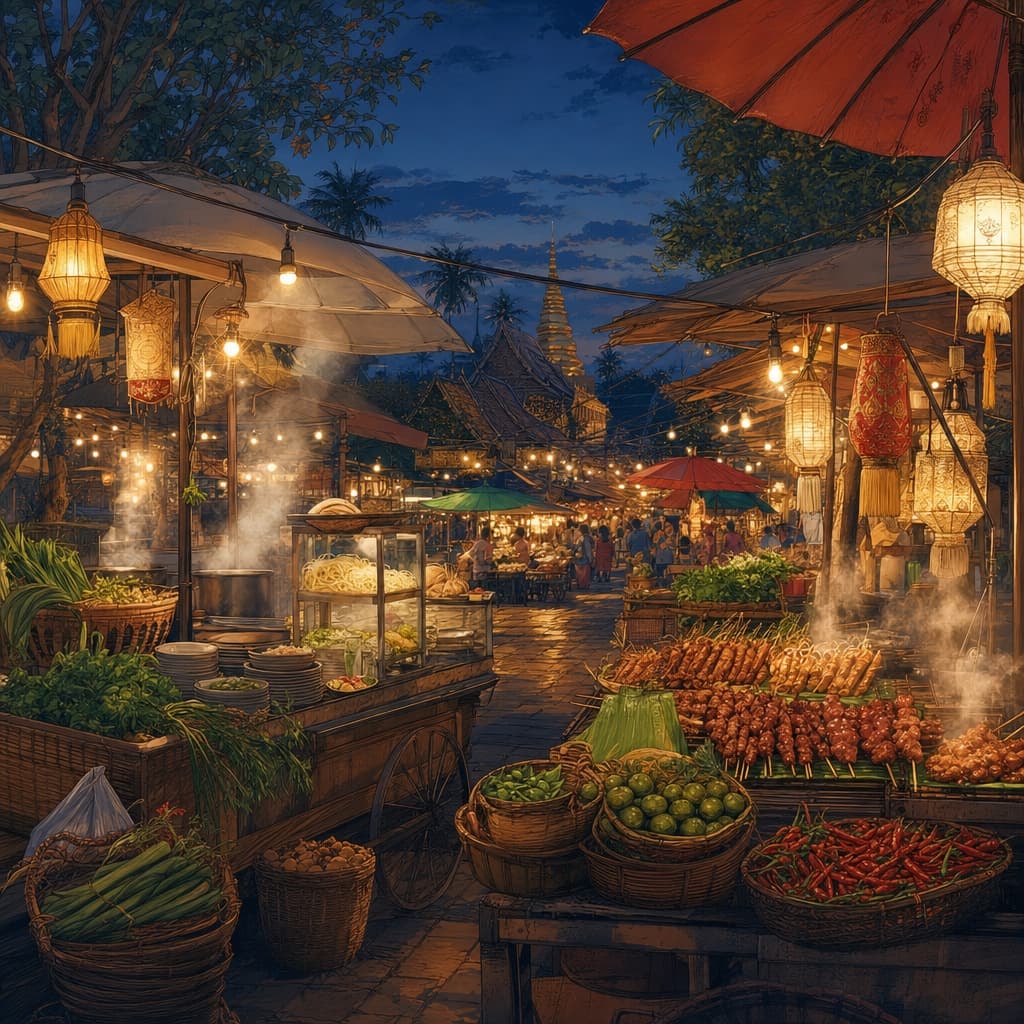
Our rule is simple: eat where the locals queue. A busy stall turns its ingredients over fast, which means fresh oil, fresh meat and a cook with nothing to hide. Begin with something friendly like sai ua, the fragrant Northern herb sausage, then build your courage from there. The buzzing night markets of Chiang Mai are perfect training grounds — order what the table beside you is eating, start with the cooked and crunchy, and work your way towards the raw and fermented over a few evenings. Go hungry but not ravenous, carry small notes, and never be shy about pointing and smiling. Vendors here are proud of this food and delighted to walk you through it.
Why it's worth the leap
These dishes are not novelties — they are the memory of a whole region, shaped by mountains, monsoons and a deep refusal to waste a single thing. Eating them is the most direct way we know to understand Lanna culture: generous, resourceful and quietly fearless. So be curious, be respectful, ask questions, and let Chiang Mai surprise you one crunchy, fermented, unforgettable mouthful at a time.
Come hungry — we'll save you a seat at the table.
Frequently asked questions
Which insects should I try, and are they any good?
They're properly delicious, not a tourist gimmick — Northern Thais have snacked on insects for generations. Start with fried crickets (jing reed), which are nutty and salty like a prawn cracker with legs, then graduate to creamy silkworm pupae or crisp, faintly sweet bamboo worms. Grasshoppers are the big, shatteringly crunchy showstoppers. Buy a small bag and eat them warm.
Where do I find the insect snacks?
You'll find buckets of them at the insect vendors in Warorot Market, usually fried with kaffir lime leaf and a dusting of seasoning. Buy a small bag and eat them while they're warm. The night markets are also good training grounds for bolder bites.
What is larb dip, and is there a cooked alternative?
Larb dip, or raw larb, is finely chopped pork seasoned with a dizzying blend of Northern spices and, traditionally, a little blood and bile for that signature bitter edge. It's bold, ceremonial food often served at festivals. If raw feels a step too far, ask for larb khua — the same flavours, cooked right through.
What's the easiest way to start eating adventurously?
Begin with something friendly like sai ua, the fragrant Northern herb sausage, then build your courage from there. The chilli dips called nam prik are the easiest on-ramp of all — smoky nam prik num and the warming tomato-and-pork nam prik ong, scooped up with sticky rice and steamed vegetables. Start with the cooked and crunchy and work towards the raw and fermented over a few evenings.
How do I eat this kind of food safely?
Our rule is simple: eat where the locals queue. A busy stall turns its ingredients over fast, which means fresh oil, fresh meat and a cook with nothing to hide. Go hungry but not ravenous, carry small notes, and never be shy about pointing and smiling — vendors here are proud of this food and delighted to walk you through it.
What about durian — is it worth pushing past the smell?
Yes — durian is the spiky king of fruit, so aromatic it's banned from many hotel lobbies, but push past the smell and the custard inside is extraordinary, rich and almost cheesecake-like. If it wins you over, keep going with sour-sweet santol, tangy langsat and fragrant fresh jackfruit. Buy a single one, share it round, and let the vendor show you how it's opened.