Things to do · June 25, 2026
Sukhothai from Chiang Mai: the dawn of happiness
By The Ada House team
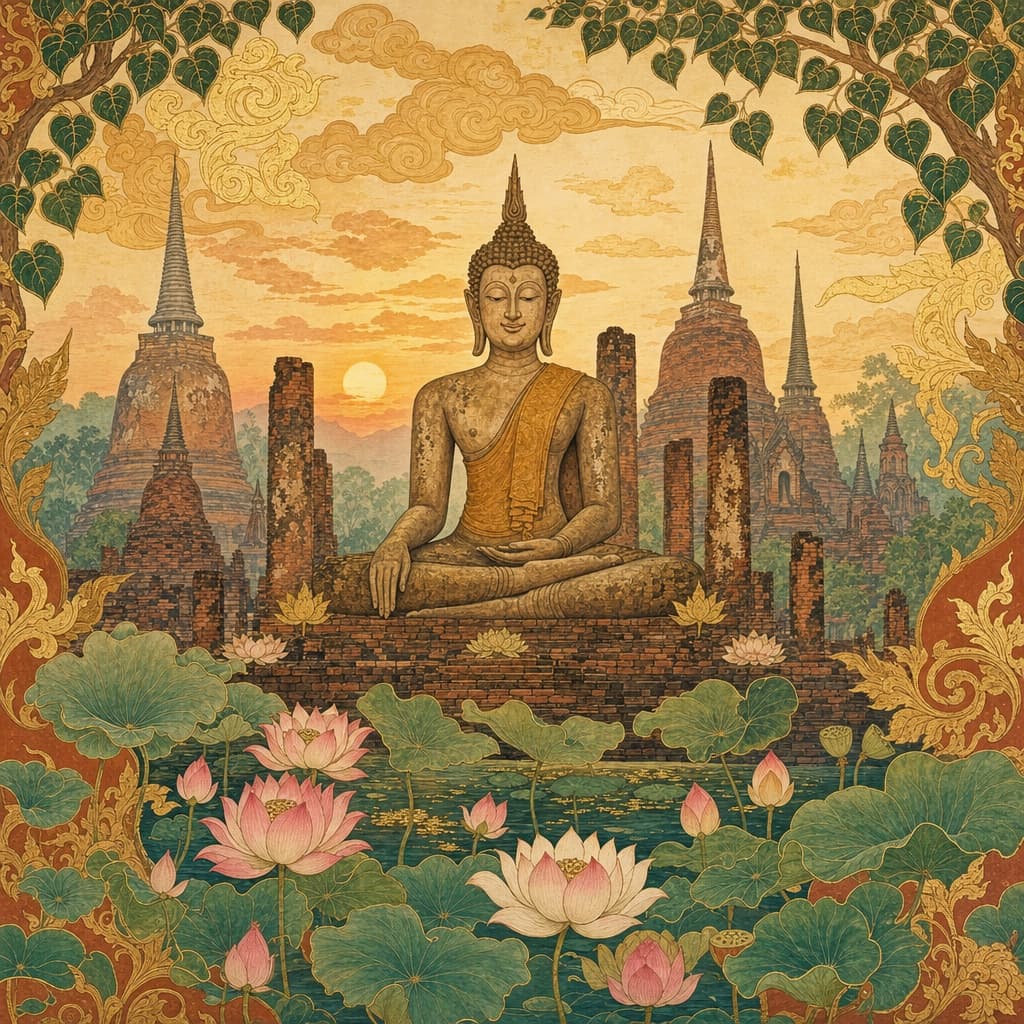
Some places ask you to slow down before they give anything up. Sukhothai is one of them — a field of ruined temples five hours south of here, where Thailand's first kingdom rose in the 13th century. The name means dawn of happiness, and on a still morning, with mist on the lotus ponds, you'll understand exactly why. This is a pilgrimage worth making.
Why Sukhothai matters
Long before Chiang Mai's Lanna kingdom found its feet, Sukhothai was the capital of the first Thai kingdom, founded in 1238. It's where the Thai alphabet was invented and where a recognisably Thai art and architecture first took shape. Today the Sukhothai Historical Park — a UNESCO World Heritage Site — protects nearly 200 monuments across a green, walled landscape: brick chedis, columned halls open to the sky, and Buddha images that have weathered seven centuries with extraordinary grace. The most famous of them sit serene among the brickwork, while others walk — a flowing, almost weightless pose that Sukhothai's sculptors made their own. If you've enjoyed digging into Lanna kingdom history, this is the chapter that comes before it.
Cycling among the ruins
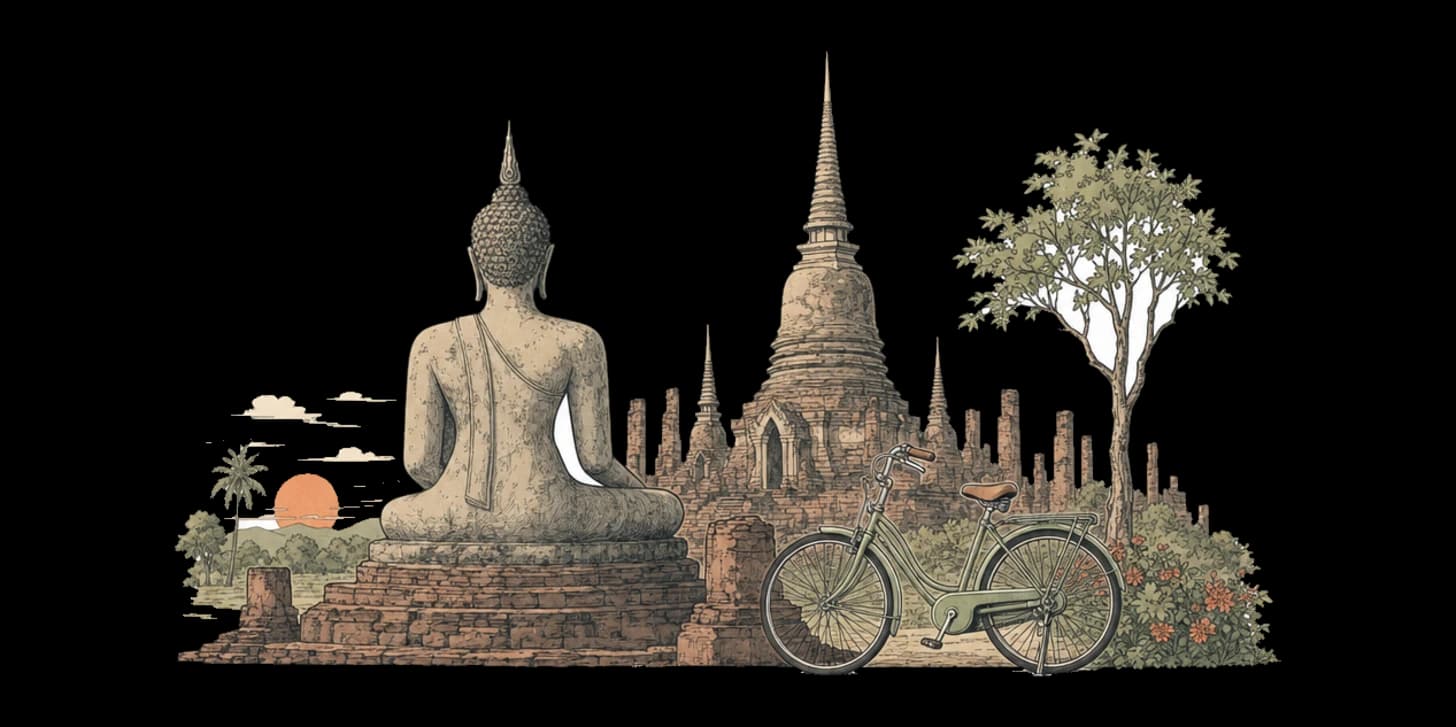
Here's the secret to a good visit: hire a bicycle. The park is large and beautifully flat, the temples linked by shaded paths and reflecting pools, and a bike costs only a few baht for the whole day from the shops by the central gate. Go at dawn or dusk, when the light turns the brick gold and the crowds thin to almost nothing, and pedal slowly from one ruin to the next. It's the single best way to feel the place — quiet, unhurried, just you and the old Buddhas. If you already love cycling around Chiang Mai, you'll feel right at home; if not, this gentle, traffic-free circuit is the loveliest place to start.
Old town, new town
A small but important detail: there are two Sukhothais. New Sukhothai is the modern town with the bus terminal and most cheap rooms, about 12km from the ruins. Old Sukhothai, right by the historical park, is where you want to stay — a cluster of guesthouses and cafés within cycling distance of the gates, so you can be among the temples before breakfast and back after sunset. Book a night here and the whole trip changes character.
The quieter sister: Si Satchanalai
If you have a second morning, point your wheels — or a songthaew — toward Si Satchanalai, about an hour north. Part of the same UNESCO listing, it's a quieter, leafier sister site: ruined temples among trees and rice fields, often with barely another visitor in sight. Many travellers come away preferring it to Sukhothai itself for the sheer sense of having walked into a forgotten world.
There's a seasonal magic here too. Sukhothai is widely held to be the birthplace of Loy Krathong, the festival of floating candles that lights up Thai waterways each November. The park stages one of the country's most beautiful celebrations among its ponds and ruins — a perfect companion to Chiang Mai's own Yi Peng lantern festival if your timing lines up.
Getting there, and when to go
Be honest with yourself about the distance: Sukhothai is roughly 320km and 5–6 hours south. Frequent buses and minivans leave from Chiang Mai's Arcade terminal several times a day, or you can take a short flight or drive. Whichever you choose, this is an overnight (two days), not a day trip — cram it into one and you'll spend more time on the road than among the ruins. It slots beautifully into a week in Chiang Mai. Aim for the cool, dry months of November to February, when mornings are crisp and the dawn light does its best work; we've gathered the full seasonal picture in when to visit Chiang Mai.
Pack light, set an early alarm, and let Sukhothai unfold at the pace it deserves. Safe travels — and tell us which Buddha you couldn't stop looking at.
The Ada House team
Frequently asked questions
How far is Sukhothai and how do I get there?
Sukhothai is roughly 320 km and 5 to 6 hours south of Chiang Mai. Frequent buses and minivans leave from Chiang Mai's Arcade terminal several times a day, or you can take a short flight or drive. Be honest with yourself about the distance before you set off.
Should I do Sukhothai as a day trip?
No, this is an overnight of two days, not a day trip. If you cram it into one day you will spend more time on the road than among the ruins. Give it an overnight, a bicycle and a sunrise, and it unfolds at the pace it deserves.
What is the best way to see the ruins?
The secret to a good visit is to hire a bicycle. The Sukhothai Historical Park is large and beautifully flat, the temples linked by shaded paths and reflecting pools, and a bike costs only a few baht for the whole day from the shops by the central gate. Go at dawn or dusk, when the light turns the brick gold and the crowds thin to almost nothing.
Where should I stay near the park?
There are two Sukhothais. New Sukhothai is the modern town with the bus terminal and most cheap rooms, about 12 km from the ruins. Old Sukhothai, right by the historical park, is where you want to stay, a cluster of guesthouses and cafes within cycling distance of the gates, so you can be among the temples before breakfast and back after sunset.
Is there anything else worth seeing nearby?
If you have a second morning, head to Si Satchanalai, about an hour north, by bicycle or songthaew. Part of the same UNESCO listing, it is a quieter, leafier sister site of ruined temples among trees and rice fields, often with barely another visitor in sight. Many travellers come away preferring it to Sukhothai itself.
When is the best time to visit Sukhothai?
Aim for the cool, dry months of November to February, when mornings are crisp and the dawn light does its best work. There is seasonal magic too, as Sukhothai is widely held to be the birthplace of Loy Krathong, the festival of floating candles each November, staged here among the ponds and ruins.